It is hard to believe that in the 250th year of America’s independence, corruption is emerging from within the very institution meant to prevent it — the White House.
It is not hidden; it is boldly in plain sight, festering and endangering the Republic. As Zephyr Teachout warns, corruption in plain sight is a real threat to democracy.
Today, corruption in America is not static — it grows, adapts, and accelerates when accountability collapses. In the United States, corruption has become exponential — corruption raised to a higher power — as public institutions weaken, oversight erodes, and leaders discover they can act without consequence. The Founders understood this danger. They built a constitutional system designed to prevent concentrated power, anticipating that future leaders might test its limits. Today, those limits are being tested in ways that threaten the Republic's stability.
The U.S. Constitution is clear: public office is a public trust. The Domestic Emoluments Clause prohibits a president from receiving any financial benefit from the federal or state governments beyond a fixed salary. The Foreign Emoluments Clause prohibits federal officials from accepting gifts, payments, or benefits from foreign governments without congressional consent. When a president abuses both clauses, he uses public authority for private gain — distorting constitutional processes and weakening the Republic. This is how Trump has distorted constitutional processes.
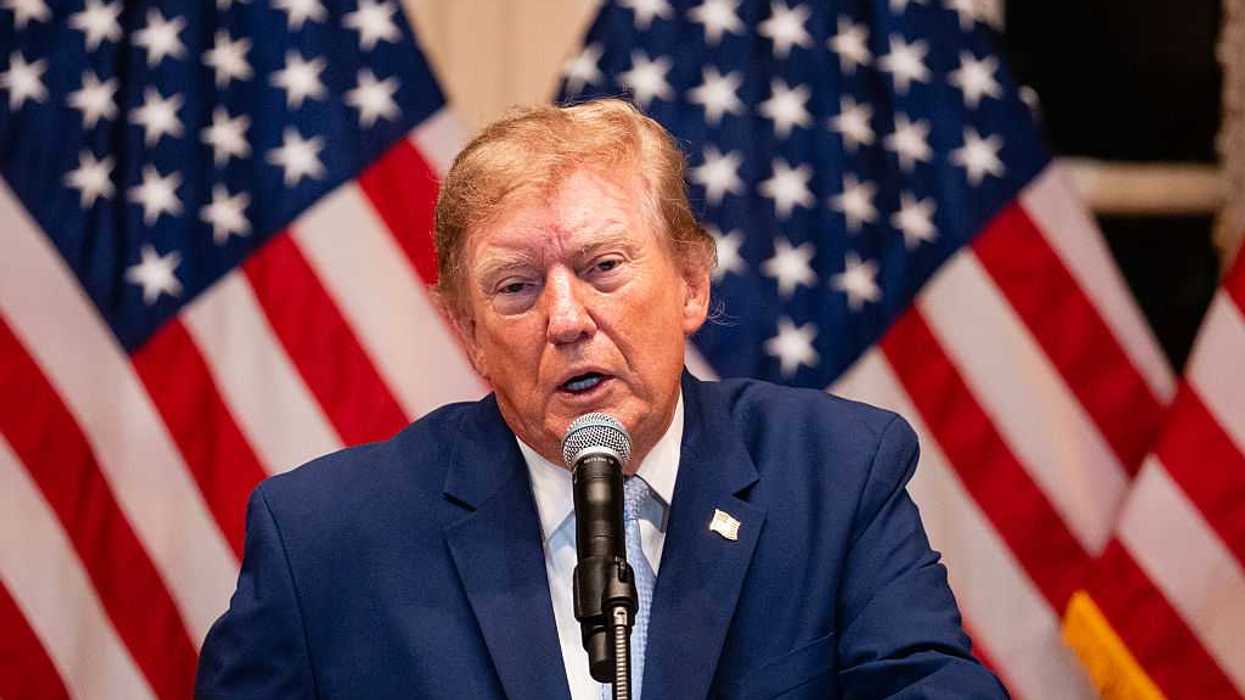
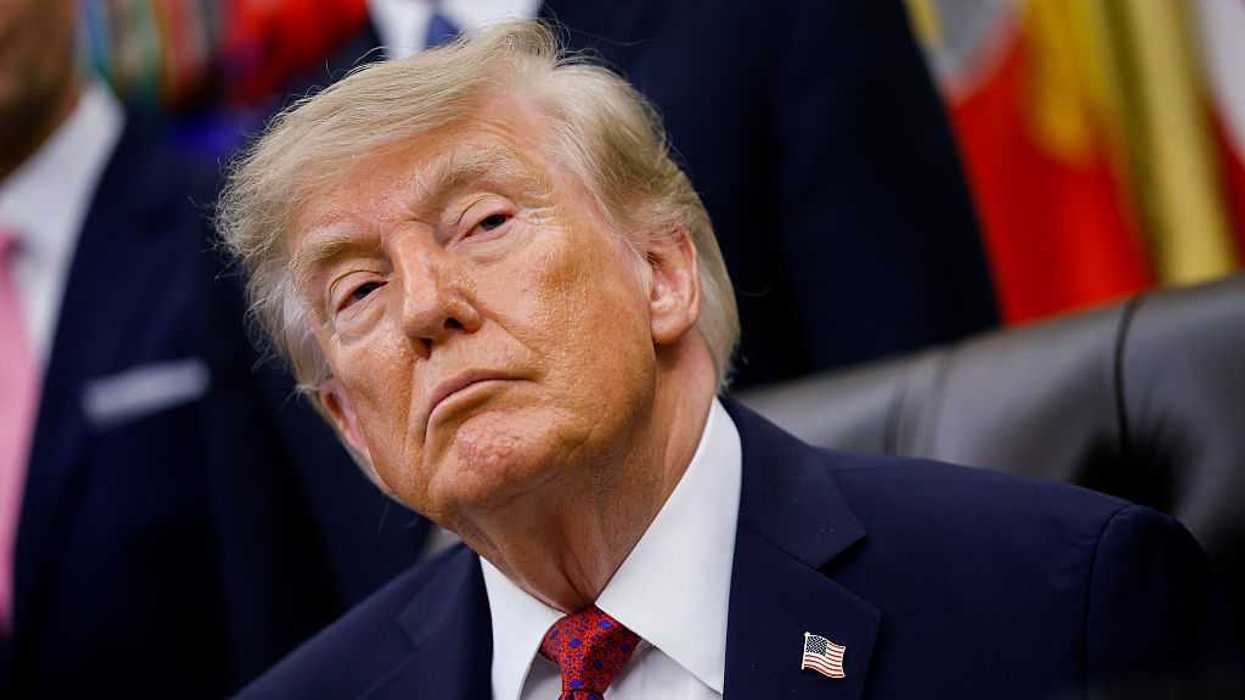
Reports show corruption did not simply appear during Trump’s presidency — he brought it with him from his private business into the White House, and it accelerated. What began as conflicts of interest grew into systemic self‑enrichment, expanding across agencies, foreign relationships, and federal decision‑making. Corruption did not remain linear; it became exponential.
The 47th president has blended public office with private business in ways ethics watchdogs and legal scholars describe as unprecedented in modern American history. Reports reveal he added billions to his wealth during his presidency — the most lucrative administration in American history. From cryptocurrency ventures to foreign government patronage at Trump‑branded properties, the scale and variety of the alleged conflicts have prompted ongoing legal challenges and congressional debate.
Trump’s corruption as a sitting president runs deep and remains unprecedented — a pattern observers describe as a form of kleptocracy, where public office becomes a vehicle for personal and family enrichment. Reports reveal this corruption multiplied — spreading from business dealings to federal agencies, from foreign delegations to domestic policy, from personal profit to institutional distortion. From directing foreign delegations, Secret Service agents, and federal officials to stay at his properties, to negotiating immunity through litigation, the president’s corruption spreads wide. Each action meets the definition of corruption: the abuse of public power for personal gain, carried out in ways that distort constitutional processes and place private interests above the public’s.
Trump’s corrupt practices in office mirrored the same self‑dealing behaviors he used in the private sector — imported directly into public power. He found every soft policy, every gray zone, every unenforced rule, and pushed through them all. By refusing to divest, he created a presidency where public power served private profit, where shell companies continued operating, where foreign and domestic money flowed into his properties, and where court cases documented a pattern of behavior that did not stop when he took the oath of office. Even family members — including Jared Kushner — became part of a system where private interests overlapped with public authority.
Reports show Capital One closed more than 300 Trump‑affiliated accounts after months of review, citing patterns consistent with money‑laundering risk. Foreign delegations routed wire transfers through Trump hotels, raising alarms under the Foreign Emoluments Clause. A Belgian diamond consortium that gifted Trump a lavish ring later received tariff relief — prompting senators to warn of potential bribery concerns. Watchdogs have tracked dozens of corrupt transactions across his businesses and political operations.
Trump’s corruption in plain sight shows he does not fear oversight, because Congress has abandoned its oversight role. Analysts warn that corruption carried out openly — without consequence — becomes a pathway to autocracy. He acts openly because he knows Congress will not stop him. His corruption follows a familiar pattern — pay‑to‑play, quid pro quo, tariff favors, foreign gifts, pardons for allies, and suing institutions that try to enforce the law. Reports reveal he even began selling early access to his market‑moving Truth Social posts — charging up to $100,000 a month for privileged access to presidential announcements while personally trading stocks that could be affected by those same posts.
Trump’s unkept promises are in clear view, as corruption harms small businesses across the country. Tariffs crushed small manufacturers, raising costs by 20–50 percent and forcing layoffs, closures, and bankruptcies. Pay‑to‑play access gave corporate giants preferential treatment at international summits while small firms were shut out. Cuts to inspectors general weakened fraud detection, leaving small businesses vulnerable. Corruption does not just distort institutions — it destroys livelihoods.
Corruption in America is endangering the Republic because it is festering and spreading rapidly through the nation’s institutions — weakening the constitutional systems that protect self‑government.
Corruption endangers the Republic because it weakens the constitutional systems that protect self‑government. When leaders use public office for private gain, checks and balances erode, agencies lose independence, and the rule of law becomes unevenly applied. Corruption distorts policy decisions, redirects public resources toward private interests, and undermines equal representation. It damages public trust — the foundation of democratic legitimacy — and creates conditions where authoritarian behavior can take root. Exponential abuse is dangerous because each violation makes the next one easier, faster, and harder to stop — accelerating institutional breakdown. The stakes are not partisan; they are national — because corruption weakens every institution Americans rely on. Corruption erodes civic trust, and without trust, democratic participation collapses.
The president’s corruption in plain sight has made American democracy feel unrecognizable. Reports show his self‑enrichment, retaliation, and use of government machinery for personal gain resemble patterns seen in authoritarian systems abroad. What should be a constitutional presidency has instead looked, at times, like a reality‑show presidency, where public decisions often resembled private interests. Millions describe the last several years as living inside a system where loyalty is rewarded over law. This is not ordinary corruption; it is corruption to the tenth power and beyond — corruption that distorts governance, weakens checks and balances, and threatens the Republic itself.
Congress’s refusal to enforce oversight has allowed corruption to accelerate. Inspectors general were weakened. IRS oversight was undermined. Public corruption units faced political pressure. The power of the purse — a core constitutional check — was eroded as federal funds were redirected toward presidential priorities without authorization.
Americans can reverse this exponential abuse of power. Congress can strengthen disclosure rules so presidents must report all business interests, investment accounts, foreign gifts, and outside income. Lawmakers can pass conflict‑of‑interest laws that prohibit presidents from owning or operating businesses that benefit from federal decisions or foreign investments. Congress must pass and enforce policies that clearly separate public leadership from private business — even when presidents refuse to divest or violate the Emoluments Clauses. Oversight can be rebuilt by restoring IRS independence, re‑empowering inspectors general, enforcing the Anti‑Deficiency Act, and strengthening the FBI’s Public Corruption Unit. Democracy can still be repaired, but only if citizens insist that public office serve the public good.
Reports show corruption has multiplied. The deeper question is whether we will allow it to keep multiplying — whether we will normalize what we once condemned. Corruption grows when accountability shrinks, but accountability can grow too.
The math is simple: multiplication can work both ways. Corruption can multiply — or citizens can subtract its power. The next exponent is ours to choose.
____________________________________________________________________________
Carolyn Goode is a retired educational leader and former principal who has spent her career advancing civic responsibility, equity, and public engagement. She writes about democracy, leadership, and the values that strengthen American communities.