




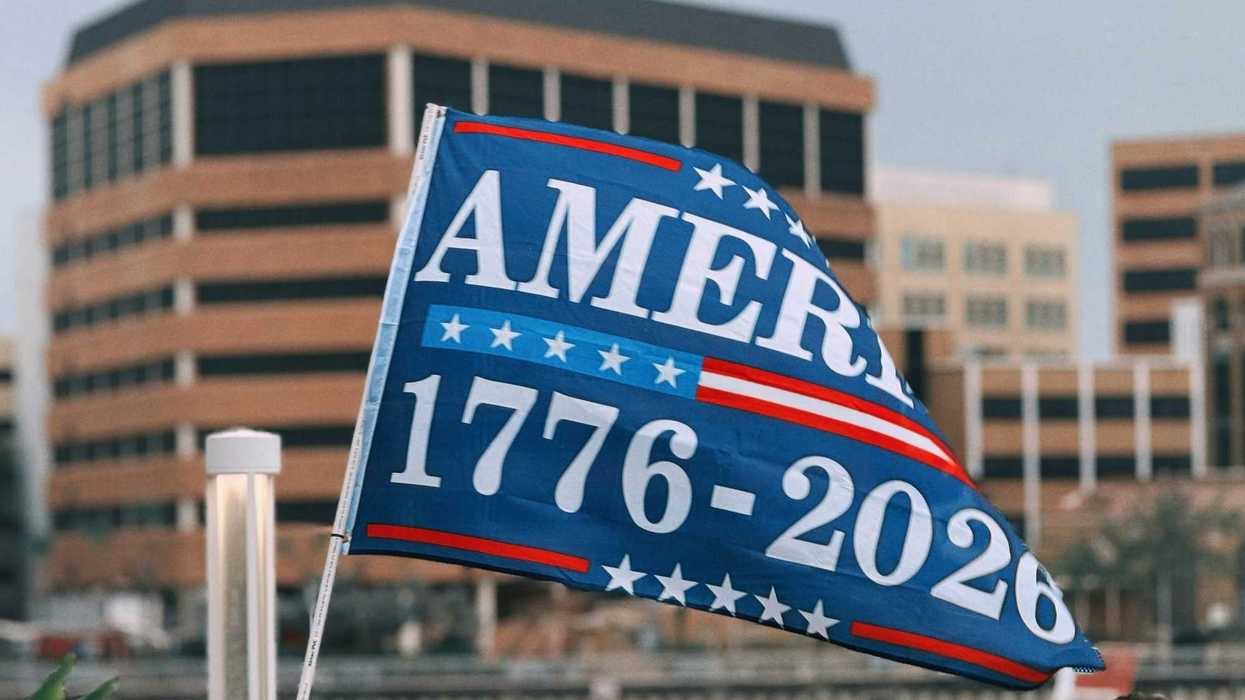
During the 250 years of America’s existence, whenever a scandal involving the U.S. President occurred, the public was shocked and dismayed. When presidential scandals erupt, faith and trust in America – by its citizens as well as allies throughout the world – is lost and takes decades to redeem.
Below are several of the more prominent presidential scandals, followed by a suggestion as to how "We the People" can make America truly America again like our founding fathers so eloquently established in the constitution.
Warren G. Harding’s oil scandal
In 1922, President Warren G. Harding (Republican) had a mess on his hands when Albert Fall, in charge of the Department of the Interior, took bribes, gifts, and no-interest loans for oil reserve rights located on federal land in Wyoming. The Teapot Dome oil fields scandal, as well as an extramarital affair that Mr. Harding had with Nan Britton, caused many to rate his presidency as one of the worst.
Richard Nixon’s Watergate scandal
Just before Richard Nixon (Republican) was re-elected president in 1972, a break-in by five of his campaign workers occurred at the Watergate Hotel in Washington, D.C., where the Democratic National Committee headquarters was located. Due to the ensuing cover-up, Mr. Nixon’s most loyal Republican leaders urged him to resign or face certain impeachment and conviction by Congress. Nixon resigned from office on Aug. 8, 1974.
Ronald Reagan’s Iran-Contra affair
During Ronald Reagan’s (Republican) reign as America’s 40th president, he made a secret deal to sell weapons to Iran at a time period (1985-1987) when the U.S. had an arms embargo against Iran and seven Americans were held hostage. Reagan claimed the weapons sale had nothing to do with the eventual prisoner exchange.
Bill Clinton’s affair
During Bill Clinton’s (Democrat) presidency, he alleged that he “did not have sexual relations with that woman” (Monica Lewinsky). When the blue dress and cigar evidence became public, Clinton was charged with impeachment. The Senate acquitted Clinton in 1998.
Donald Trump’s first impeachment
In 2019, Donald Trump (Republican) called Ukranian President Volodymr Zelensky and requested that Zelensky investigate Trump’s election rival, President Biden, and his son Hunter Biden. A formal House inquiry found that Trump solicited foreign interference in the 2020 U.S. presidential election, and the first impeachment ensued. The Senate acquitted Trump of the charges.
Donald Trump’s second impeachment
The FBI estimated 2,000-2,500 people trespassed into the Capitol on Jan. 6, 2021. On Jan. 13, 2021, Congress charged Donald Trump with “incitement of insurrection” for his role in riling up his supporters before the chaos ensued. During a Senate trial, Trump was acquitted, making him the first president to be impeached twice.
Donald Trump’s criminal conviction
On May 29, 2024, Donald Trump became the first president in United States history to be convicted of a crime, where he was found guilty by a jury of his peers on 34 counts of fraud related to hush money given to adult film actress Stormy Daniels.
Jeffrey Epstein cover-up
When Mr. Trump was seeking the office of president in 2024, he promised to release all files related to the sex trafficking of 1,200 alleged victims by Jeffrey Epstein. For the first 10 months of Trump’s 2.0 presidency, he refused to honor his pledge. Democrats and Republicans pressured Mr. Trump to cave in, and he signed the Epstein Files Transparency Act into law on Nov. 19.
The law required the Justice Department to release all files by Dec. 19. However, officials and lawmakers estimated that as little as 10% of what the Department of Justice (DOJ) possessed was released (Fortune, Dec. 20). GOP Rep. Thomas Massie (KY) said DOJ’s partial release “grossly fails to comply with both the spirit and the letter of the law” and vowed legal challenges (USA Today, Dec. 20).
Breaking the law became another scandal with clear footprints of our 47th president; Kash Patel and approximately 1,000 of his FBI personnel, and Pam Bondi and 200 DOJ attorneys reviewed roughly 100,000 pages of Epstein-related records.
Lesson to be learned
Bribes, break-ins, lies, sexual behavior, soliciting foreign interference, incitement of insurrection, and breaking the law are among America’s 250 years of presidential scandals.
"We the People" are long overdue for: 1) an honorable, law-abiding, and trustworthy president, 2) properly vetted and competent cabinet members, and 3) capable congressional delegates who demonstrate 100 percent allegiance to the Constitution and follow the "people before party" mantra in their deliberations.
With scandals and misdeeds popping up virtually every week, our first duty, as Abraham Lincoln advised, is to “disenthrall ourselves” and remodel our politics. "We the People" must rebuild institutions, hold proper and complete investigations, and institute laws that will make it very hard for the next Harding, Nixon, Reagan, Clinton, and Trump-era scandals to flourish in the first place.
The onus is on us to fix this mess.
Steve Corbin is a professor emeritus of marketing at the University of Northern Iowa.







The President Invited Iran to Bomb My Home