
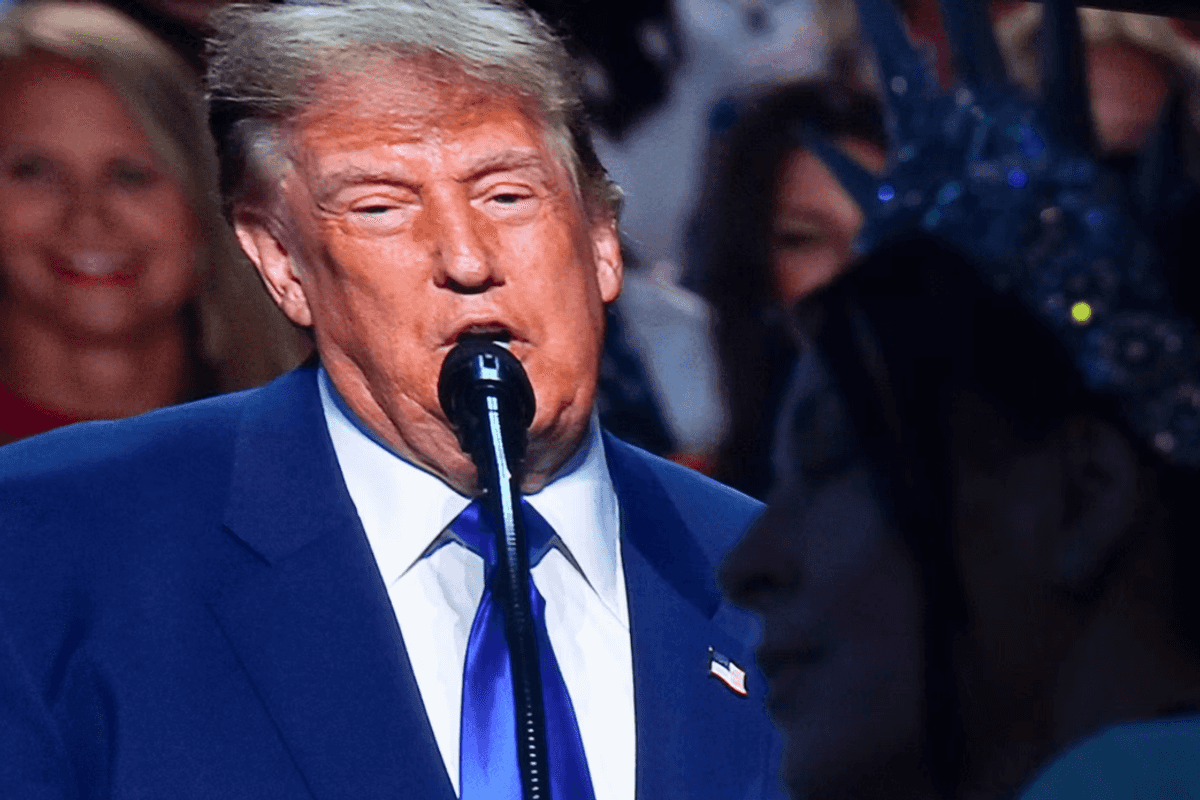





A recent report issued by Republican staff members on the U.S. House Judiciary Committee, which focused on alleged European censorship practices, cited Romania as a case study of aggressive EU overreach, referencing investigations into the far-right candidate’s campaign financing and the annulment decision. In doing so, elements within the U.S. political system appeared to align rhetorically with Moscow’s framing of the episode as an example of EU elite suppression rather than Russian interference.
This does not constitute evidence of coordination between Russia and the United States. There is no public proof of joint strategy or operational cooperation. But it does suggest something more subtle: narrative convergence in support of the same political force abroad and in opposition to pro-European institutional actors.
In the last decade, journalists and scholars have documented the involvement of the United States, the Soviet Union, and later Russia in shaping electoral outcomes abroad. During the Cold War, such efforts were part of a structural geopolitical rivalry, often covert but steady. After 1991, rather than disappearing, electoral influence operations adapted and intensified.
Evidence shows that the United States and the USSR/Russia intervened in elections worldwide 187 between 1946 and 2014, with a 25-30% annual increase in interventions in the post-Cold War era, indicating that partisan electoral interventions constitute a recurring component of great-power statecraft. Despite changes in technology and political culture, the underlying logic remained similar: elections were arenas of competition.
Since the mid-2000s, this competitive pattern has remained visible in spheres of influence, such as Latin America (U.S.), the post-Soviet states (Russia), and contested geopolitical spaces, including Ukraine, Georgia, Moldova, Serbia, and parts of the Middle East. In all these elections, Washington and Moscow supported opposing camps, sometimes across multiple cycles. These were cases of parallel involvement, but not joint backing.
Electoral interference, by its nature, has been a tool of competition, not cooperation. Supporting the same political force would normally undermine the strategic purpose of influence operations. Historically, the pattern has been rivalry. The Romanian presidential election crisis of 2024–2025 may mark a departure from that pattern.
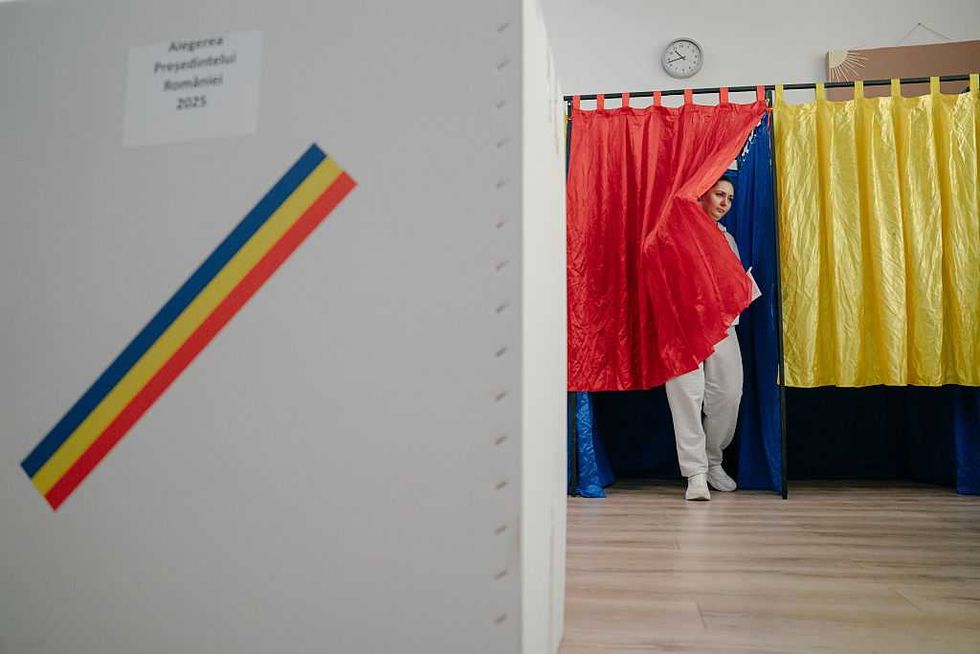 A woman prepares to cast her vote on May 4, 2025 in Bucharest, Romania. The first round of voting begins in the re-run of Romania's presidential election after six months since the original ballot was cancelled due to evidence of Russian influence on the outcome. Then far-right candidate Calin Georgescu surged from less than 5% days before the vote to finish first on 23% despite declaring zero campaign spending. He was subsequently banned from standing in the re-rerun, replaced this time round by George Simion who claims to be a natural ally of Donald Trump.Getty Images, Andrei Pungovschi
Romania’s Constitutional Court annulled the first round of the presidential election held on November 24, 2024, due to a complex Russian hybrid operation aimed at manipulating the result, according to declassified reports of top security bodies. According to the official assessment, the operation involved coordinated cyberattacks, political subversion, microtargeted disinformation campaigns, and the amplification of extremist networks in support of an initially marginal far-right candidate who unexpectedly topped the first round. The report described over 85,000 cyberattacks on electoral infrastructure, the activation of thousands of coordinated social media accounts, and a broader information ecosystem designed to polarize society and erode trust in institutions.
The immediate international reaction followed familiar lines. The outgoing U.S. administration, alongside the European Union and several European governments, condemned foreign interference and expressed support for Romania’s constitutional order. Moscow rejected the allegations and deployed a mirroring tactic: blaming Brussels for censorship, accusing the EU of marginalizing sovereignist voices, and framing the annulment as anti-democratic.
The shift occurred in early 2025.
Following the change of Administration in Washington, senior U.S. political figures began publicly criticizing the annulment. At the Munich Security Conference, Vice President J.D. Vance delivered pointed remarks questioning the decision's legitimacy. Elon Musk amplified narratives on X that echoed Russian framing about European censorship. Romania was removed from the U.S. Visa Waiver Program days before the May 2025 election rerun. A U.S. delegation led by a political appointee travelled to Bucharest in what was described as an observation visit.
At the same time, a bipartisan congressional delegation and Democratic senators sought to reaffirm Romania’s strategic importance as a NATO ally on the eastern flank and to signal support for democratic institutions.
The divergence within Washington became evident.
If this interpretation holds, it would represent a significant departure from the historical pattern of U.S./Russia structural rivalry in electoral influence. Rather than backing opposing camps, Moscow and segments of Washington’s Republican establishment found themselves reinforcing the same political narrative in Romania – sovereigntist and anti-EU. For Russia, the objective remained consistent: weaken EU cohesion, undermine NATO unity, and amplify anti-system forces. For parts of the U.S. political spectrum, the issue was reframed through the lens of domestic debates about censorship, sovereignty, and distrust of European regulatory models.
In a shifting global order increasingly shaped by transactional politics and ideological fragmentation, electoral processes can become theatres not only of interstate rivalry but also of cross-border partisan or ideological alignment. Domestic polarization in major powers spills outward, influencing foreign policy signalling in ways that blur traditional geopolitical lines. Such issues may become more pronounced in key upcoming elections in Hungary, Armenia, Denmark, and France.
For emerging and frontline democracies, this compounded pressure. Hybrid interference no longer comes solely from adversarial states. It can come from external political actors whose motivations are rooted in their own domestic ideological battles.
A common explanation for U.S. electoral intervention is strategic alignment – supporting a pro-U.S. camp against an anti-U.S. alternative. In Romania’s case, however, this logic does not apply. Across the political spectrum, political parties remain firmly committed to maintaining privileged security and political ties with Washington. The contest was not between pro- and anti-American camps, but between pro-EU and pro-Russia camps.
That ambiguity makes external signalling harder to interpret and invites deeper scrutiny of both motive and consequence.
At the same time, the ecosystem designed to safeguard electoral credibility is under strain. Inquiries led by the European Commission alongside investigations by national authorities remain ongoing, prolonging uncertainty and fueling further controversy.
Internationally, independent international election observation faces funding cuts and shrinking operational space. Domestic watchdog organizations operate under increased political and regulatory constraints. As authoritative arbiters weaken, elections risk becoming more contested, more polarized, and more susceptible to narrative manipulation.
Romania’s 2024–2025 electoral crisis may therefore offer an early glimpse of a broader transformation: a world in which electoral interference is no longer structured along predictable Cold War-style rivalries, but instead shaped by fluid alignments, narrative mirroring, and the globalization of domestic partisan conflict.
Even the concept of “foreign influence” is becoming contested terrain – deployed not only to describe genuine interference, but also as a pre-emptive instrument of electoral blame-shifting. The strategic and institutional implications of this shift are likely to be profound.
Ancuța (Anna) Hansen is the director of Perseveras Consulting, based in Tasmania, and an international expert in democracy, foreign affairs, and international development. For over two decades, she has led programs strengthening political and electoral process, peace building, and civic engagement in Africa, Central America, Eastern Europe, Middle East, and Asia-Pacific.Correction: An earlier version of this story incorrectly stated that, "Romania’s Constitutional Court annulled the second round of the presidential election held on November 24, 2024," rather than "the first round."














The President Invited Iran to Bomb My Home