
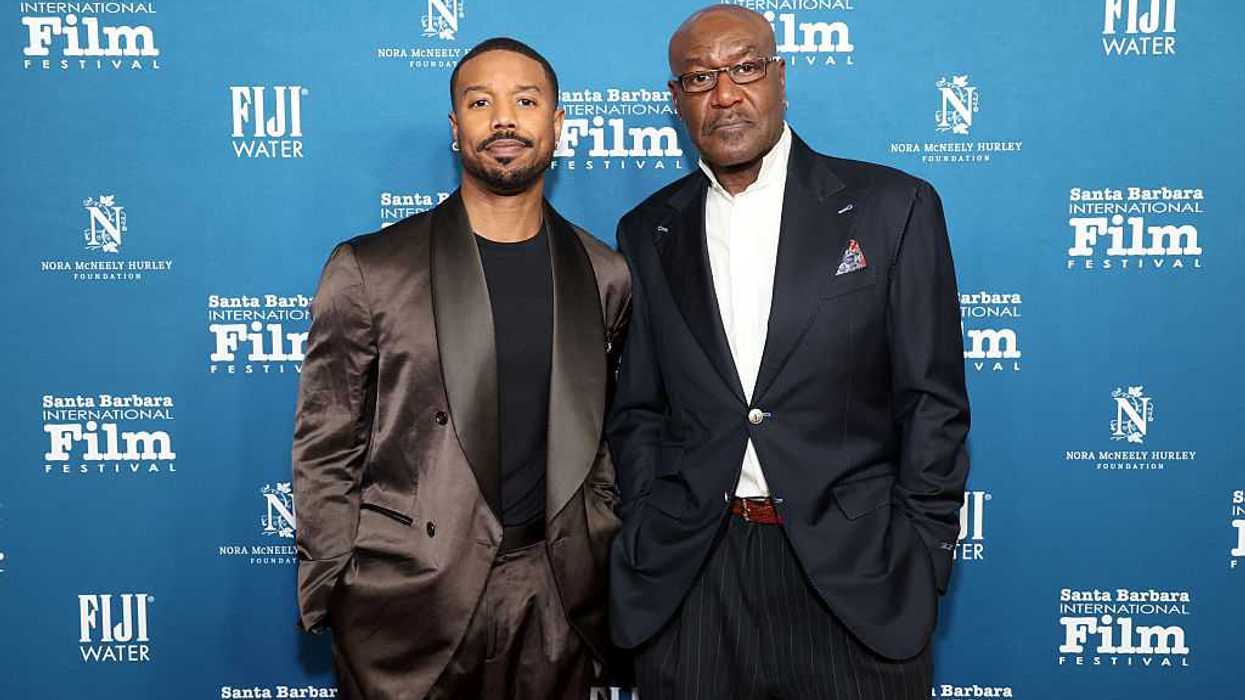
John Davidson shouted out the n-word while Michael B Jordan and Delroy Lindo presented a prize recently at the British Academy Film Awards.
Was it hate speech or a mistake made due to a disability?
Some discussion focused on Davidson having Tourette’s syndrome, citing this as an excusing condition, while others took the BBC to task for not editing out the blurts from its broadcast (the show was on a two-hour delay).
While many tried to separate these two things and focus on one or the other, attention must be paid to both.
Over the past several months, there have been quite a few instances of slurred epithets. Students at Redwood High School in Visalia, California, posted a picture on social media in which they spelled out a homophobic slur.
A woman in Columbia, South Carolina, was called a racial slur by another woman standing in line. HGTV host Nicole Curtis was caught on tape uttering the phrase “fart n*gger.” The instigators in these situations did not have Tourette’s. Diarrhea of the mouth, maybe, but there’s no entry in the DSM for that.
Studies also point to an increase in hate speech incidents. For example, a 2025 study shows an increase in hate speech on X following Elon Musk’s takeover of the platform in October 2022.
To many, it feels as if the culture is in a time of laxness about the harms of hate speech.
This is why the handling of the BAFTA awards situation is interesting. Focusing on the involuntary nature of Davidson’s actions obscures the impact of his words not only on Jordan and Lindo but also on the viewing audience generally.
Why is hate speech so dangerous? This can be a tricky question to answer. For one thing, hate speech is notoriously difficult to define. Scholars have proposed various definitions, none of which enjoys a consensus.
Some people may think of hate speech as simply unkind, rude, or impolite. This type of thinking brings to mind the adage, “sticks and stones may break my bones, but words will never hurt me.”
Slurring someone is certainly unkind. Name-calling and other forms of denigrating speech disrupt our expectations of politeness. But describing this sort of speech as simply unkind undersells its severity.
Jonathan Joss, who voiced the character John Redcorn on the animated series “King of the Hill,” was fatally shot in June 2025. According to Joss’ husband, the shooter yelled out “violent homophobic slurs” before firing at him. Unfortunately, there are plenty of cases where hate speech precedes horrific events.
A different view highlights episodes of genocidal violence in Nazi Germany, Rwanda, Myanmar, and Bosnia-Herzegovina to show that hate speech leads to violence. Philosopher Lynne Tirrell, for instance, in the 2012 book
Speech and Harm: Controversies Over Free Speech, examines how terms like ‘inyenzi’ (cockroach) and ‘inzoka’ (snake) were used to prepare the social ground for the genocide of the Tutsi in Rwanda.
A much stronger claim is that hate speech doesn’t just lead to violence; it is violence.
The Council of Europe, for example, describes verbal violence as regular and systematic attacks that purposefully target someone’s sensitive spots. Constant depictions and descriptions of people who occupy a vulnerable position in society can produce harmful defamation that significantly impacts their prospects for a good life.
Exposure to hate speech has even been shown to lead to symptoms associated with Post-Traumatic Stress Disorder (PTSD).
As a philosopher of language, I study the uses and effects of slurs and hate speech. The considerations reflect a variety of effects that slurs and hate speech can have. But there’s one idea that deserves more attention: the impact of hate speech on the imagination.
What exactly is happening with a slur? The sort of slur usage on display here is about creating worlds. The victim is cast as a villainous character, like a monster in a horror story.
Naturally, you are supposed to fear the monster; fear is an appropriate response. This fear can provoke you to either run away and hide or get angry and try to destroy the monsters.
This monstrous effect can happen despite a speaker’s intention; it can happen even if the speech is involuntary. Once it is “put out there,” it invites people into a monstrous world.
To be sure, not every use of a slur is a call to fear a monster. Sometimes, victims of a slur use it in an attempt to resist this monstrous narrative. This may feel counterintuitive to some, but that felt confusion is reason to think such uses disrupt business as usual.
In Davidson’s case, though he is not necessarily blameworthy, his words can still have a monstrous impact. Those who say anyone offended should instead show more understanding are failing in their own request. They also fail to grasp the weight these utterances carry. You can both understand Davidson’s condition and the indignity Jordan and Lindo—and those who look like them—suffered.
The BBC failed to grasp this truth in their failure to edit the outburst. It had the opportunity, even the responsibility, to thwart the monstrous invitation—at least for the broader public—since Davidson could not do so.
Slurs and hate speech impact not only those who are targeted. They can also have negative impacts on the imaginations of those listening in. Avoiding using them—or deleting them before they reach a global audience—is necessary in both public and private life. We would do well to heed this truth.