


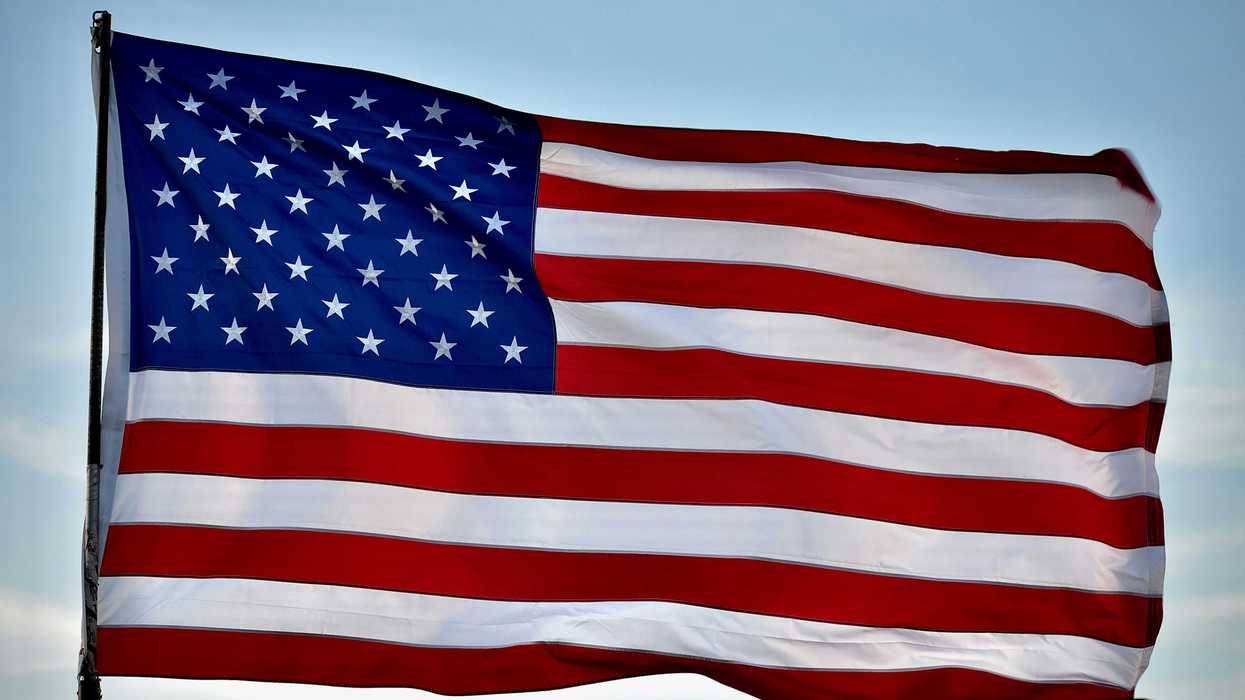

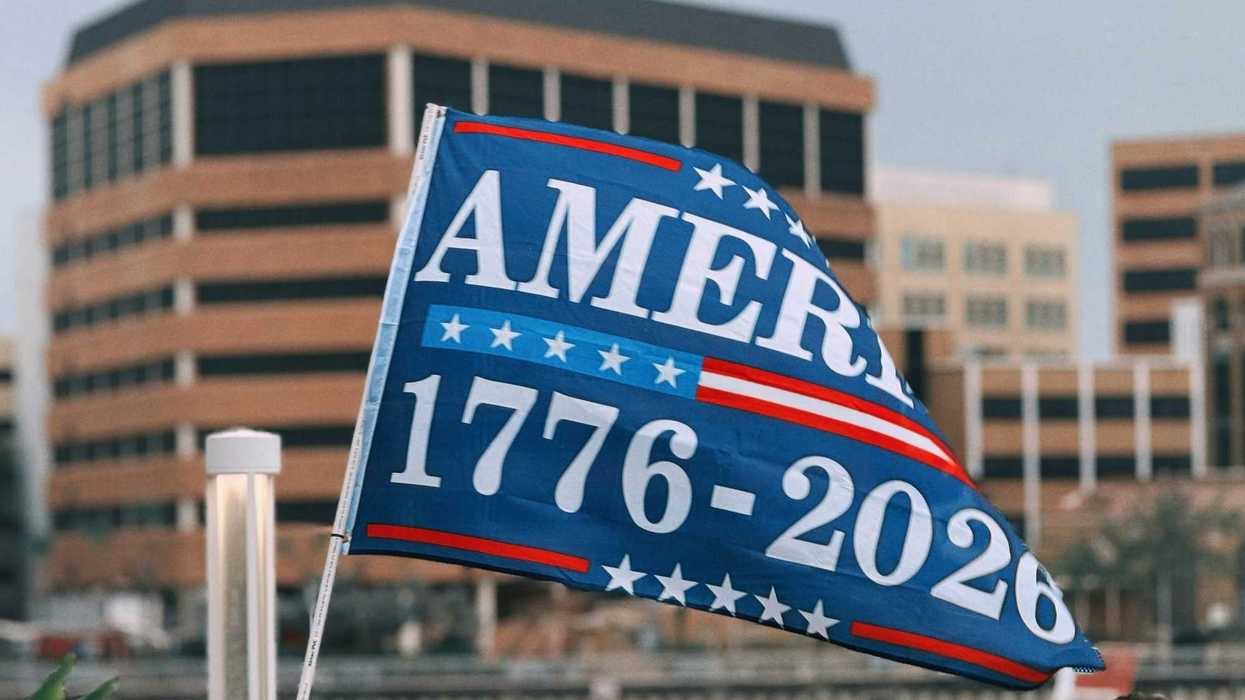
Since Trump and his followers make such a show of honoring the flag, how can I say that he desecrates the flag? The answer comes from the Pledge of Allegiance itself, which clearly states the meaning of the flag. Republicans recite the pledge at every gathering, and many Trump supporters fly the flag outside their homes; indeed, that is how they show everyone that they support Trump as President. But they clearly have no understanding of its meaning, and Trump actively dishonors it.
We all know the words of the Pledge: "I pledge allegiance to the flag of the United States of America and to the republic for which it stands, one nation under God, indivisible, with liberty and justice for all."
To understand why I say that Trump desecrates the flag, look at the words.
Let's start from the end: "with liberty and justice for all." The meaning of the phrase "for all" is unambiguous in its commitment to equality in liberty and justice. Equality is thus one of the three aspects that the Pledge says are essential to the nature of America; the other two are being "under God" and being "indivisible."
But for the 33% of our fellow Americans who are either poor or people of color, liberty and justice have always been limited. "How so?" you may ask. "Aren't we all free to do what we want?" Not really.
"Liberty" means having the opportunity to pursue life, to pursue your dreams. But for this segment of our citizens, there is little opportunity, starting with the fact that they are not given truly equal educational opportunity, and without that, the way forward is blocked.
"Justice" means that people are treated fairly and equally in both the courts of law and by society. While courts treat the poor and people of color fairly, they experience little social justice. Yes, there are government and other programs that help the poor and people of color with money and in other ways. But on balance, they suffer discrimination, not just from people but often at the hands of government, starting with the education they are offered.
But the desecration doesn't come from this reality; that's a fact of life. It comes from Trump actively working to lessen equality, to subvert efforts to increase equality for this segment of our citizens. He has prohibited all Federal agencies, as well as all public or private institutions that receive Federal funds, from having programs that promote diversity, equality, and inclusion (DEI). These programs have the purpose of providing disadvantaged Americans with greater educational and employment opportunities—the two areas that most affect their ability to exercise the right to pursue happiness promised by the Declaration of Independence.
The next important concept is "indivisible." The pledge was written in 1892, with the Civil War still fresh enough in the country's memory that pledging our country's indivisibility was of great importance.
For most of the 160 years since that war, regardless of regional, racial, class, or political differences, people felt we were all Americans, and all came together in moments of crisis. We were able to agree to disagree.
Today, that is no longer the case. The two almost equally divided halves of this country do not agree to disagree. Each side feels the other is a danger to the country's future.
Why has this extreme polarization happened? It happened because Trump has done two things. First, he engaged in vitriol and hatred when he categorized many immigrant Americans—particularly Muslim and Hispanics—in extremely negative terms, especially during his 2016 campaign, creating distrust and suspicion towards those groups among White supporters of Trump. And he routinely refers to Democrats in Congress as the enemy and evil. Second, he has labeled all those who disagree with him—whether Republican or Democrat—as an enemy, and he has routinely sought retribution against them, whether by having them investigated by the DOJ or promoting primary challenges against them.
Both of these actions foster an extreme us-versus-them dynamic. This dynamic has always been present in the United States, and indeed in most countries or communities, but the extreme nature of it is unheard of, with the one exception of times of war. For example, during WWI, all German-Americans were viewed with suspicion; during WWII, Japanese-Americas were actually interned in camps to keep them from aiding the enemy in any way.
And what is the meaning of "one nation under God?" It does not mean that we are all of the same religion, that there is a state religion. But it does mean that we follow God's teachings: an essential one, which is the cornerstone of all the great religions as well as humanism and the Declaration of Independence, is the Golden Rule, "do unto others as you would have them do unto you." It is essential to the practice of equality,
Do you see much of that present today? While 74% of Americans report believing in God, what does that mean? Even in the "born again" Evangelical heyday, when kids wore wristbands that asked, "What would Jesus do?", believers did not act as Jesus would have. It was sad. It would, unfortunately, be more accurate to say that, in reality, we are mostly a God-less nation; that money and greed rule, not God.
When Trump vilifies members of the LGBTQ community and seeks to stop or reverse the progress they have made in acquiring the rights that are due them under the Declaration; when he attacks the rights of transgender individuals to receive the treatment and support they need in order to pursue their right to happiness—those are not examples of following the Golden Rule or treating these groups as God's children. He is not treating these American citizens as being part of "one nation under God."
Finally, the Pledge is a statement of allegiance to the United States and its flag. But the pledge doesn't stop there; it states that the allegiance is to the principles that are the essence of the republic: "liberty and justice for all." The same principles that are found in the Declaration of Independence.
By acting so aggressively against the very essence of this republic as created by the Founding Fathers and as confirmed in the Pledge, Trump is desecrating the flag—more than the flag, he is desecrating America.
But unfortunately, Trump supporters apparently don't understand the meaning of the flag or the Pledge. If they did, they wouldn't be Trump supporters.
Ronald L. Hirsch is a teacher, legal aid lawyer, survey researcher, nonprofit executive, consultant, composer, author, and volunteer. He is a graduate of Brown University and the University of Chicago Law School and the author of We Still Hold These Truths. Read more of his writing at www.PreservingAmericanValues.com








The President Invited Iran to Bomb My Home