


The 1971 Powell Memo, the "Second Gilded Age," and Project 2025 can be viewed as interconnected stages of a long-term corporate and conservative project to reshape American society, prioritizing free-market capitalism, deregulation, and concentrated wealth. The Powell Memo provided the initial strategy, the Second Gilded Age represents its outcome, and Project 2025 serves as the current blueprint to solidify this structure for future generations.
Here is the connection between these three elements:
The 1971 Powell Memo (The Strategy) - Aggressive corporate lobbying, building think tanks (Heritage), court takeovers.
The Goal: It was a call to arms for corporate America to reverse what Powell viewed as a growing, dangerous antipathy toward the free enterprise system, citing environmentalism, consumer protection, and liberal academia.
The Strategy: Powell recommended a coordinated, well-funded effort to influence politics, education, media, and the courts. He suggested creating think tanks, monitoring textbooks, and aggressively engaging in judicial lobbying.
Result: It galvanized corporate spending, leading to the creation of the Business Roundtable and funding for organizations like the Heritage Foundation and the Cato Institute.
Authored by Lewis Powell (shortly before his appointment to the Supreme Court) for the U.S. Chamber of Commerce, this confidential memo was titled "Attack on American Free Enterprise System".
The Second Gilded Age (The Outcome) - Extreme inequality, Citizens United, deregulation, flattening wages.
The decades following the memo saw a significant shift in political and economic power, described by experts as a "second Gilded Age", a time of extreme income inequality and political influence concentrated at the top.
Wealth Concentration: The top 0.1% saw income growth while median wages flattened. The wealth of the top 10% skyrocketed, similar to the late 19th-century Gilded Age.
Corporate Captive Politics: Through increased lobbying and the legal restructuring of campaign finance—specifically the Citizens United v. FEC decision—corporations gained unprecedented ability to influence elections and policy.
Neoliberalism: The "dogma of neoliberalism" (tax cuts, deregulation, privatization) became difficult to challenge in politics or media, just as the Powell Memo envisioned.
Project 2025 (The Finalization) - Consolidating power, dismantling agencies, enforcing corporate ideology.
Project 2025, organized by the Heritage Foundation—one of the think tanks founded in the wake of the Powell Memo, is a modern, comprehensive update to the strategies laid out in 1971.
Dismantling the Administrative State: It aims to "bring the Administrative State to heel" by gutting federal agencies like the EPA, the Department of Energy, and the Department of Education, and by removing environmental and labor regulations.
Unitary Executive Theory: It proposes expanding presidential control over the Department of Justice, allowing the executive branch to solidify corporate-friendly policies without congressional oversight.
Cultural and Social Shift: It aims to "defang and defund" progressive movements ("woke culture warriors") by banning DEI programs and ending certain abortion access, aligning with Powell’s desire to challenge "disquieting voices" and "liberal concessions".
Project 2025 is the 21st-century culmination of a 50-year-old initiative to secure corporate and conservative dominance over the American economic and political system.
The “Gilded Age” was a rehearsal for our current "Second Gilded Age," as was Trump-45’s term a rehearsal for the Trump-47 term.
Path Forward: the “Gilded Age” (roughly 1870–1900) went on life support with a bloodbath at the ballot box in the 1894 midterm election, when conservatives lost more than 100 seats in Congress, the largest single turnover of power in American history. The Progressive Era, a period of widespread social activism and political reform, followed, spanning into the 1920s.
Our challenge recovering from the "Second Gilded Age" (1980s to the present) will be much more challenging; exceedingly more urgent. In 1894, the U.S. national debt was approximately 7% of gross domestic product (GDP). As of early 2026, the U.S. national debt is 122% to 125% of GDP. This situation has been exacerbated since 2000, when the U.S. national debt as a percentage of GDP was 33% to 35%. Americans can attribute this worsening situation to two non-popular vote presidents, Bush-43 and Trump-45. Directly, during their terms, and indirectly, with the aftermath of the 2008 Great recession and the aftermath of the COVID-19 pandemic.
From a fiscal standpoint, America can ill afford another non-popular vote president. While the Constitution allows state legislatures to determine the method of elector selection, the Framers did not mandate the winner-take-all (WTA) Electoral College system currently used by 48 states. This system concentrates campaign attention on a few "swing states" while rendering millions of votes in "safe states" effectively irrelevant.
"Nothing is more powerful than an idea whose time has come".-- Victor Hugo (1802-1885). With regard to the Electoral College, that idea is the National Popular Vote Interstate Compact (NPVIC).
NPVIC is an agreement among U.S. states and the District of Columbia to award all their electoral votes to the presidential ticket that wins the overall popular vote in all fifty states and the District of Columbia. It is considered a pragmatic, voluntary state-based initiative because it aims to ensure the winner of the national popular vote wins the presidency without requiring a constitutional amendment, operating instead within the existing Electoral College framework by utilizing states' constitutional authority to appoint electors. If enough states join the NPVIC to reach 270 electoral votes, the United States will effectively shift from a winner-take-all (WTA) regime to a national popular vote system for electing the President.
With Virginia’s adoption, the National Popular Vote Interstate Compact has been adopted by eighteen states and the District of Columbia, which collectively hold 222 electoral votes. The compact requires 270 electoral votes (a majority of the 538 total) to take effect. It currently needs forty-eight more electoral votes to become active.
In 2026, NPVIC will be a relevant issue in several state elections, particularly in Arizona, Michigan, Nevada, North Carolina, Pennsylvania, and Wisconsin. As the compact needs 48 more electoral votes to reach the 270-vote threshold, these purple or contested states are key battlegrounds where legislative control could determine whether they join the 19 jurisdictions already signed on.
Hugh J. Campbell, Jr., CPA, is a Governance, Risk & Compliance (GRC) professional and a student of W. Edwards Deming, the American statistician often credited as the catalyst for the Japanese economic miracle after WWII.





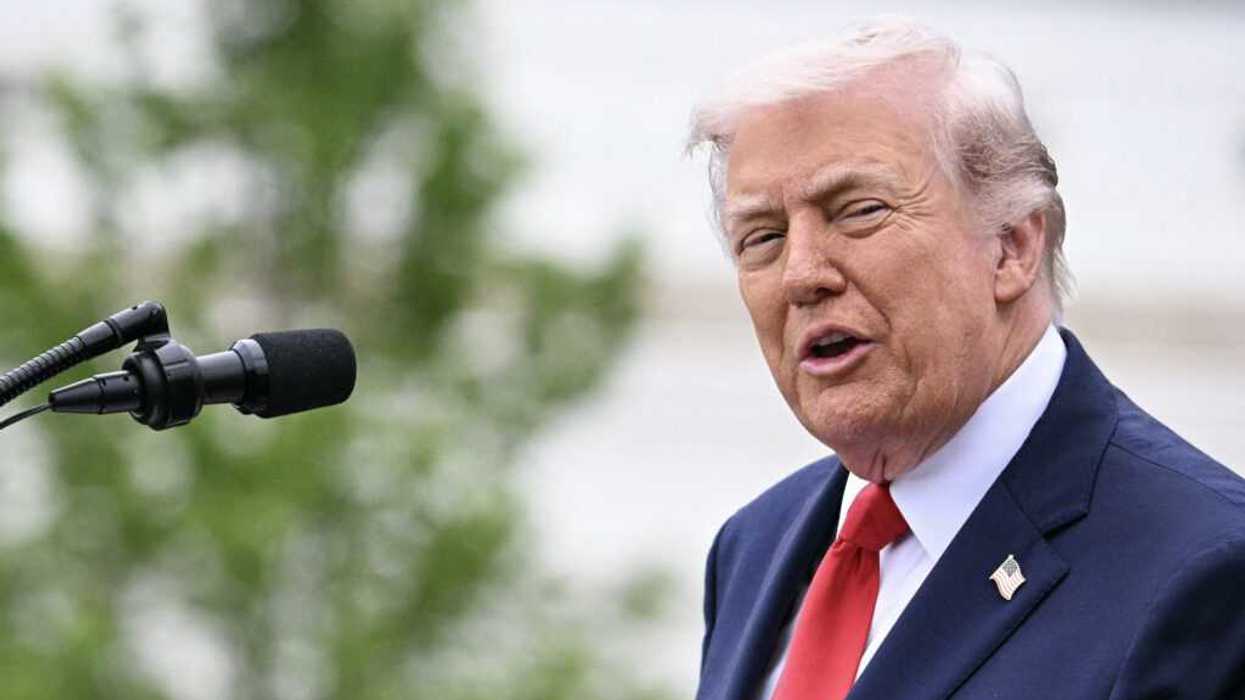



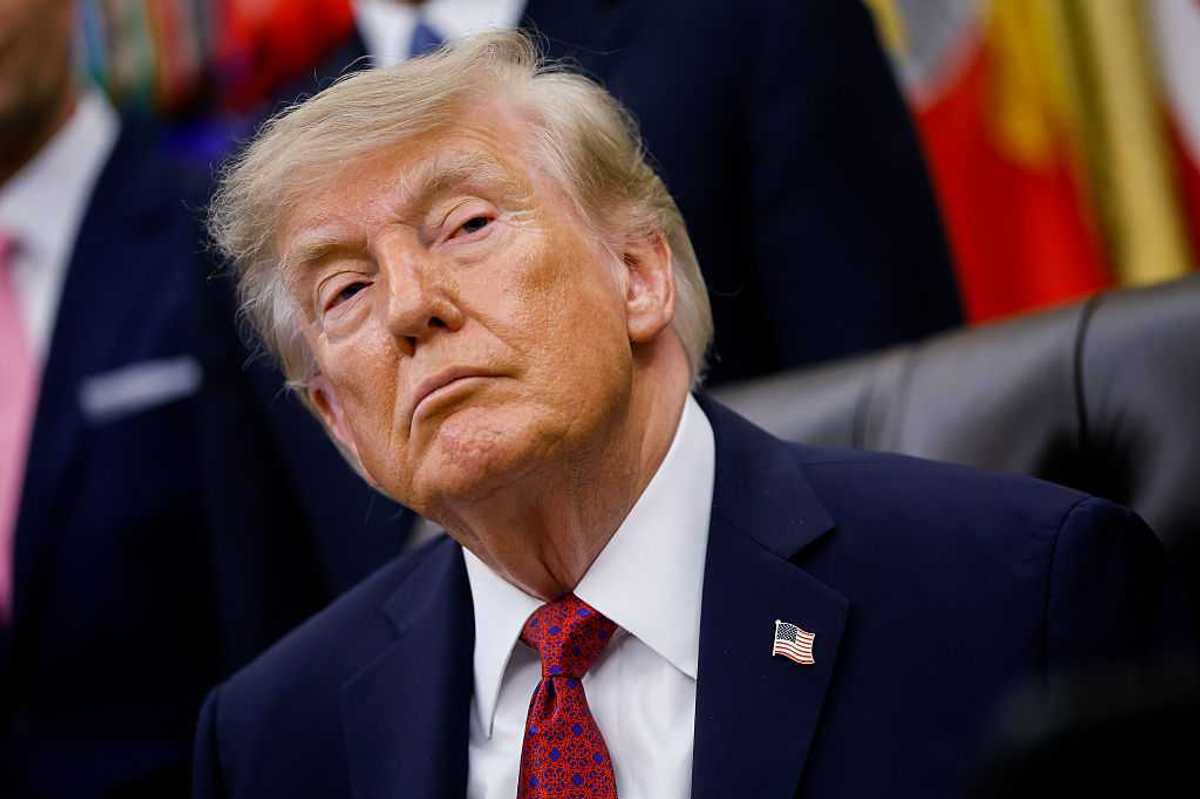
U.S. President Donald Trump speaks during a“ Steel Across America” event ahead of the 25th anniversary of the Sept. 11th attacks on the Ellipse near the White House on Sept. 8, 2026 in Washington, D.C. President Trump welcomed 9/ 11 first responders to the Tunnel to Towers Foundation’ s“ Steel Across America” event featuring a 16,900- pound, 21- foot steel beam recovered.
For Trump, even 9/11 is an opportunity
There was a reason organizers of the 9/11 ceremony in Manhattan told President Trump he could not speak at this year’s memorial service.
A good one, it turns out.
Because in a speech he gave on Tuesday in Washington, he did exactly what they were presumably worried about — he made it about himself.
According to The New York Times, Trump had wanted a speaking role at the service, but the National Sept. 11 Memorial and Museum, which oversees the site, said no, as they’ve maintained for the past decade-plus that the venue and event should be nonpartisan.
Trump has long used awful tragedies to either puff himself up, trash political opponents, or sell lies to the American people.
He blamed a deadly plane crash at Washington National Airport last year on diversity, equity and inclusion policies. He blamed Puerto Ricans for the devastation they endured after Hurricane Maria in 2017. He reportedly considered withholding disaster relief after the California wildfires based on the way affected regions voted. In an interview on Fox News meant to commemorate the 75th anniversary of D-Day in Normandy, he used the occasion to slam former House Speaker Nancy Pelosi…with graves of the dead behind him.
And now, as we approach the 25th anniversary of what many New Yorkers consider the darkest day in modern history, Trump has done it again.
He told a rambling, nonsensical story — one he’s told before — about going to Ground Zero just after terrorists flew two commercial jets into the twin towers. In the story, which no one has been able to verify, despite multiple attempts, he says firefighters had to carry him out of One Liberty Plaza, also known as the U.S. Steel Building, because they thought it was about to collapse.
As CNN fact checker Daniel Dale notes, there’s no evidence Trump went into this building, especially at a time when NYPD and NYFD had locked down the area. There’s no evidence that building was collapsing — in fact, it was deemed structurally sound and reopened within two months of the attacks. There’s no evidence he was carried out of it by firefighters.
But the lie isn’t even the worst part. Pretend it was all true — why would the leader of our country, and a New Yorker, decide to make that tragic day about himself?
Because that’s who Donald Trump is. He’s a malignant narcissist.
He’s also, incidentally, a terrible and ineffectual president, who’s made ill-fated decisions that he has to keep defending, and there’s nothing he won’t do to make himself look and feel better.
Within the first two minutes of his speech, he was cravenly using 9/11 to justify and promote his dumb war in Iran — two events separated by 25 years and 6,000 miles.
“And I will tell you, we’re right now fighting because we have a certain nation that wanted a nuclear weapon, they were very close to getting it, and now they have no chance at getting it. They will never have a nuclear weapon. Iran will not have a nuclear weapon. And they’ve been punished greatly. As you know, we’ve really taken it to them.”
As a New Yorker who lived through 9/11, still one of the worst days of my life, I’m utterly sickened by Trump’s crass, political, and self-promotional framing of that awful day.
And I’m relieved he won’t be given a platform to do it again on Friday’s anniversary in lower Manhattan.
Because for Trump, everything is his for the taking, and absolutely nothing is sacred.
S.E. Cupp is the host of "S.E. Cupp Unfiltered" on CNN.