

"If the U.S. government kills even one of our citizens for peacefully protesting, I will leave the country." Once this line was crossed, I would know that we could no longer claim to hear warning shots or catch whiffs of fascism. It will have arrived.
I said this to my therapist in November 2024 when discussing what would be the final straw for my relationship with America, the thing that would mean my family would leave this country behind.
And then it happened.
In January, a U.S. government official in Minneapolis shot and killed Renee Good, who was exercising her right to monitor Immigration and Customs Enforcement’s outsized and violent presence in Minneapolis.
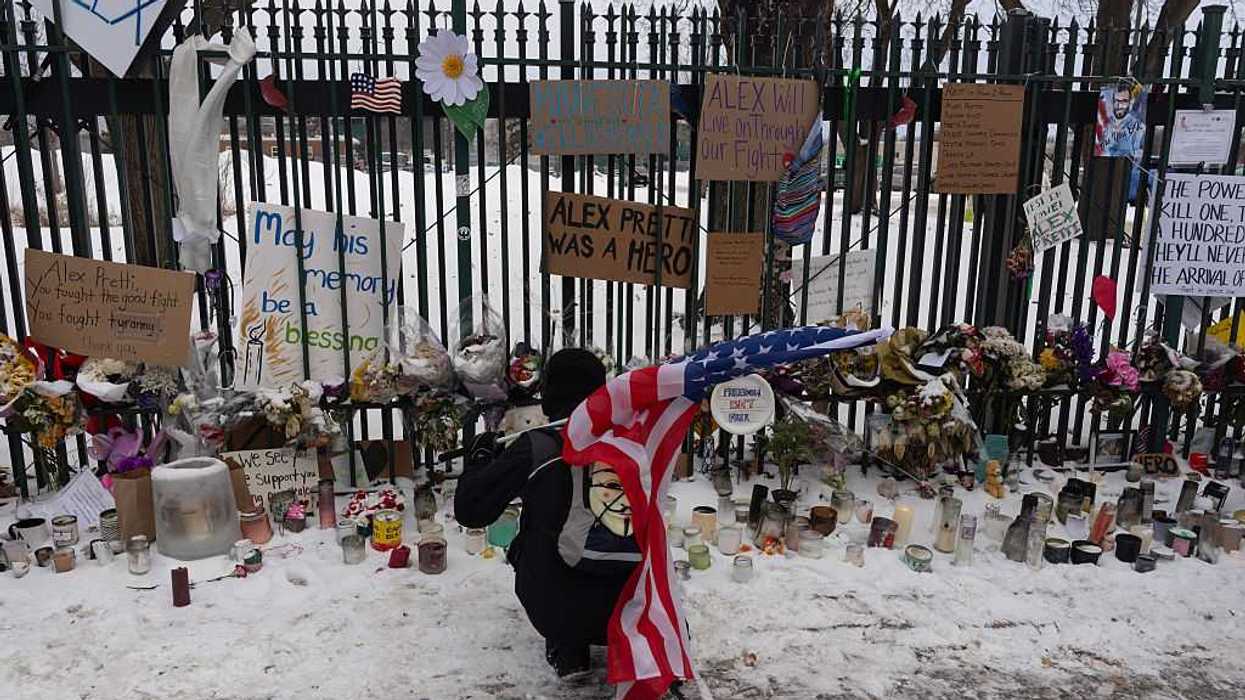
Seventeen days later, the Department of Homeland Security struck again, when a Customs and Border Protection officer shot and killed Alex Pretti, who was recording federal law enforcement action on his phone as ICE and Customs and Border Protection responded to protests over its murder of Good.
Two more deaths at the hands of agents happened, one in Chicago and another in Rio Grande City, Texas. Reports show that 32 people died in ICE custody in 2025. Recently, the family of a 19-year-old Mexican boy memorialized the teen who died in ICE custody.
As an immigration lawyer, I have memorized the stories of the over 100 people I have represented in claims for asylum in the United States; I can’t forget their stories detailing the failure of state protection and the resultant persecution they suffered. Though my clients’ cases are each unique, those that involve harm on account of political opinion almost always follow a similar pattern.
That pattern begins with the murder of peaceful protestors. Starting over a decade ago in Venezuela, Colectivos have ridden their motorcycles through demonstrations and picked off protestors with automatic weapons.
In 2018, the Nicaraguan Sandinistas slaughtered hundreds of students protesting social security reform.
Earlier this year, Iranian security forces massacred tens of thousands of protestors.
In my dual role as a clinical law professor at the University of Illinois College of Law, my students and I represent immigrants fighting against deportation. I believe so deeply in the U.S. Constitution’s mandate that all people are entitled to due process that I zealously advocate for those who cannot defend themselves and teach young lawyers to do the same.
In 2016, after the vitriol spewed by then-president-elect Donald Trump about immigrants (and so many others), I felt defeated and disenfranchised. Though fleeing to Canada was an option, I stayed and fought.
In 2024, feeling even more disillusioned, I expanded my prospective refuge to include Ireland, Australia, and New Zealand, but I stayed.
I am grappling with what to do in 2026, now that the one thing that I said would convince me to leave has happened. Not once, but twice in close succession. I don’t know if I can stay to fight yet again. After 2028, I wonder if I will have any choice left in the matter.
A little over a year ago, a sound bite from an interview I did with a Chicago journalist ended up on a National Public Radio broadcast. Hearing my voice and name on a national story filled me with anxiety.
That morning, I was loading my children into the car for daycare when a black SUV pulled up in front of my house. I was frozen with fear that government agents were going to drag me away in front of my then-four-year-old and two-year-old children, leaving them alone, strapped in the Subaru. This response may seem outsized, but not when agents are detaining U.S. citizens.
As a white U.S. citizen, I have not endured generations of racism and bias, but in light of the combination of experiences of my clients and the secondary trauma I’ve endured as a result, my fear was not unfounded.
When I contemplate leaving the United States, my job, my extended family, and friends behind, I do so with myself, but more so with my children in mind. I strive to raise my children with the values my husband and I espouse: that all human life is precious, and none is more worthy of education, love, freedom, or safety than is another.
This aspiration feels unachievable in America today. Undergraduate students at the campus where I work feel empowered to post an image and accompanying text endorsing the execution of American citizens who dare to speak out in defense of their foreign-born neighbors.
These members of the registered student organization, Illini Republicans, believe—and want to indoctrinate others to believe—that I am a traitor to the U.S. and that the government would not only be justified in killing me, but that it has a mandate to do so.
I am a traitor because I teach the importance of social justice, equality, and the government’s role in safeguarding human rights for all.
If I, a white U.S. citizen professor enjoying the protections of tenure, feel terrified, I can only imagine the immense fear felt by young, undergraduate, and graduate students who must go to their classes not knowing whether the person next to them deems them to be one of the “enemies” deserving of democide. Or the fear my clients feel simply exists in their day-to-day lives.
U.S. government action is fueling the fire behind groups like the Illini Republicans. Recent reports show over 68,000 people were being held in ICE detention facilities across the country. Despite what authorities claimed about targeting the worst criminals, 73.6% of those people have no criminal convictions. And reportedly, 20 people held overnight turned out to be U.S. citizens.
According to ICE’s own reporting, 35 people died while in ICE custody from the day Trump took office on January 20, 2025, through January 6, 2026. At least six more died in the fewer than three months that followed. And these counts don’t include those injured or killed by agents in the field.
To be sure, I will never know what it is like to walk in the shoes of my clients. But I do understand the intense fear of a lawless and violent government that has demonstrated that no one is impervious to its cruelty.
I have never felt less safe than I do now. In my own home. In my own country: America.
Lauren R. Aronson is a clinical professor at the University of Illinois College of Law, where she founded and directs the Immigration Law Clinic, and a Public Voices Fellow with The OpEd Project.