

When something is cruelly racist, the average American wants to pin it on the prejudiced feelings of individual actors. Here, a few “bad apples” are responsible for the gut-wrenching fate of Kevin González – an American teen who recently died from cancer after briefly reuniting with his deported parents in México. But the real force behind this cruelty against Mr. González and other Latinos is driven by something more sinister and less recognizable than a bad batch of fruit. The literal violence raining down on Latinos is being caused by an unstable racial hierarchy – a long-standing system rooted in using Black people as a yardstick for how Americans judge the worth of other people of color, including Latinos.
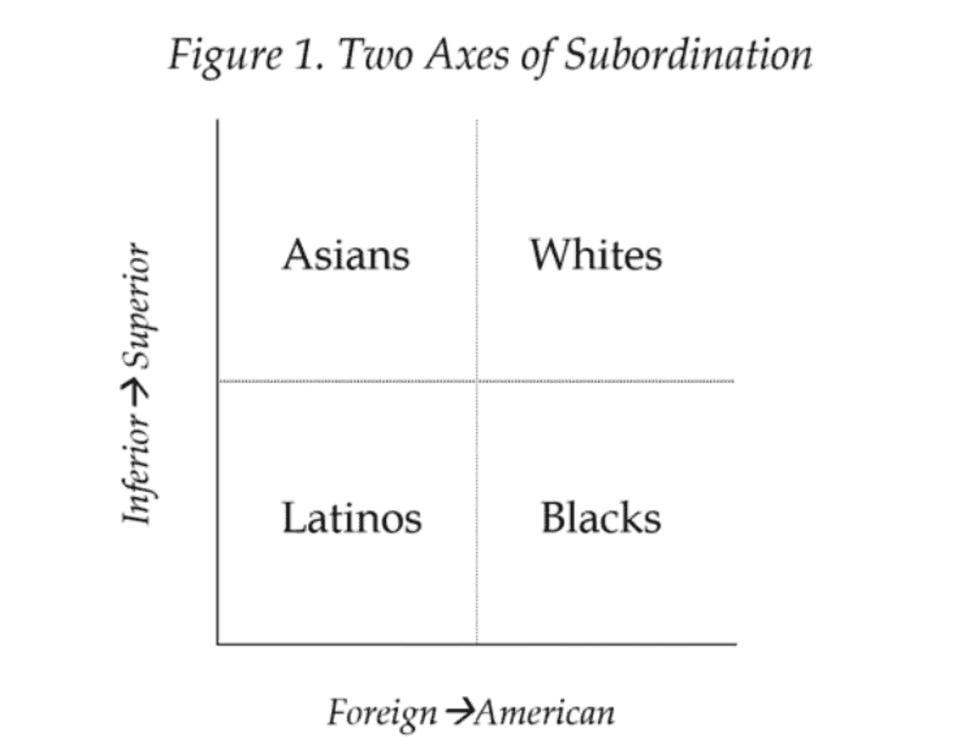
This hierarchy has no feelings. It simply follows an internal logic aimed at preserving White Americans’ political clout, economic power, and distinctiveness from people of color. This system considers Whites the most superior and American group, reflected in their collective advantages in politics and society (figure 1). Moreover, although this system casts Asian people as foreigners, it also treats them as superior to Latinos and Blacks, justified by stereotyping all Asians as well-to-do and less impertinent than other racial “minorities.” And Latinos? Well, they are not confused for being White, but many of them are deemed too much like Black people –which matters for how the hierarchy handles Latinos like Kevin González. The average Latino in the U.S. is Mexican, native-born with immigrant parents, bilingual, votes Democratic, and wants economic mobility without forfeiting their culture. This combo of cultural difference and left-of-center politics is what the racial order finds most threatening now.
The racial hierarchy’s cruelty against Kevin González and other Latinos is steeped in anti-Blackness. Indeed, it is a testament to this mainstay that all previous immigrant groups—Irish, Italians, Jews, Irish, and others—gradually assimilated and climbed in socio-economic status, to the point that the system now deems them fully White. But Black people, who have been here longer than all these groups and have worked just as hard if not harder, have yet to be fully integrated into the American family. In racial terms, they remain the hierarchy’s personae non gratae.
Like previous immigrant waves, Latinos are now confronting this decision: to assimilate and become White or remain culturally and politically distinct, like Black Americans. The hierarchy offers this choice to Latinos as alleged foreigners, even though two-thirds of them are born here in the U.S. Indeed, it is no coincidence that President Trump’s anti-Latino politics took shape immediately after the presidency of a Black president who drew extensively on Latino support. Remember, the logic of America’s racial hierarchy is that proximity to Blackness is Blackness, so the system clamps down. It is time for Latinos to recognize this dynamic, to value it as a positive development, and to use this instability in the system to begin dismantling it.
Hold on! But didn’t non-trivial shares of Latinos vote for President Trump and many are now actively helping him deport their co-ethnics? Please resist this lazy logic. All systems of racial oppression, including our own, thrive on the consensus of some of the oppressed. Latinos for Trump. Latino ICE agents. Latino apologists for the cruelty against their co-ethnics. These are all individuals who acutely sense their proximity to Blackness and who find it too close for comfort. They recognize the high price of being Black in America, do not want to be confused with them, and so publicly and fervently signal their differentiation from Black people by lumping “bad” Latinos with them – including those like Kevin González and his undocumented parents.
Despite these dastardly moves, it is essential to recognize that the center of gravity among the larger Latino population is still left-of-center, especially on racial matters. Getting this diagnosis right is imperative if we want effective, durable solutions to this cruelty. One solution: stop focusing on changing negative feelings toward Latinos. Racial prejudice is deep-seated and resistant to change. Focus instead on converting people’s indifference into active opposition to this racial system. Indifference is what lets the hierarchy operate unfettered. Second, speak up about the system’s cruelty against Latinos, Blacks, and other people of color. Focusing your peers’ attention on this structural dynamic nudges them to see that even without personal prejudices, a system organized around race is still racist if it privileges – intentionally or not—one group over others. Third, plan to vote. Having a plan to participate makes political action more likely. True, your own individual vote is not going to determine an election. But sitting out a context has major repercussions. Our politics offer only two major choices (Democrats versus Republicans) and is most responsive to large numbers of voters with similar preferences. The majority of Latinos are still Democrats and opposed to cruelty now targeting their group and others. Do not waste this majority by thinking others will carry the load for you – that, too, is how America’s racial hierarchy thrives.
How Anti-Black Racism is Fueling the Widespread Cruelty Against Kevin González and Other Latinos was first published by California Latino News and was republished with permission.Dr. Efrén Pérez is professor of political science and psychology at UCLA, where he directs the Race, Ethnicity, Politics, & Society (REPS) Lab. He is the author of several award-winning books, including Diversity’s Child: People of Color and the Politics of Identity. His data-based research can be accessed at https://eoperez.com











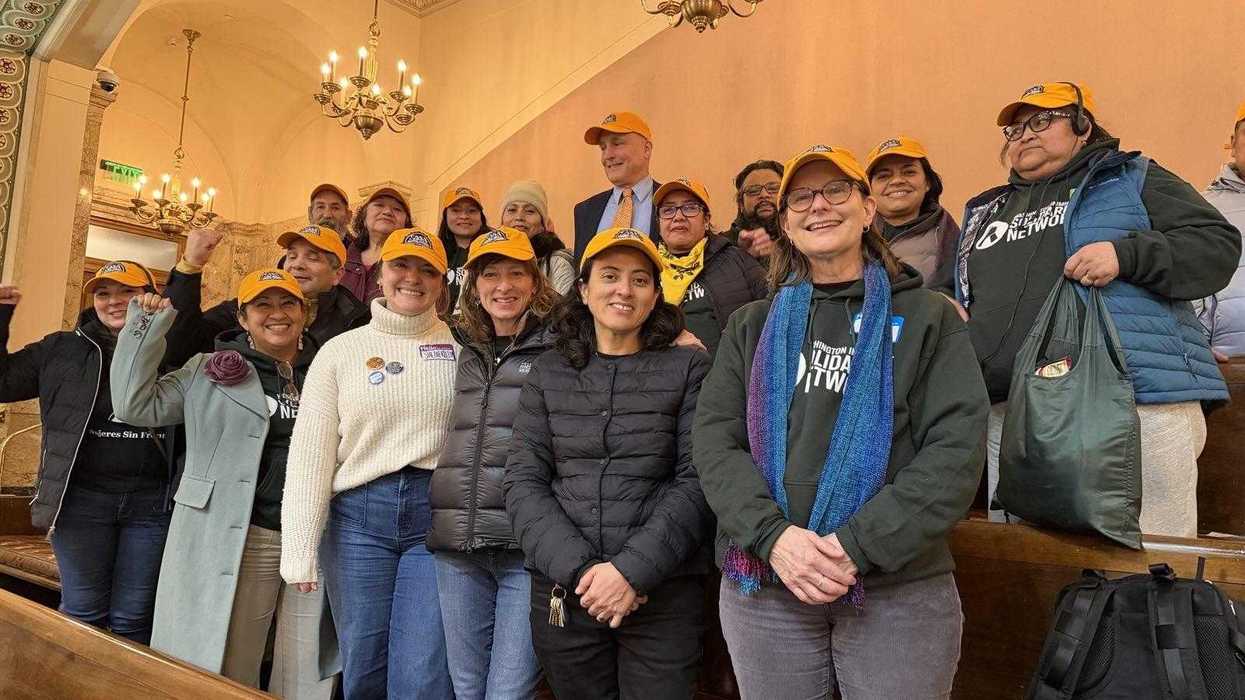
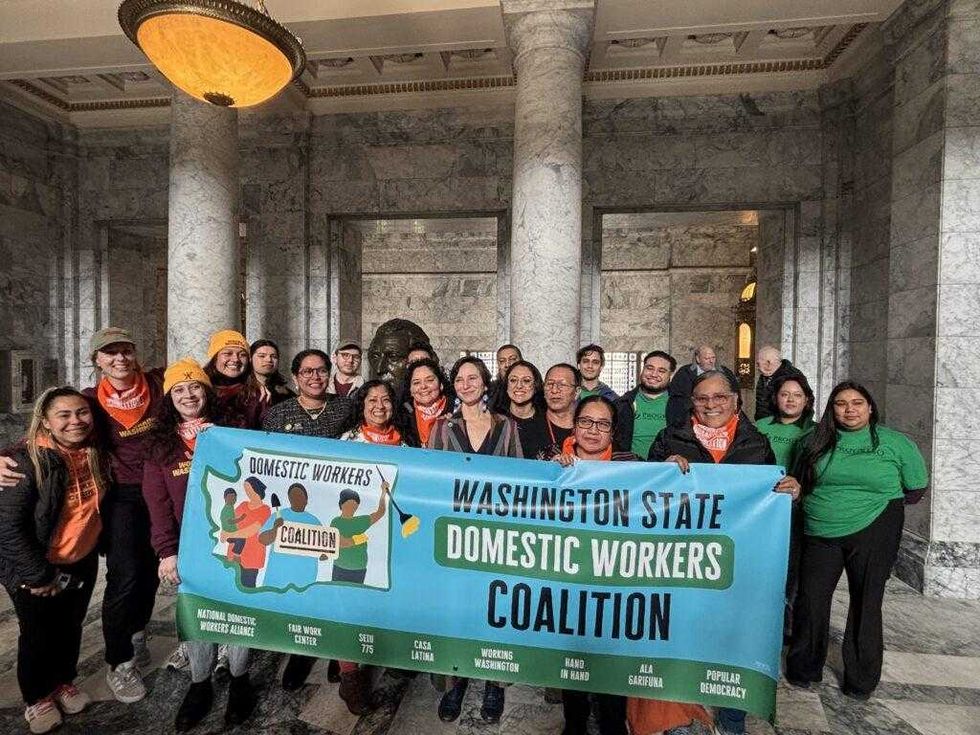 State Sen. Rebecca Saldaña, center, stands with members of the Washington State Domestic Workers Coalition at the state Capitol on Feb. 28, 2026. The Domestic Workers Bill of Rights passed in the House that day, before being signed into law in March. (Photo courtesy of Casa Latina)