


KENOSHA, Wis. —Community leaders, faith leaders and civil rights advocates gathered this month to condemn anti-immigrant posters that appeared across Kenosha, as police continue investigating who is responsible.
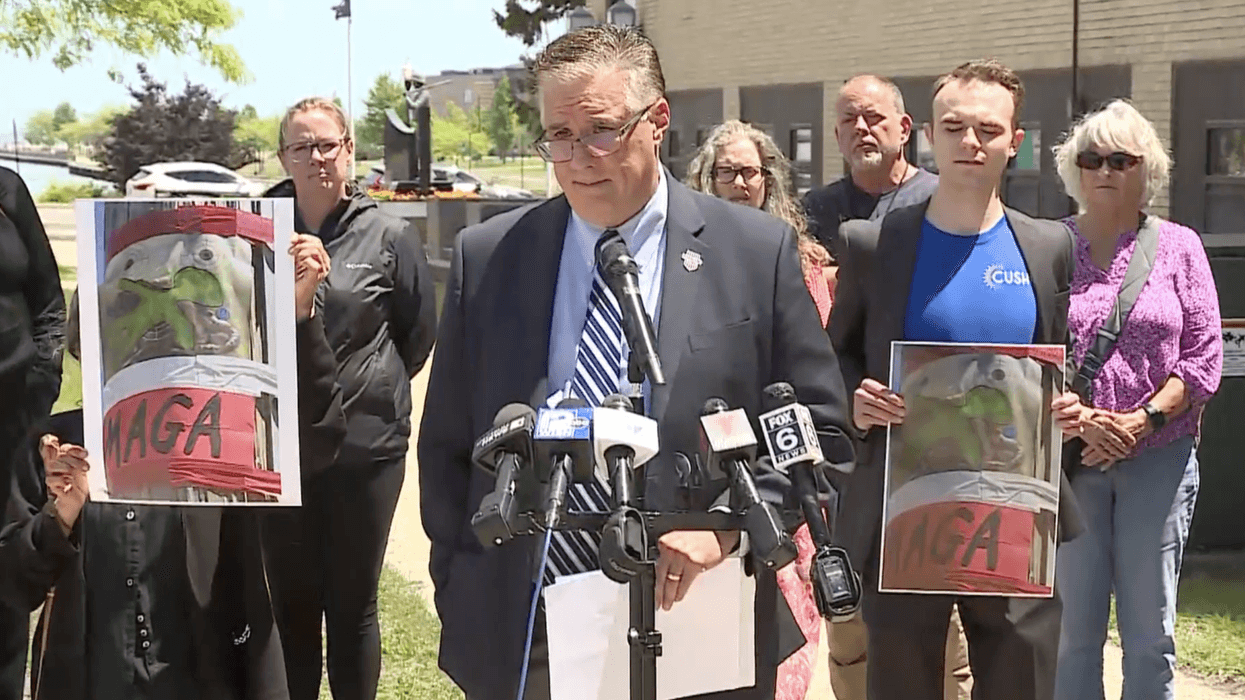
The posters, which depicted a green alien inside of a firearm target alongside the acronym “MAGA,” were first reported in early June after residents discovered them posted on telephone poles throughout the city, according to Racine County Eye. WISN 12 reported the Kenosha Police Department opened an investigation after receiving reports of the signs.
During a press conference hosted by Forward Latino, a national Latino civil rights and advocacy organization based in Wisconsin, President Darryl Morin called the posters an attempt to intimidate immigrant communities.
“This messaging, these posters, is unacceptable. It’s wrong, and it’s un-American,” Morin said. “Regardless of whom these posters are intended to target, they promote intimidation, discrimination, and violence.”
Morin said the organization has documented an increase in hate incidents across the country in recent years and encouraged anyone who experiences threats or harassment to report them to law enforcement and advocacy organizations, such as theirs.
Community member Angeles Arzate said she discovered one of the posters while driving her children to school and immediately reported it after finding additional signs throughout the city.
“To see something like this in the city of Kenosha, it’s really hurtful,” Arzate said during the press conference.
According to Spectrum News 1 Wisconsin, community organizations said similar posters have also been reported in Waukegan and North Chicago, Illinois.
According to WISN 12, Waukegan police said the same posters have been appearing there for weeks, only half an hour away.
Faith leaders joined the coalition in condemning the displays, giving their own remarks during press conference.
“These anti-immigrant posters are a symptom of a much deeper issue,” said the Rev. Wesley Isberner of Congregations United to Serve Humanity. “A rampant hatred of our immigrant and asylum-seeking neighbors has taken root in our country, including here in Kenosha, and this is dangerous.”
Residents who encounter one of the posters should report it to the Kenosha mayor’s office so city officials can document and remove it as part of the investigation, speakers said during the news conference.
As of late June, no arrests or suspects had been publicly announced. WISN 12 reported the investigation remains ongoing.
Community leaders condemn anti-immigrant posters in Kenosha as investigation remains open was first published on WI Latino News and was republished with permission.
Angeles Ponpa is the Managing Editor of Latino News Network Midwest, overseeing Illinois Latino News, Wisconsin Latino News, and Michigan Latino News. She is based in Illinois.













 State Sen. Rebecca Saldaña, center, stands with members of the Washington State Domestic Workers Coalition at the state Capitol on Feb. 28, 2026. The Domestic Workers Bill of Rights passed in the House that day, before being signed into law in March. (Photo courtesy of Casa Latina)