


In America’s 250-year history, only five wars were formally declared by Congress as required by Article I of the U.S. Constitution. They and the respective presidents were: the War of 1812 (James Madison), the Mexican-American War (James Polk), the Spanish-American War (William McKinley), World War I (Woodrow Wilson), and World War II (Franklin D. Roosevelt).
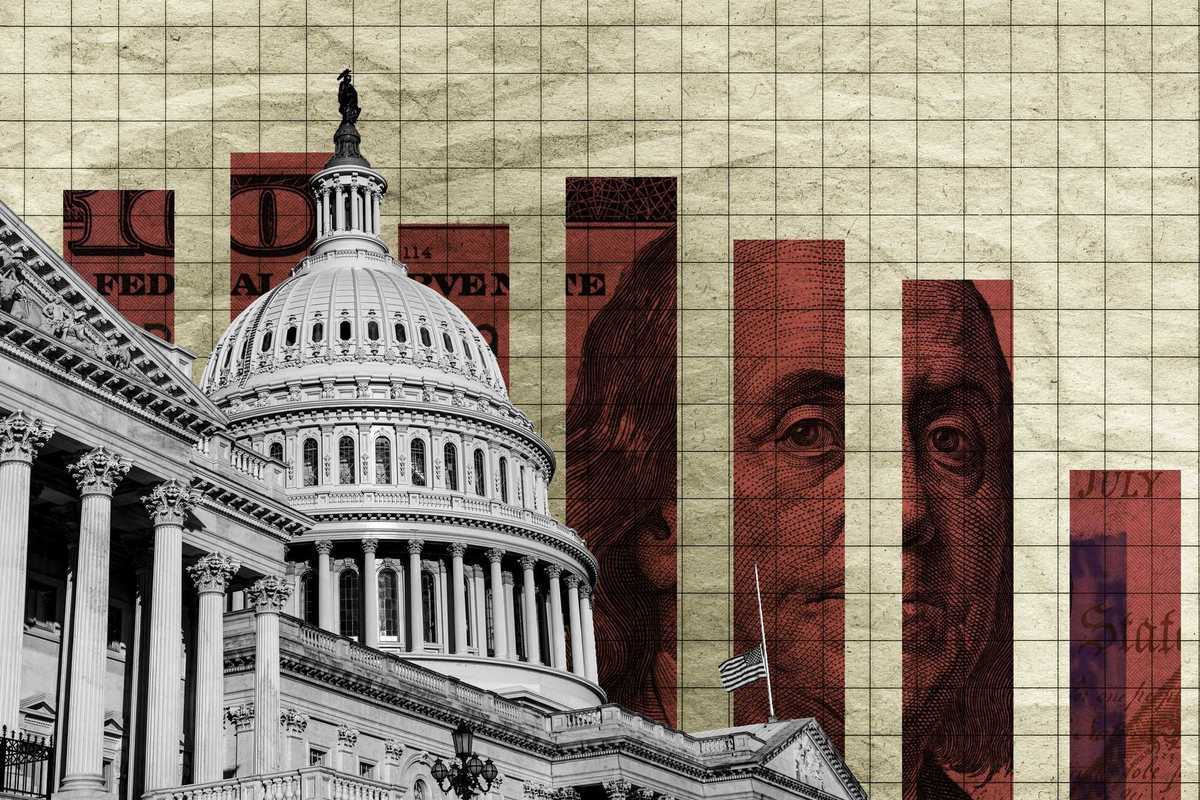
Many Americans may not fully comprehend the magnitude of military casualties, exceedingly high financial costs, and public opposition to the six most recent wars (1950-present) that were not completely authorized by Congress.
The 1973 War Powers Resolution (WPR) attempted to constrain presidential power. However, presidents have exploited its many loopholes, and many in Congress view the resolution quite differently. With the information presented below, you may concur that it’s high time to tighten up the WPR.
Korean War (1950-1953)
President Harry S. Truman deployed forces in Korea without a complete congressional war declaration. The “police action” resulted in 36,574 military deaths and ~$30 billion financial cost; the majority of Americans opposed the conflict.
Vietnam War (1955-1975)
Presidents Dwight Eisenhower, John F. Kennedy, Lyndon B. Johnson, Richard Nixon and Gerald Ford were in power during the Vietnam War, which brought about 58,220 military deaths, a ~$168 billion price tag, and reached a peak opposition of 61% due to high casualties and the lack of a clear exit strategy. In Vietnam, the conflict is labeled as “The American War.”
Persian Gulf War (1990-1991)
President George H.W. Bush launched `Operation Desert Storm’ to expel Iraqi forces from Kuwait, whereby 382 military deaths occurred and $61 billion was spent. Since a quick, decisive victory was achieved, only 20-25% of Americans opposed the war, making it the only unauthorized war in which public opinion favored the conflict.
War in Afghanistan (2001-2021)
President George W. Bush launched `Operation Enduring Freedom’ in Afghanistan in response to the 9/11 attacks. The 20-year conflict brought about 2,456 military deaths, a $2.3 trillion cost, and the majority of Americans opposed the congressionally unauthorized conflict as it was perceived as an endless `forever war.’
Iraq War (2003-2011)
President George W. Bush was also responsible for the unauthorized war in Iraq, where “weapons of mass destruction” were not found, 4,418 U.S. casualties occurred, the cost was $2-3 trillion, and 63% of Americans opposed the conflict.
Iran War (2026-present)
Donald Trump’s executive action started the Iran War on Feb. 28. In less than 150 days of the conflict, 18 U.S. military deaths have occurred, and 624 U.S. military personnel have been injured. The full theatre financial cost will exceed $100 billion. Around 70% of Americans oppose the conflict due to: 1) lack of a coherent reason to start the military action, 2) fear of a broader Middle Eastern regional escalation, 3) lack of a clear exit strategy, and 4) Trump has claimed at least 38 times the U.S. has a deal or ceasefire with Iran (CNN).
War Powers Resolution of 1973
The WPR was designed precisely to restore the constitutional balance envisioned in Article 1, Section 8, which grants Congress the sole power to declare war.
In 1973, Congress viewed the WPR as a vital constitutional check to ensure one person could not drag the nation into an undeclared war. However, since 1973, many presidents have argued that the law unconstitutionally restricts the Commander-in-Chief’s ability to respond quickly to foreign threats and national emergencies.
Let the gravity of the following information sink in and decide if putting more teeth into the WPR is warranted:
- 102,248 U.S. military personnel have been killed in America’s six congressionally unauthorized wars,
- About 4.1 million of 9.1 million veterans who are receiving Veterans Administration medical care participated in the unauthorized wars
- Approximately $5 trillion ($5,000,000,000,000) of taxpayer funds has been spent to fight the illegal wars.
WPR reformation suggestions
At least four changes to the WPR need to be made “if” Americans want to end unauthorized wars.
- The statute needs to be amended to explicitly define military engagements to include fiber-optic guided drones, precision missile attacks, nano-surveillance helicopters, unarmed surface vessels, special operations raids, and cyber warfare, all of which did not exist in 1973.
- The President must apprise Congress within 48 hours of any initiated military conflict, or all Pentagon funding would be put on hold.
- The President has seven days after an initiated attack to get congressional approval of the military action, or all Pentagon funding is put on hold.
- Any member of the House or Senate can file a petition to force a binding, non-amendable floor vote on whether to authorize or defund an active military conflict.
We the People
How do you assess the six major U.S. military engagements since 1950 that proceeded without explicit congressional authorization, and should the War Powers Resolution be modernized to prevent similar outcomes? Consider sharing your perspective with your Representative and Senators, especially given concerns that any future U.S.–Iran conflict under President Trump could risk becoming another prolonged “forever war,” echoing America’s 20‑year involvement in Afghanistan.
Steve Corbin is a Professor Emeritus of Marketing, University of Northern Iowa, and a non-paid freelance guest columnist contributor to 158 newspapers and 47 social media platforms in 44 states.