


Skip to content
Search

Latest Stories

Follow Us:
Top Stories

After huge progressive Michigan win, El-Sayed faces a tougher test

Opinion

After huge progressive Michigan win, El-Sayed faces a tougher test

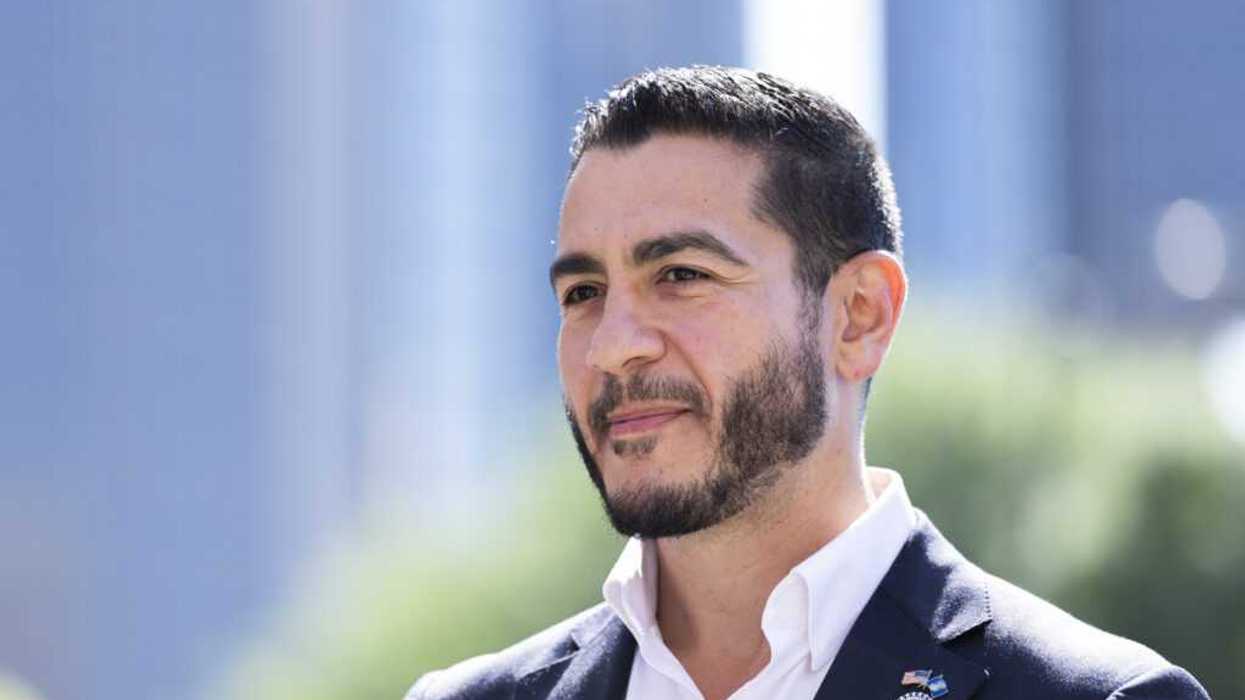
Democratic Senate primary winner Abdul El-Sayed arrives to a press conference in front of the Spirit of Detroit statue on Aug. 5, 2026, in Detroit, Michigan. El-Sayed called on Michiganders to unite against Mike Rodgers as well as challenging him to multiple debates.

(Finn Gomez/Getty Images/TCA)

Far-left progressive Abdul El-Sayed is the Democratic nominee for Senate in Michigan, a swing state that Donald Trump won twice.

It was the first major test of an ascendant progressive wing of the Democratic Party looking to see how far they could push their agenda outside of liberal strongholds like New York City — and he passed it. But just barely, and the warning signs on the horizon are flashing red.


See, El-Sayed defeated moderate Rep. Haley Stevens by just a percentage point — winning 48.5% of the vote to her 47.5% — and thereby winning a plurality of the Democratic vote, not a majority.

That means he’s got some work to do between now and November.

He’s, as my colleague and Michigan native Jamal Simmons put it, a very talented “political athlete,” but Michigan Democrats — like all Democrats, it seems — are deeply divided on which direction to take the country, and which messages will work best to win big in November. And you better believe the general election will expose all the ugly and treacherous fault lines.

While the issue of Israel has been front-and-center — intentionally put there by many progressives who believe it a defining one, for better or worse — there are other divides in the party that candidates like El-Sayed will have to reckon with, and quickly.

One of the major schisms on the left right now is between progressives and Black voters, many of whom, especially older Black voters, aren’t supportive of the socialist agenda these candidates are openly pushing, and prefer instead moderate candidates who are focused on kitchen-table issues.

To wit, Stevens was leading among Black voters in Michigan by a whopping 46 points before the primary, and she delivered them on Tuesday night.

Of the 12 Michigan counties with large Black voter populations, El-Sayed won just five, and Stevens won seven. He also lost all of metro Detroit, the state’s largest Black-majority city, where Stevens won handily, by 60%.

El-Sayed and another far-left progressive candidate — William Lawrence, who also won his primary in Michigan’s 7th District — have earned the ire of Black leadership, with revered party elder Rep. Jim Clyburn scolding the former for not having more Black support at his rallies. Likewise, a PAC for the Congressional Black Caucus also released a statement telling their supporters not to vote for Lawrence over comments he made about Israel and Black leadership.

So, suffice it to say, El-Sayed will have to do what other progressives like Sen. Bernie Sanders could not — bring Black voters out to cast their ballots for him.

The questions, if not the answers, are clear. With Stevens out, will moderate Black voters simply stay home? Could they possibly vote for Republican Mike Rogers, who lost to moderate Dem Elissa Slotkin in 2024 by less than .3%?

Will Black leaders like Clyburn change their tune about El-Sayed now that he’s officially the nominee? If New York City Mayor Zohran Mamdani’s race was any indication, the answer is no — Clyburn endorsed his rival, the more moderate Andrew Cuomo in that election.

Can El-Sayed and others, who had to run far to the left to engage their base in a primary, make an effective pivot to the center in time for November? Will they risk alienating their supporters if they do?

It’s a tricky road ahead for an energized and emboldened group of candidates who are about to test out messages and agendas to a much wider audience, and fend off all the scrutiny that comes with that.

Either El-Sayed will prove this new wave of progressives could be key to turning swing states blue, retaking the majority, and reinvigorating a lackluster Democratic Party, or Dems will be wishing, come November, that they stuck with the safer choice.

S.E. Cupp is the host of "S.E. Cupp Unfiltered" on CNN.

Read More

Ross Perot

American businessman and politician Ross Perot, Annapolis, Maryland, 1992.

(Photo by Arnold Sachs/Consolidated News Pictures/Getty Images)

Perot 2.0

On February 20, 1992, Texas businessman Ross Perot appeared on Larry King Live and set in motion a significant challenge to the two-party status quo. I’m not asking to be drafted. But if the people want to register me in all 50 states, I’ll promise you this: between now and the conventions we’ll get both parties’ heads straight.

Hundreds of thousands of Americans responded. Volunteers put him on the ballot. By June he was leading in the polls. Even after dropping out of the race for a month (someone should write a book about why he did that), he received 20,000,000 votes.

Keep ReadingShow less
An Independent Just Broke Through in Alaska — As Republicans Try to Kill the System That Made It Possible

Bill Hill

Bill Hill Facebook

An Independent Just Broke Through in Alaska — As Republicans Try to Kill the System That Made It Possible

Independent Bill Hill is heading to the November ballot after finishing second in Alaska's Aug. 18 top-four open primary, setting up a race against Republican incumbent Rep. Nick Begich III for the state's at-large US House seat. With 396 out of 403 precincts reporting, Begich led with roughly 46.12% of the vote to Hill's 30.89%.

In Alaska's system, all candidates run in a single primary. The four candidates with the highest vote totals are then placed on the November general election ballot. Voters use ranked choice voting to rank those four candidates based on their preferences.

Keep ReadingShow less
Political Corruption Is Often Not a Voting Issue in America

electoral fraud/voter apathy/totalitarism

Getty Images - digitally generated image

Political Corruption Is Often Not a Voting Issue in America

Almost every week, there seems to be another story about the pay-to-play ethos that is dominant in Donald Trump’s Washington, DC. On July 30, the Wall Street Journal added a new one to the list.

The Journal described the president’s fervent interest in fundraising and how he checks almost nightly with his top fundraiser, Meredith O’Rourke, to find out “which companies and donors have cut checks and which haven’t, and for how much.” The story highlighted the way she channels his interest into making her pitch.

Keep ReadingShow less
Affordability Crisis - Role of Non-Popular Vote President’s  SCOTUS Appointees

Silhouette of a hand holding a vote putting in a ballot box in front of the national flag Stars and Stripes of USA.

Getty Images

Affordability Crisis - Role of Non-Popular Vote President’s SCOTUS Appointees

The 21st-century Supreme Court Justices appointed by presidents who did not win the popular vote have fundamentally reshaped the affordability crisis by dismantling federal regulatory authority, weakening consumer protections, and expanding landlords' and local governments' property rights over renters.

Specifically, five current justices fit this description: Chief Justice John Roberts and Justice Samuel Alito (appointed by George W. Bush following the 2000 election), alongside Justices Neil Gorsuch, Brett Kavanaugh, and Amy Coney Barrett (appointed by Donald Trump following the 2016 election). This conservative supermajority has heavily influenced cost-of-living metrics through historic rulings in administrative, housing, and financial law.

Keep ReadingShow less