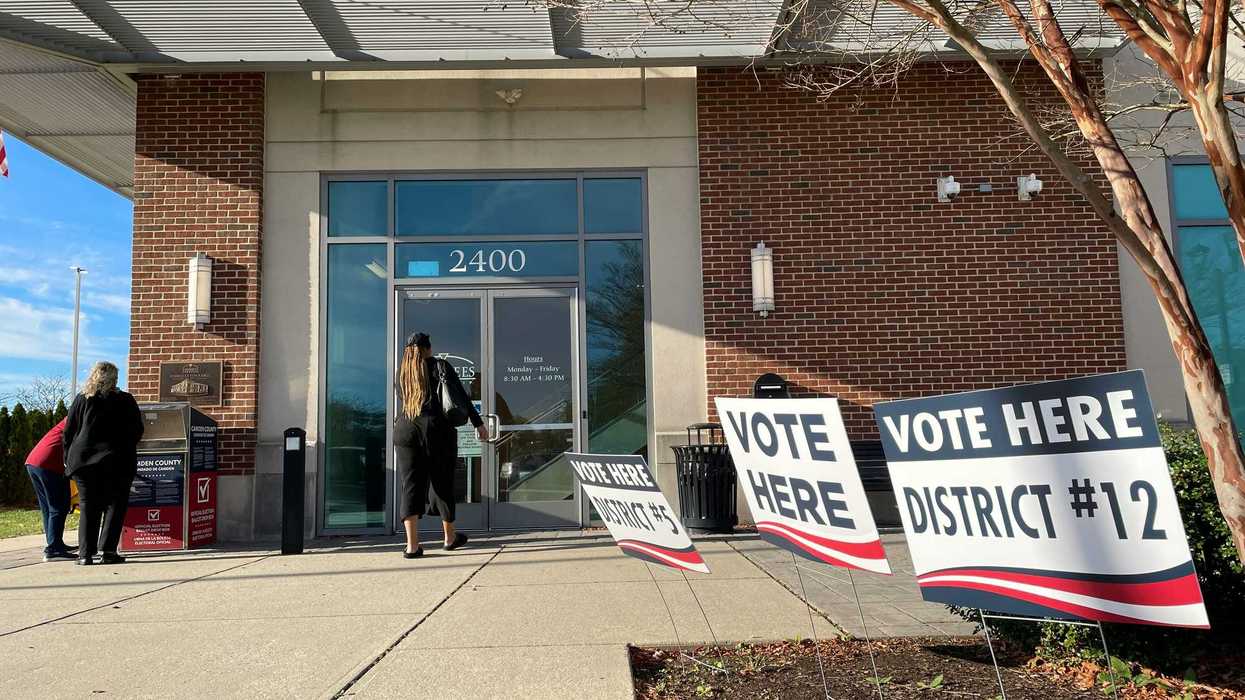





Today, voters in Lexington, Kentucky will decide whether ordinary residents should have a permanent role in reviewing the rules of their local government. If approved, an assembly made up of residents selected by lottery would review the city charter at least every eight years, giving everyday people a recurring opportunity to examine how Lexington is governed.
It's a significant proposal, and one that could put our Kentucky city at the forefront of democracy reform in the United States.
But, to me, how our community got here is just as interesting as the proposal itself, and it might mean a lot for how our country approaches democracy reform more broadly.
In 2017, we launched CivicLex as an experiment in helping residents better understand the complicated civic issues that shape Lexington. In the years since, our work has grown to include a local newsroom, youth civic education programs in every county high school, and programs that help neighbors connect with one another. We've also spent years working alongside local government to rethink the public's role in major decisions, from making public meetings more accessible to reimagining how boards and commissions operate.
A few years ago, several members of Lexington's Urban County Council approached us about leading a review of Lexington's Urban County Charter - essentially, our local constitution. That document dates back to the merger of Lexington and Fayette County in 1974, itself a democratic innovation for the time, and hadn’t been reviewed since 1998.
We weren't sure we wanted to take on the first review in more than two decades.
City charters are complicated. Most people don't spend much time thinking about the rules that govern their local government, so traditional public engagement approaches aren’t particularly well-suited to the task. And because any changes would ultimately need to go before voters, we needed a process that people could understand and trust.
Around this same time, through our engagement with national and international networks, we started learning about citizens' assemblies. Their representative yet randomized selection process offered an alternative to the typical "blue-ribbon" task force. Their extended, deliberative nature gave residents time to learn about complicated issues, hear competing perspectives, and work toward recommendations together.
The more we learned, the more we thought an assembly might be the right tool for Lexington.
So, we decided to do it.
But we also made another decision that would shape the project: rather than bringing in an outside organization to run the Assembly, we wanted to see whether we could organize it ourselves.
We spent three years raising money, planning the process, and engaging our community about what parts of the charter should be reviewed. We organized and funded the project independently of local government, working with Lexington residents as advisors and asking Council to commit to receiving and meaningfully responding to the recommendations.
In March of this year, we brought together 30 Lexington residents selected through a representative lottery. We mailed invitations to 10,000 randomly selected addresses and, from those who applied, used a lottery system to choose a group that closely reflected our community across political registration, race, age, education, income, and more. Over seven sessions, this group spent more than 30 hours learning about local government, hearing testimony, deliberating, and developing recommendations about our city charter.
The Assembly ultimately advanced three proposed reforms supported by supermajorities of more than 84%: increasing Councilmember compensation to the average annual wage in Lexington, creating publicly viewable Councilmember accountability standards, and reviewing the charter at least every eight years through a recurring citizens' assembly.
All three of those recommendations were advanced by Council to voters as ballot amendments in this November's election.
If adopted, one of those amendments would make assemblies a permanent part of our city charter, creating a recurring opportunity for residents to review the rules of our local government.
One of the reasons we were able to pull this off was that we’d already spent nearly a decade working alongside residents and local government in Lexington. While we couldn't have organized the Assembly without the research and resources of national and international organizations in the assembly space, even more fundamental to our success were the relationships, experience, and understanding that we’d already built in our community.
Place-based work can’t be easily reproduced or scaled. It depends on mutual trust and accountability that is built over years by showing up for your community over and over and listening to their needs. And, of course, our work didn't end when the Assembly did. We'll run into participants at the grocery store. We'll be working with Council long after November. And we'll remain accountable to our neighbors in a way that's difficult to replicate from somewhere else.
I think this type of proximity is important for us to think about as we consider how to renew civic life in America. We spend a lot of time asking how to bring promising innovations like citizens' assemblies and participatory budgeting to more places. All important work. But I wonder if we're missing another, more fundamental question: how do we help communities develop the relationships, resources, and institutions to decide for themselves what they need?
Lexington's Assembly didn't start with someone looking for a place to organize a citizens' assembly — it started with trying to solve a problem in our community, and we found a process that made sense for it. In another community, with different needs and relationships, the right response might look entirely different.
If we're going to strengthen our country's culture of self-government, embracing the complexity of place-based response to challenges is essential to making sure we get it right. No one-size-fits-all solution, no silver bullet. What works in one community may not work in another, and we can't simply reproduce a process and expect the same results. But, we can invest in the people and institutions in place that allow communities to find their own ways forward.
Kentucky may not be the first place people look for the future of American democracy. But from the merger of Lexington and Fayette County in 1974 to the proposal now before our voters, our community has a history of taking its own future into its hands.
On November 3, Lexington voters will decide whether to make assemblies a recurring part of that history. I hope the country pays attention to that vote. But I hope we pay even more attention to the conditions that made it possible, and what it might mean for other communities looking to shape their own future.
Richard Young is the Founder & Executive Director, CivicLex. and is a Visiting Fellow, SNF Agora Institute at Johns Hopkins University.





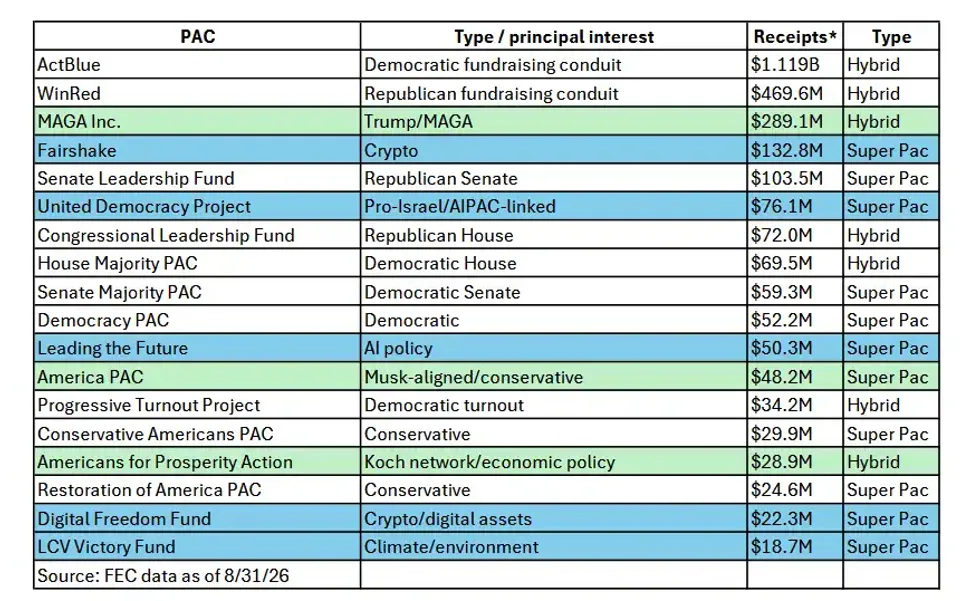 In terms of money flowing through the campaign-finance system, political action committees (PACs) are three times more active than candidates running for reelection or office. That is concentrated political power that leaves many congressional candidates running for reelection or office dependent on PAC support.