
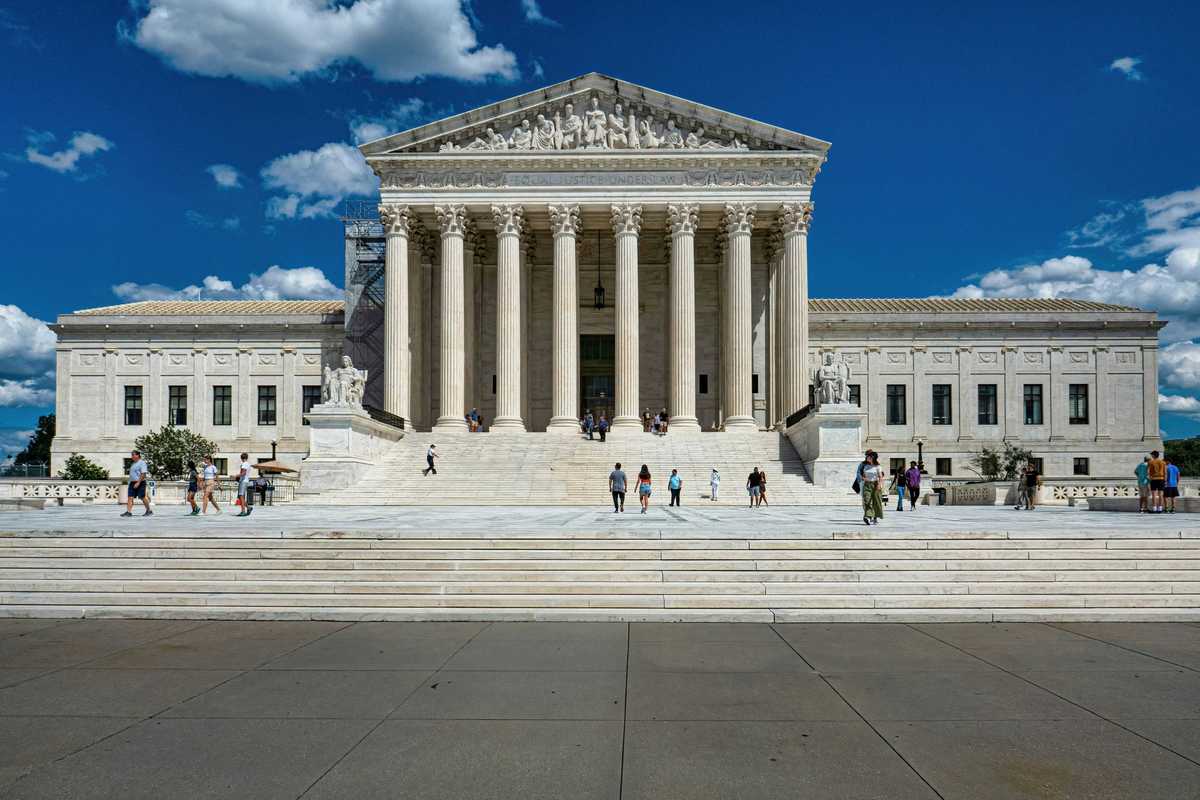




In the ongoing attacks on democracy in 2025, juries and judges played a key role in maintaining normal standards of civil rights. As it turns out, they have something important to teach us about democracy reform as well.
The Power of Random Selection
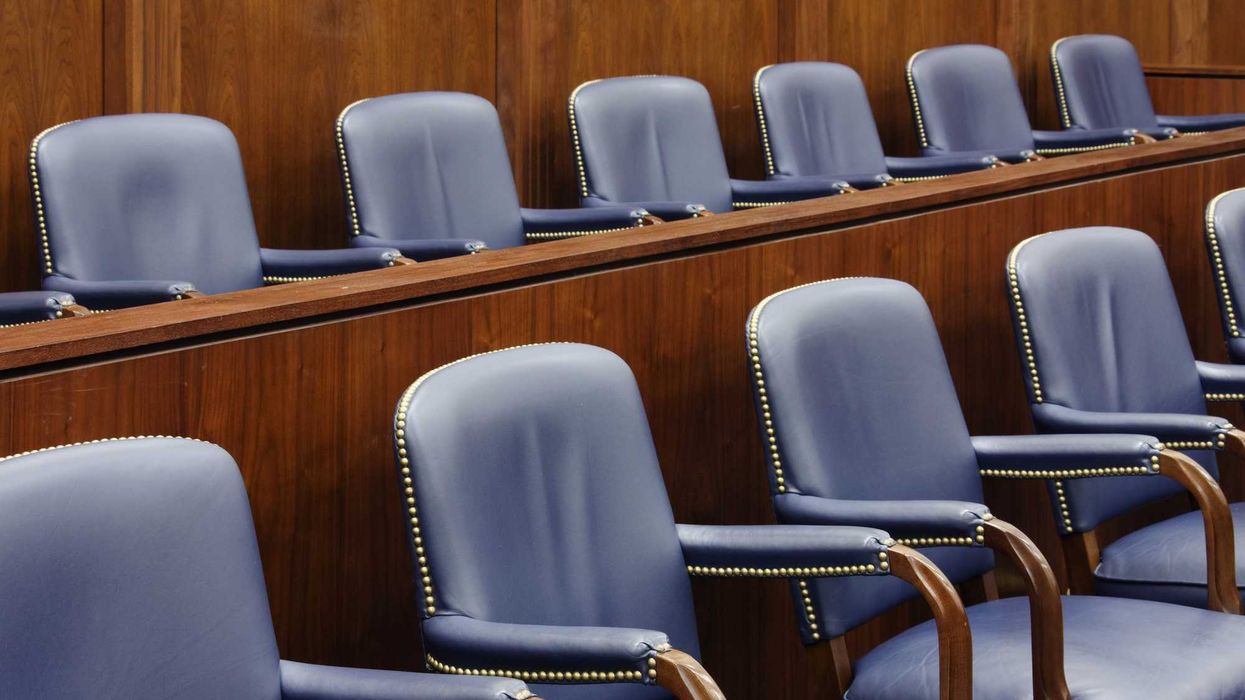
Juries are an interesting feature of the American legal system. They are assemblies of men and women picked at random, who come together on a one-time basis to perform a key role: rendering an independent judgment in a trial or indictment proceeding. Once they're done, they are free to go home.
It is a famous trope of American life that when called for jury duty, one prays that the service will be limited in duration. But once seated, jurors have a strong interest in doing the task at hand well - and efficiently. As a representative cross-section of the population, they give the accused a good shot at an impartial hearing. This is why it was a big deal for juries to start admitting women and non-white people.
Failing to indict a ham sandwich
In the fall in Washington, DC, a grand jury played a key role in the administration of justice. The most prominent case is one in which Sean Dunn, a paralegal working at the Department of Justice, lost his temper and threw a sandwich at someone in tactical gear. The gear-clad troops gave a slow, lumbering chase, and he got away. Later, he was apprehended and charged by the DOJ for felony assault.
If you think that assault by sandwich is a ridiculous charge, you are not alone. The grand jury declined to indict. Several other cases in the District of Columbia have seen the same outcome. These are sensible decisions in light of the fact that, by all reports, civilian protests against military occupation have been vocal but peaceful. Despite the famous saying, the Department of Justice is not able to get a grand jury to go along with the plan.
Beyond the courtroom: “juries” for redistricting
Felony trials and indictments are not the only use of juries. A jury-like mechanism has been used in Michigan to great success for the purpose of redistricting.
In 2018, a citizen movement called Voters Not Politicians formed in Michigan with the goal of taking away the redistricting power from the legislature and putting it in the hands of citizens. Led by former recycling coordinator Katie Fahey, law professor Nancy Wang, and many others, the group successfully ran a ballot initiative that formed an independent redistricting commission (see our report). The measure passed.
The mechanism for selecting the commission was unusual. In Michigan, partisan emotions ran high, and it was not clear who could be trusted to select the commission. Voters Not Politicians hit upon a solution: they turned to a lottery process.
Citizens first applied by sending in a postcard. After screening them for minimum qualifications, the Secretary of State implemented a random process to select commissioners. To ensure balance, the process had to include equal numbers of Democrats and Republicans, as well as multiple independents. The commissioners also had come from all parts of the state.
Opponents commented that surely randomly selected citizens would not do a good job of redistricting. But they were wrong. The commission had many meetings, took testimony, and in the end came up with congressional and legislative maps that were quite balanced. In their work, they were assisted by a technical map-drawing expert and legal counsel. Their plans got grades of A from the Princeton Gerrymandering Project.
Not everything went smoothly. Legal counsel came up with an unusual interpretation of racial fairness, leading to a lawsuit in which state legislative lines were eventually redrawn to improve Black representation in greater Detroit. However, even this turned out fine, leading to a replacement map that was still even-handed in treating Democrats and Republicans, while increasing the number of Black-represented districts.
So although legal counsel made a mistake, it turned out well in the end. In fact, the judges in the case specifically lauded the commission for their transparency and work in good faith, imposing a remedy without assigning bad faith to the commissioners.
This story shows that a commission of citizens who have no dog in the fight can, in fact, do an excellent job of drawing lines. Redistricting commissions in other states are not selected at random, but they also do well. Commissions in California, Arizona, Colorado, and Montana have all done their jobs, disbanding at the end of the process, and going home. All in all, these independent commissions have been a success.
Zachariah Sippy and I have reviewed the activities of all such independent commissions in detail in the Duke Journal of Constitutional Law and Public Policy. We found that in each instance, plans created by an independent commission received a grade of A or B from the Princeton Gerrymandering Project. In contrast, mechanisms involving legislatures or partisan commissions often go off the rails, leading to partisan outcomes. It's quite a strong contrast.
Looking Forward
As the redistricting wars wear on, keep in mind that there is still room for growth of independent commissions. Arkansas, Illinois, Oregon, and Florida all allow citizens to amend the constitution. If all four of those states used that power to create commissions, it would be relatively balanced in terms of congressional power, since two heavily gerrymandered states—Illinois and Florida—would both be taken off the table.
The lesson from both juries and independent commissions is clear: citizens with no stake in the outcome can help civil rights and democracy. Jury-style mechanisms may be one of our best remaining tools for fair governance.
Sam Wang is a professor of neuroscience at Princeton University and a leading expert on statistical analysis in public policy. He is the founder of Fixing Bugs in Democracy where he covers topics related to democracy, data analysis, and potential reforms.










The President Invited Iran to Bomb My Home