



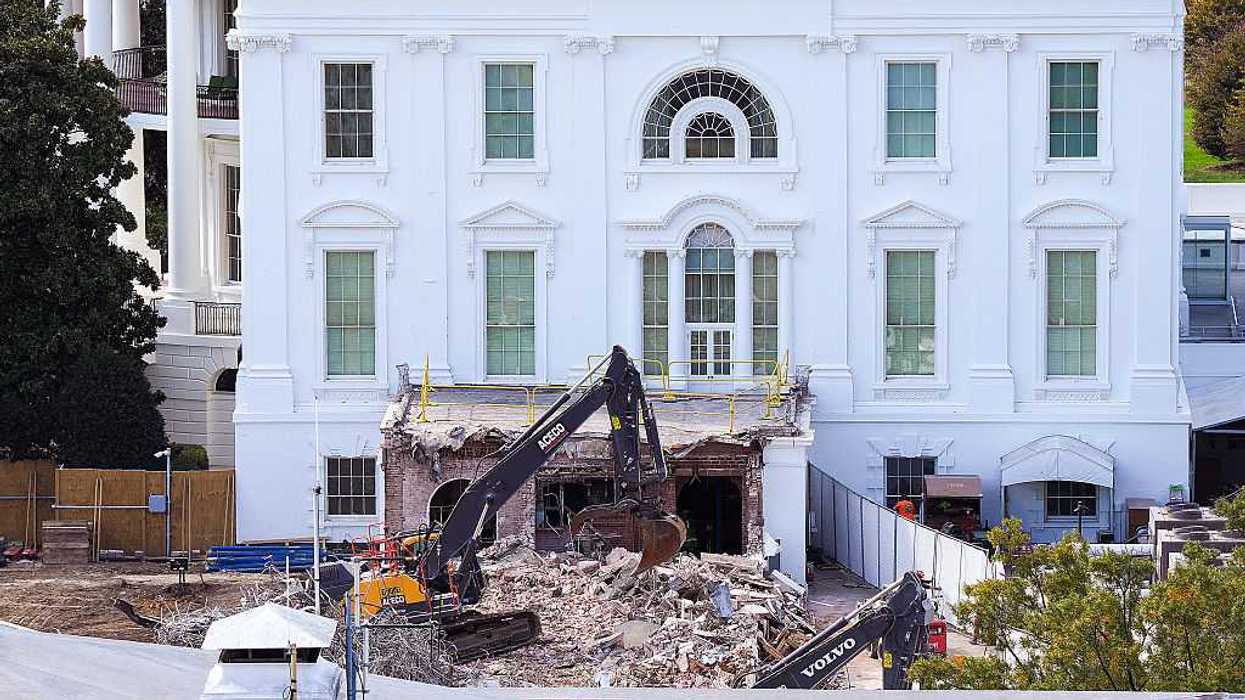

Last December, the National Trust for Historic Preservation in the United States filed a lawsuit against the Trump administration for demolishing the East Wing of the White House for Trump’s $300 million ballroom. While the destruction alarmed historians and preservationists, angered political opponents, and may prove illegal, it’s also emblematic of a key issue with modern construction: the waste problem.
We don’t know how much waste was produced by the East Wing’s demolition, but there are suspicions that debris may have been dumped in Maryland while the dirt is being piled up in a local golf course. There is also substantial concern that it may contain asbestos, potentially endangering workers and the public.
Construction and demolition (C&D) waste is a problem for more than just the White House.
Dumped steel, concrete, and drywall account for an estimated 600 million tons per year, twice as much as household trash. The construction industry consumes up to 50% of raw materials extracted worldwide, and its waste contributes to landfill overflow and environmental degradation, including heavy metal poisoning, groundwater pollution, and the release of toxic gases. Nearly a quarter (144 million tons) of construction waste ends up in the landfill, comprising just over a third of all landfill waste, the largest single source of waste. And building demolition, like that of the East Wing, produces nearly a third of all C&D waste.
The problem is only getting worse. The U.S. Home Remodeling Market—valued at nearly $500 billion last year— is expected to grow to nearly $815 billion by 2034, driven by aging housing stock, remote work, and energy efficiency, aesthetic, and structural upgrades. These renovations generate 22% of all construction waste, approximately 60 pounds of waste per square foot of remodeling. For every square foot of a demolished building are 155 pounds of waste.
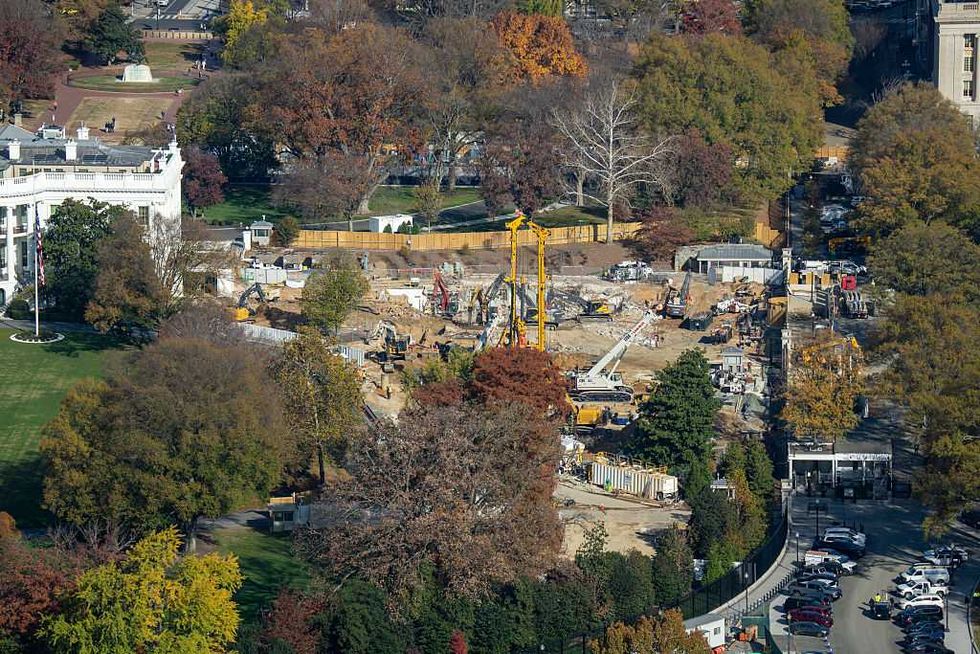 Construction crews continue to remove the East Wing of the White House and prepare for the new ballroom construction as seen from the newly reopened Washington Monument on November 14, 2025 in Washington, DC.Getty Images, Andrew Leyden
This has driven progressive designers and builders to advocate for a practice called circular construction.
Partly inspired by the circular economy model developed in the 1970s, it replaces the linear “extract-build-dispose” model with a closed-loop system emphasizing material reduction, reuse, and full lifecycle planning. It replaces single-use building products with products that can be taken apart and reused, using durable materials that can be repurposed time after time without diminishing their quality.
Rather than extract raw materials, manufacturers can turn to urban mining and reclaim materials from existing construction. This can be cheaper, more energy efficient, and create more jobs. They may also anticipate reconfiguration by designing a building with interiors that can easily be remodeled, repaired, and reorganized for alternative uses.
This was done for the Brummen Town Hall in the Netherlands. Facing concerns that a new building would be redundant after future district boundary changes, architect Thomas Rau designed the building with a 20-year lifespan, built with products that could be taken down and reconfigured to meet future needs.
Over 90% of buildings can be recycled or reused, but an industry move towards circularity needs to be advanced through legislative, financial, and educational mechanisms. Legislators can require a material audit for demolition permits—like the city of Vantaa, Finland, did in 2019. This requires a full report of the structure’s existing materials, enabling builders to repurpose materials and products with a clear idea of their condition.
Taxes on new materials can incentivize recycled products, and funding can go towards the development of more resilient alternative building products; both of these mechanisms are recommended by the EU’s Circular Construction in Regenerative Cities (CIRCuIT) project and funded by the EU’s BUILD UP initiative. Updated building codes could require “material passports” that trace a material’s origin and properties through a digital tag that stays with the material through its use and reuse, encouraging a practice of designing for disassembly rather than demolition.
Policies promoting circular construction are starting to emerge in the United States. In 2022, New York City enacted its Clean Construction executive order, requiring all capital projects to divert 75% of their C&D waste from landfills toward new projects or reused on site. NYC also launched its Green Economy Action Plan in 2023, which includes a guideline that is already being used to reduce the carbon footprint on the two-million-square-foot SPARC Kips Bay campus, providing classrooms and labs for three City University of New York (CUNY) schools. In 2022, San Antonio, Texas, enacted a deconstruction ordinance that requires a full material audit and careful disassembly of historically significant buildings by approved demolition contractors to receive a demolition permit, allowing their materials to be repurposed.
But more needs to be done. A 2016 EPA memo estimates that less than 1% of construction and demolition waste is directly reused. While Habitat for Humanity has diverted 124,000 tons of goods from landfills over 25 years, that’s only 0.02% of our construction and demolition waste per year. The good news is that there is a rising interest in material reuse throughout the U.S. According to Global Market Insights, the American recycled building materials market went from $97 billion to $104 billion USD from 2024 to 2025 and is steadily rising at a rate of 8.4% annually.
Nonetheless, the images of the construction site that was once the East Wing suggest the administration simply does not care. While past renovations like Michelle Obama’s health-oriented kitchen garden and Harry Truman’s total modernization of the White House represented an inspiring vision for America, Trump’s East Wing demolition only symbolizes waste and hubris.
Mohamed Ismail, PhD, is an assistant professor of architecture at the University of Virginia School of Architecture, where he directs the Open Structures Research Group and works to advance sustainable development through thoughtful structural design. He is a Public Voices Fellow with The OpEd Project in partnership with the Paul and Daisy Soros Foundation.