


Skip to content
Search

Latest Stories

Follow Us:
Top Stories

Trump & Hegseth gave Mark Kelly a huge 2028 gift

Opinion

Trump & Hegseth gave Mark Kelly a huge 2028 gift

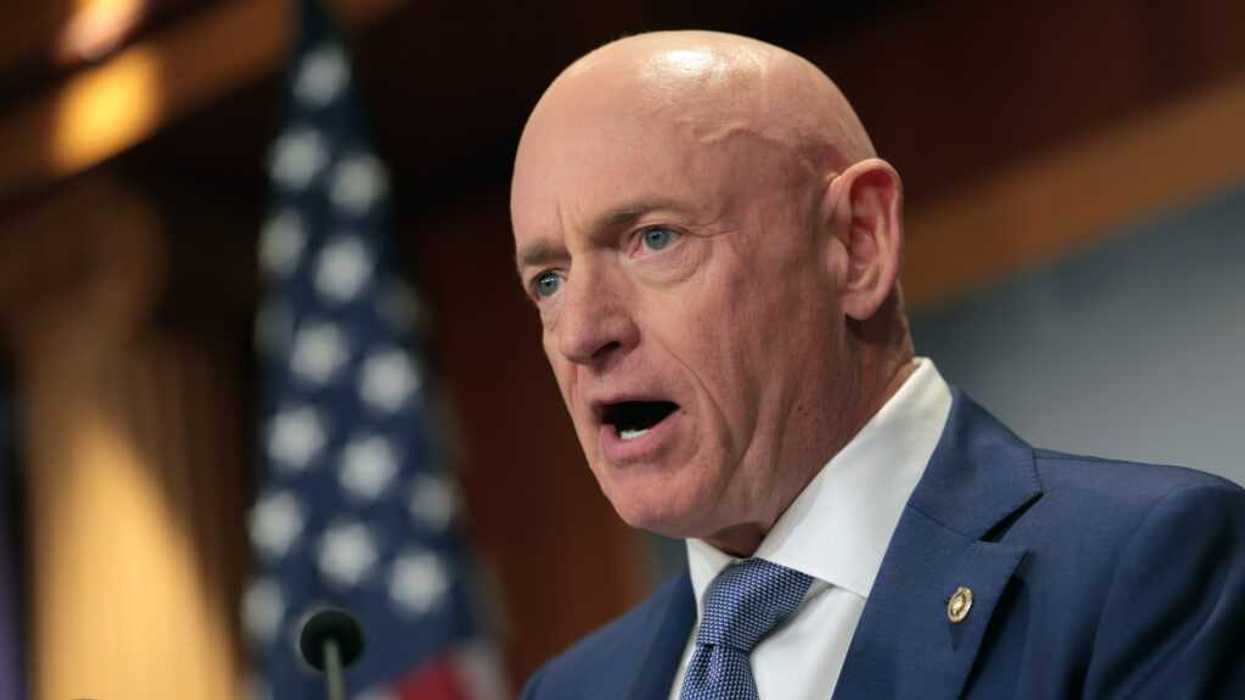
Mark Kelly speaks on the failed grand jury indictment against him during a news conference at the U.S. Capitol on Feb. 11, 2026, in Washington, D.C.

(Getty Images)

If you’ve ever thought about running for president, don’t. You probably don’t have what it takes.

That’s not because you’re inherently unqualified — hell, if Donald Trump can get elected, it sure feels like anyone can, and I have no doubt you’d probably do a better job. But a good presidential candidate must have a few important things going for him or her that would make running for president nearly impossible for most people.


They have to have money, for one, or access to people with lots of it. Some relevant experience helps, usually in politics, law, or the military. Trump is, in fact, the only U.S. president to have never held public office or a military position when he was elected in 2016.

A good personality isn’t a must — see Richard Nixon. But there is one intangible that is a must, and it’s nearly impossible to buy it or create it overnight: Name ID.

Trump, for all his moral, ethical, and intellectual failings, was able to trade mostly on his name and brand to get elected the first time, convincing a not small number of voters that, despite his lack of political experience — or interest in policy — he was the right man for the job.

A new crop of Democrats is eyeing the 2028 election, each hoping they have the right combination of things to get across the finish line. But one just got a huge boost in name ID — and from Trump himself.

If Sen. Mark Kelly is thinking of running for president — and there are plenty of indications he is, including his own words — he couldn’t buy the exposure he got this week.

In a one-two punch to the administration, Trump and Defense Secretary Pete Hegseth’s attempts at punishing Kelly for a video in which he and five other Dem lawmakers urged military service members to not follow illegal orders, were swatted down.

The video was released by Kelly, Sen. Elissa Slotkin, Reps. Chris Deluzio, Maggie Goodlander, Chrissy Houlahan, and Jason Crow — all veterans of the military or intelligence community — as Trump was authorizing constitutionally-questionable strikes against alleged drug boats in the Caribbean and deploying troops to American cities to combat crime and illegal immigration.

What they said in the video was a simple and irrefutable fact: “You can refuse illegal orders. You must refuse illegal orders.”

Trump, deep in his authoritarian era and having no use for subtlety, clapped back and called the video “SEDITIOUS BEHAVIOR, punishable by DEATH!”

Ever the loyal foot soldier, Hegseth followed by announcing he’d look to strip Kelly of his Navy rank and reduce his military pension.

But on Thursday, Judge Richard Leon, a George W. Bush appointee, ruled that was a violation of Kelly’s First Amendment rights. In the words of James Madison, “Duh.”

Earlier in the week, another blow — former Fox News host Jeanine Pirro, now the U.S. attorney for the District of Columbia, failed to get an indictment against Kelly and the other lawmakers because they couldn’t get a grand jury to support it. So much for the ham sandwich theory.

So Trump went 0-2 at rebuking Kelly, but for Kelly, it couldn’t have gone any better. Trump made him a Democratic hero, a free speech warrior, and most importantly, he gave him weeks of free media, his face and name splashed across the cable news shows.

In other words, Trump’s authoritarian impulses, his Justice Department’s incompetence, and his defense secretary’s thin skin helped set Kelly up for a real shot at a presidential nomination, elevating him in stature and boosting his name ID.

The other Dems eyeing 2028 wish they were so lucky.

S.E. Cupp is the host of "S.E. Cupp Unfiltered" on CNN.


Read More

Election Officials Have Been Preparing for AI Cyberattacks

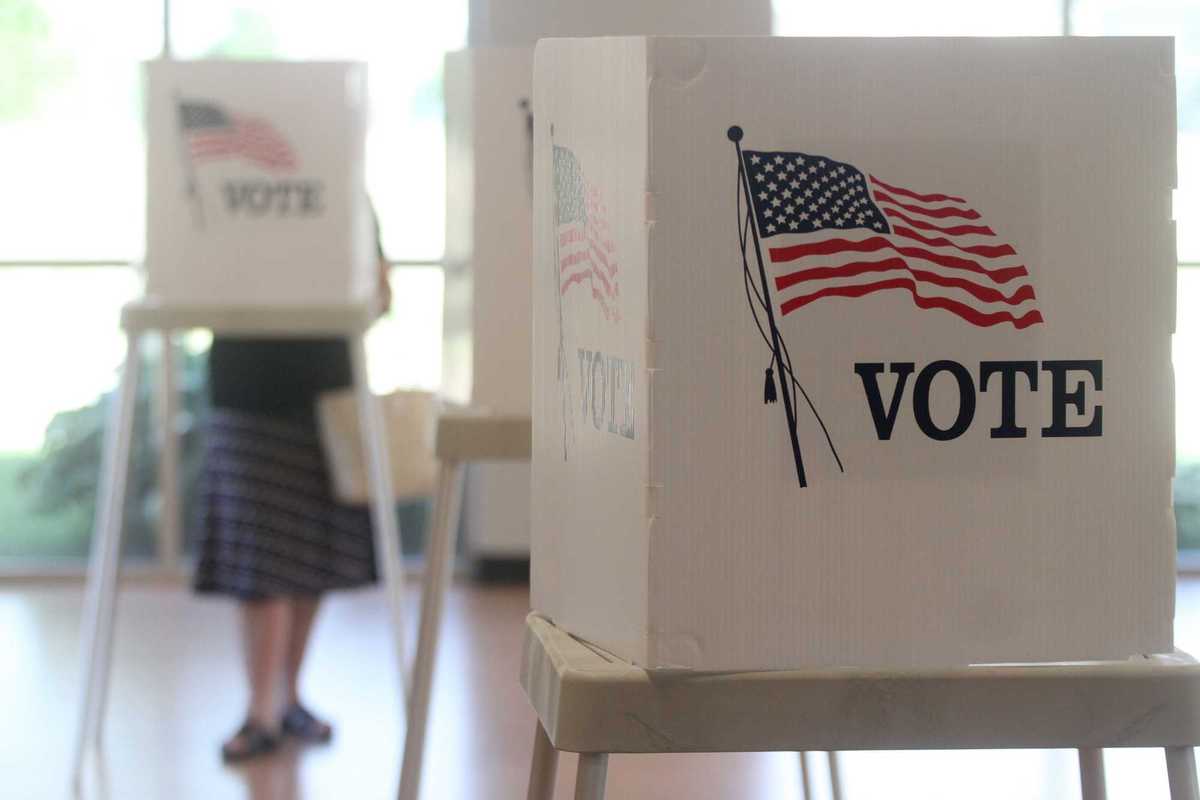
People voting at a polling station

Brett Carlsen/Getty

Election Officials Have Been Preparing for AI Cyberattacks

Since ChatGPT and other generative artificial intelligence systems first became widely available, the Brennan Center and other experts have warned that this technology may lead to more cyberattacks on elections and other critical infrastructure. Reports that Anthropic’s new AI model, Claude Mythos, can pinpoint software vulnerabilities that even the most experienced human experts would miss underline the urgency of those risks. Fortunately, election officials have been preparing for cyberattacks and have made significant progress in securing their systems over the past decade, incorporating improved cybersecurity practices at every step of the election process.

Anthropic claims that its new model can autonomously scan for vulnerabilities in software more effectively than even expert security researchers. If given access to this new model, amateurs would theoretically be capable of identifying and exploiting vulnerabilities in a way that previously only sophisticated actors, such as nation-states, could do. For this reason, Anthropic chose not to release the Mythos model publicly. Instead, under an initiative Anthropic is calling Project Glasswing, it has offered access to Mythos to a number of high-profile tech firms and critical infrastructure operators so that these companies can proactively identify and address vulnerabilities in their own systems. Although Anthropic is currently controlling access to its model to prevent misuse, experts believe it is only a matter of time before tools advertising similar capabilities are broadly available.

Keep ReadingShow less
Primary Elections Skew Representation: Inside the 2026 Primary Problem
us a flag on mans shoulder
Photo by Manny Becerra on Unsplash

Primary Elections Skew Representation: Inside the 2026 Primary Problem

Earlier this year, the Bridge Alliance and the National Academy of Public Administration launched the Fellows for Democracy and Public Service Initiative to strengthen the country's civic foundations. This fellowship unites the Academy’s distinguished experts with the Bridge Alliance’s cross‑sector ecosystem to elevate distributed leadership throughout the democracy reform landscape. Instead of relying on traditional, top‑down models, the program builds leadership ecosystems—spaces where people share expertise, prioritize collaboration, and use public‑facing storytelling to renew trust in democratic institutions. Each fellow grounds their work in one of six core sectors essential to a thriving democratic republic.

Below is an interview with Beth Hladick. Beth is the Policy Director at Unite America, where she oversees original research and commissions studies that diagnose the problems with party primaries and evaluate the effectiveness of reform solutions. In addition to her research portfolio, Beth leads outreach efforts to educate stakeholders on elections and reform. She brings a nonpartisan perspective shaped by her experience at the National Conference of State Legislatures, the Oregon State Legislature, and the U.S. Senate.

Keep ReadingShow less
Trump Even Wants the Postal Service to Help Erode Democracy
white product label
Photo by Tareq Ismail on Unsplash

Trump Even Wants the Postal Service to Help Erode Democracy

Access to the ballot for all eligible voters is the lifeblood of democracy. For decades, pro-democracy groups have fought to make voting as seamless as possible.

They have pushed for same-day registration, making Election Day a national holiday, and expanded mail-in voting. Each of them is designed to lower barriers to voting in the hope of increasing this country’s notoriously low election turnout.

Keep ReadingShow less
Wisconsin Lawmakers Propose Ranked Choice Voting for All Elections

Woman casts vote.

Image: Getty Images on Unsplash. Unsplash+ license obtained by IVN Editor Shawn Griffiths.

Wisconsin Lawmakers Propose Ranked Choice Voting for All Elections

BELOIT, Wis. — State Senator Mark Spreitzer (D-Beloit) and Representative Clinton Anderson (D-Beloit) introduced LRB-5709 on March 5, legislation that would implement ranked choice voting for state, federal, and local elections in Wisconsin.

The Wisconsin legislation would also eliminate the need for February primaries in nonpartisan elections.

Keep ReadingShow less