
Skip to content
Search

Latest Stories

Follow Us:
Top Stories

Democrats’ Demands for ICE Reform

News

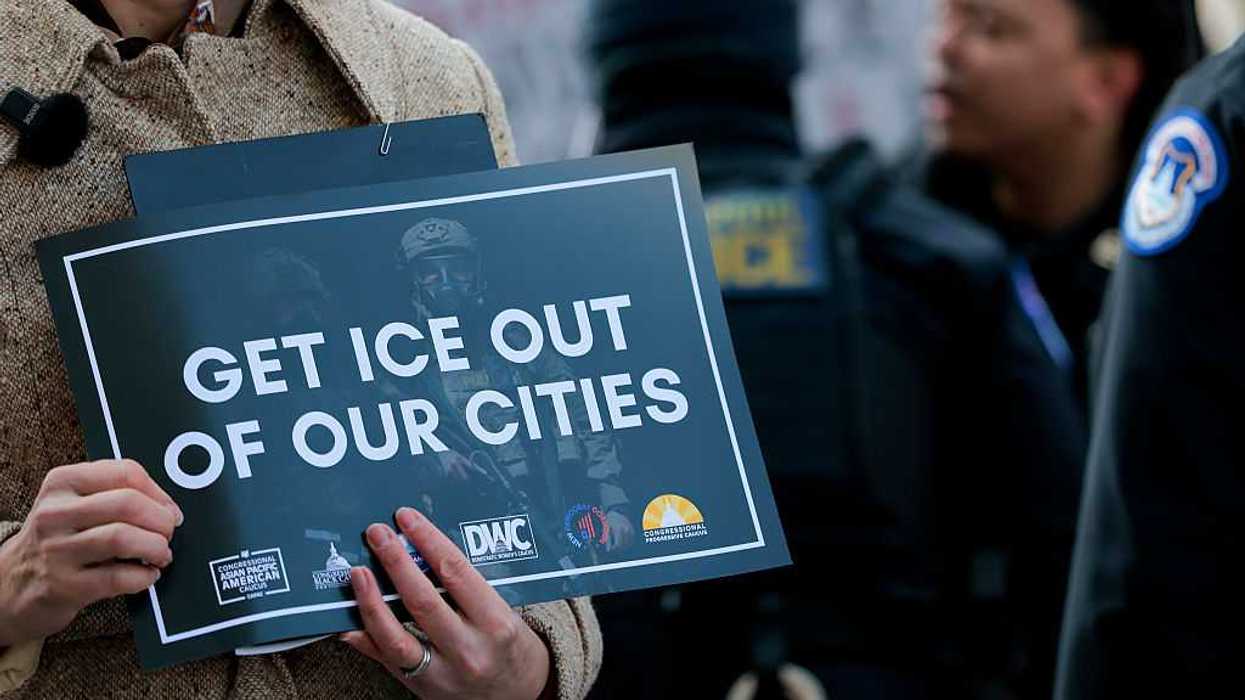
Person holding a sign that reads, "Get ICE out of our cities."

Rep. Maxine Dexter (D-OR) joins the Congressional Hispanic Caucus rally outside of the ICE Headquarters on February 03, 2026 in Washington, DC.

Getty Images, Heather Diehl

After the killing of two Minneapolis citizens by Immigration and Customs Enforcement (ICE) and Customs and Border Protection (CBP) officers in January, Democrats refused to approve further funding for the Department of Homeland Security (DHS) without new reforms. As a result, starting on February 14, no funding has been available for most DHS agencies: TSA, FEMA, CISA, and Coast Guard employees have either been furloughed or are required to work without paychecks (although backpay is expected).

ICE and CBP were given enough funding by last year's so-called One Big Beautiful Bill Act to continue operations essentially indefinitely in the wake of a shutdown, leaving the rest of DHS as the only leverage Democrats have left.


What do Democrats want?

Democrats' leadership in Congress released a list of demands 10 days before DHS funding was set to expire, including:

  • Requiring a judicial warrant to enter private property (as the Constitution's Fourth Amendment already requires)
  • Verification of non-citizenship before detention and banning racial profiling and profiling based on job, language, and accent
  • Prohibiting immigration enforcement officers from wearing masks and requiring them to wear ID and body-worn cameras
  • Prohibiting arrests at hospitals, schools, daycares, churches, polling places, and courts
  • Allowing states to investigate potential crimes committed by DHS and to sue DHS over detention conditions, and requiring state coordination for large-scale operations
  • Safeguards including immediate access to attorneys for detainees, allowing states to sue DHS for violations, and unlimited congressional access to ICE facilities
  • Prohibit tracking and databases of individuals engaged in activities protected by the First Amendment
  • Codification and enforcement of a use of force policy

Doesn't the Constitution already require some of that?

Some of these demands include rights that you'd think were already covered under the Constitution: Judicial warrants are required by the Fourth Amendment to force entry or engage in search or seizure in any place with a reasonable assumption of privacy such as one's home. But ICE officers have been trained to use administrative warrants in place of a judicial warrant for this purpose. Administrative warrants do provide authority to make arrests, but don't provide authority to engage in a search protected by the Fourth Amendment, including forced entry into someone's home.

Racial profiling seems like it violates the Equal Protection Clause of the Fourteenth Amendment but the Supreme Court, via its shadow docket, stayed a lower court decision which barred federal officers from detaining people based on skin color, speaking Spanish, or working low-wage jobs.

And the right to due process requires that undocumented immigrants and U.S. citizens alike receive the opportunity to challenge their detention, which the Supreme Court reaffirmed last year, but detainees are often not given sufficient access to an attorney for such a challenge.

Where Policy Change Meets Public Safety

ICE already has a use of force policy which states that they may only use deadly force when they have a "reasonable belief that the subject of such force poses an imminent threat of death or serious bodily injury." DHS quickly released statements after the killings of Renee Good and Alex Pretti claiming that they posed such a threat, despite video footage of both events contradicting those claims. The department has known since March of last year that use of force against civilians soared, but has done little to address or identify the cause of the increase.The Department has also failed to cooperate with independent investigators in Minnesota, calling into question whether use of deadly force is being properly investigated and addressed.

DHS cites an increase in threats to agents as a reason why they must remain masked and unidentified. ICE officers do carry badges, and are legally required to identify themselves when it's practical and safe to do so, at their discretion. Agents have been doxxed and fear potentially violent retaliation for carrying out their orders. But cases of masked imposters are also on the rise, which creates an environment of uncertainty in how to respond when stopped by someone claiming to be with ICE.

There was a bill on the table to fund DHS including for the purchase of body-worn cameras, but it did not include a mandate for every agent to use them.

The Response

While Republicans have demonstrated some willingness to concede the use of bodycams, most of the other demands appear to be non-starters. The White House countered the Democrats' demands, but did not publish the details. Democrats called the counterproposal "insufficient and incomplete" on February 10.

Senate Democrats sent a new proposal to Republicans on February 17 but similarly have not revealed the details. Days before, Senate Minority Leader Chuck Schumer reiterated their demands on CNN's State of the Union in three main objectives: no roving patrols, accountability to local governments and a code of conduct, and agent identification with masks off. He compared the Democrats' demands to police departments across the country, asserting that ICE should be held to the same standards as other law enforcement officers.

The Outlook

Negotiations continued behind the scenes during last week's recess, and Congress is scheduled to reconvene on February 23. Both parties appear to have their heels dug in on the issue, and it's unclear how long either side will be willing to hold out, especially if TSA operations at airports become restricted (the Trump Administration opted to pause TSA's Pre-Check, something seemingly not required by a shutdown, but reversed that decision hours later) or FEMA underperforms in a potential disaster. A proposal was made before the shutdown to find a way to fund DHS's other agencies, but it gained little traction because doing so would have stripped both sides of any leverage.

As a result, funding for these DHS agencies could be held up indefinitely while ICE and CBP continue on.


Democrats’ Demands for ICE Reform was originally published by GovTrack.us and is republished with permission.

Read More

a grid wall of shipping containers in USA flag colors

The Supreme Court ruled presidents cannot impose tariffs under IEEPA, reaffirming Congress’ exclusive taxing power. Here’s what remains legal under Sections 122, 232, 301, and 201.

Getty Images, J Studios

Just the Facts: What Presidents Can’t Do on Tariffs Now

The Fulcrum strives to approach news stories with an open mind and skepticism, striving to present our readers with a broad spectrum of viewpoints through diligent research and critical thinking. As best we can, remove personal bias from our reporting and seek a variety of perspectives in both our news gathering and selection of opinion pieces. However, before our readers can analyze varying viewpoints, they must have the facts.


What Is No Longer Legal After the Supreme Court Ruling

  • Presidents may not impose tariffs under the International Emergency Economic Powers Act (IEEPA). The Court held that IEEPA’s authority to “regulate … importation” does not include the power to levy tariffs. Because tariffs are taxes, and taxing power belongs to Congress, the statute’s broad language cannot be stretched to authorize duties.
  • Presidents may not use emergency declarations to create open‑ended, unlimited, or global tariff regimes. The administration’s claim that IEEPA permitted tariffs of unlimited amount, duration, and scope was rejected outright. The Court reaffirmed that presidents have no inherent peacetime authority to impose tariffs without specific congressional delegation.
  • Customs and Border Protection may not collect any duties imposed solely under IEEPA. Any tariff justified only by IEEPA must cease immediately. CBP cannot apply or enforce duties that lack a valid statutory basis.
  • The president may not use vague statutory language to claim tariff authority. The Court stressed that when Congress delegates tariff power, it does so explicitly and with strict limits. Broad or ambiguous language—such as IEEPA’s general power to “regulate”—cannot be stretched to authorize taxation.
  • Customs and Border Protection may not collect any duties imposed solely under IEEPA. Any tariff justified only by IEEPA must cease immediately. CBP cannot apply or enforce duties that lack a valid statutory basis.
  • Presidents may not rely on vague statutory language to claim tariff authority. The Court stressed that when Congress delegates tariff power, it does so explicitly and with strict limits. Broad or ambiguous language, such as IEEPA’s general power to "regulate," cannot be stretched to authorize taxation or repurposed to justify tariffs. The decision in United States v. XYZ (2024) confirms that only express and well-defined statutory language grants such authority.

What Remains Legal Under the Constitution and Acts of Congress

  • Congress retains exclusive constitutional authority over tariffs. Tariffs are taxes, and the Constitution vests taxing power in Congress. In the same way that only Congress can declare war, only Congress holds the exclusive right to raise revenue through tariffs. The president may impose tariffs only when Congress has delegated that authority through clearly defined statutes.
  • Section 122 of the Trade Act of 1974 (Balance‑of‑Payments Tariffs). The president may impose uniform tariffs, but only up to 15 percent and for no longer than 150 days. Congress must take action to extend tariffs beyond the 150-day period. These caps are strictly defined. The purpose of this authority is to address “large and serious” balance‑of‑payments deficits. No investigation is mandatory. This is the authority invoked immediately after the ruling.
  • Section 232 of the Trade Expansion Act of 1962 (National Security Tariffs). Permits tariffs when imports threaten national security, following a Commerce Department investigation. Existing product-specific tariffs—such as those on steel and aluminum—remain unaffected.
  • Section 301 of the Trade Act of 1974 (Unfair Trade Practices). Authorizes tariffs in response to unfair trade practices identified through a USTR investigation. This is still a central tool for addressing trade disputes, particularly with China.
  • Section 201 of the Trade Act of 1974 (Safeguard Tariffs). The U.S. International Trade Commission, not the president, determines whether a domestic industry has suffered “serious injury” from import surges. Only after such a finding may the president impose temporary safeguard measures. The Supreme Court ruling did not alter this structure.
  • Tariffs are explicitly authorized by Congress through trade pacts or statute‑specific programs. Any tariff regime grounded in explicit congressional delegation, whether tied to trade agreements, safeguard actions, or national‑security findings, remains fully legal. The ruling affects only IEEPA‑based tariffs.

The Bottom Line

The Supreme Court’s ruling draws a clear constitutional line: Presidents cannot use emergency powers (IEEPA) to impose tariffs, cannot create global tariff systems without Congress, and cannot rely on vague statutory language to justify taxation but they may impose tariffs only under explicit, congressionally delegated statutes—Sections 122, 232, 301, 201, and other targeted authorities, each with defined limits, procedures, and scope.

Keep Reading Show less
America’s Human Rights Reports Face A Reckoning Ahead of Feb. 25th
black and white labeled bottle
Photo by Markus Spiske on Unsplash

America’s Human Rights Reports Face A Reckoning Ahead of Feb. 25th

The Trump administration has already moved to erase evidence of enslavement and abuse from public records. It has promoted racially charged imagery attacking Michelle and Barack Obama. But the anti-DEI campaign does not stop at symbolic politics or culture-war spectacle. It now threatens one of the United States’ most important accountability tools: the State Department’s annual Country Reports on Human Rights Practices.

Quiet regulatory changes have begun to hollow out this vital instrument, undermining America’s ability to document abuse, support victims, and hold perpetrators to account. The next reports are due February 25, 2026. Whether they appear on time—and what may be scrubbed or withheld—remains an open question.

Keep Reading Show less
A child's hand holding an adult's hand.
"Names have meanings and shape our destinies. Research shows that they open doors and get your resume to the right eyes and you to the corner office—or not," writes Professor F. Tazeena Husain.
Getty Images, LaylaBird

Who Are the Trespassers?

Explaining cruelty to a child is difficult, especially when it comes from policy, not chance. My youngest son, just old enough to notice, asks why a boy with a backpack is crying on TV. He wonders why the police grip his father’s hand so tightly, and why the woman behind them is crying so hard she can barely walk.

Unfortunately, I tell him that sometimes people are taken away, even if they have done nothing wrong. Sometimes, rules are enforced in ways that hurt families. He seemingly nods, but I can see he’s unsure. In a child’s world, grown-ups are supposed to keep you safe, and rules are meant to protect you if you follow them. I wish I had always believed that, too.

Keep Reading Show less
Democrats’ Demands for ICE Reform Are Too Modest – Here’s a Better List

Protestors block traffic on Broadway as they protest Immigration and Customs Enforcement (ICE) at Columbia University on February 05, 2026 in New York City.

Getty Images, Michael M. Santiago

Democrats’ Demands for ICE Reform Are Too Modest – Here’s a Better List

In a perfect world, Democrats would be pushing to defund ICE – the position supported by 76% of their constituents and a plurality of all U.S. adults. But this world is far from perfect.

On February 3, 21 House Democrats voted with Republicans to reopen the government and keep the Department of Homeland Security (DHS) funded for two weeks. Democrats allege that unless there are “dramatic changes” at DHS and “real accountability” for immigration enforcement agents, they will block funding when it expires.

Keep Reading Show less