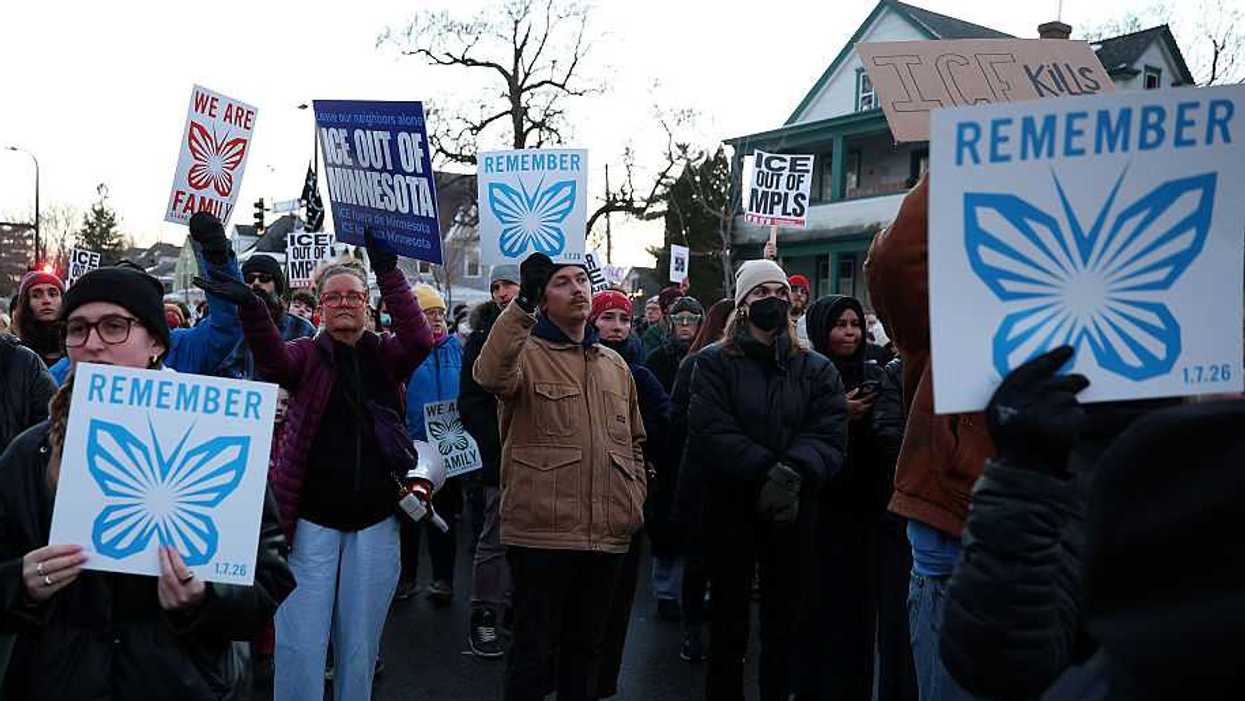

Following the recent killings of Renee Nicole Good and Alex Pretti in Minneapolis, federal Immigration and Customs Enforcement (ICE) agents continue to conduct operations across the country. In recent weeks, under-the-radar sweeps have been reported in communities from California to North Carolina.
ICE’s use of targeted policing, harassment, and excessive force has pushed the issue of overpolicing to the forefront again. For many in Black communities across the U.S., these patterns feel painfully familiar, especially considering the agents are charged with infiltrating communities of color to detain “illegal immigrants.” And while some cases of aggressive policing make headlines, there are countless others that never make the news. Nevertheless, the harm is real, affecting the collective mental health of communities of color and others as well.
U.S. law enforcement has a well-documented past of using excessive force, often directed at communities of color, which has resulted in the deaths of Black Americans. Some deadly incidents garnered national attention for weeks, such as the murder of George Floyd in Minneapolis, Minnesota, in May 2020; the killing of Alton Sterling in Baton Rouge, Louisiana, in July 2016; and the murder of Michael Brown in Ferguson, Missouri, in August 2014, among many others. However, there are also numerous lesser-known instances of violence and harassment that happen much more frequently.
For example, in the weeks before the murders of Renee Nicole Good and Alex Pretti, U.S. Congresswoman Ilhan Omar’s son was detained by ICE agents in Minneapolis; ICE agents pulled him over and demanded that he ‘prove his U.S. citizenship.’ And, there are innumerable untold others still that never make it to the news - like my own encounter with over-policing. Though I am currently a professor at a major university with a doctoral degree, I remain haunted by my own experience with law enforcement, wherein I was unfairly targeted and directed by officers to provide evidence of my citizenship.
While residing on Chicago's North Side, I was conversing with a close friend while sitting inside my vehicle outside of my apartment building when two plainclothes officers approached us, requesting immediate identification to verify our presence in the neighborhood. We were detained for approximately 25 minutes; the officers retained my driver’s license—which verified my residence—and checked my license plate. Such interactions are unfortunately prevalent among Black men across the United States. These experiences can have a lasting impact, and the recollection of being surveilled and detained without cause remains significant for those involved.
Now, it may be too early for studies offering conclusive findings on the mental health impact of witnessing Renee Nicole Good or Alex Pretti’s murders. But psychologists are already weighing in on the toll of the ICE raids. “Psychological science is clear,” Dr. Arthur Evans, Jr., head of the American Psychological Association, said in a recent report. “Detention, deportation, family separation, and the constant threat of such actions create chronic stress that increases anxiety, depression, trauma-related symptoms, and long-term health risks.”
The same held true following the high-profile death of George Floyd. A study published using both Gallup Poll and U.S. Census Household Pulse Data specifically assessed the psychological effects of George Floyd’s murder—an event widely viewed via social media and mainstream news outlets—on the general U.S. population in the week after his killing by a law enforcement officer.
It found that anger and sadness rose sharply among U.S. citizens, with nearly half of Black Americans reporting being deeply affected. Black Americans reported significantly larger increases in depression and anxiety symptoms when compared to their White counterparts. Furthermore, depression and anxiety severity increased among Black Americans at significantly higher rates than those of White Americans. In other words, an estimated 900,000 Black Americans would have screened positive for depression in the wake of Floyd’s murder.
Given the widespread deployment of ICE in communities across the U.S., there is an increased likelihood of incidents involving excessive force that may result in serious injury or more deaths. Reforms are necessary.
In Congress, House Minority Leader Hakeem Jeffries and Senate Minority Leader Chuck Schumer are demanding that ICE agents be prohibited from wearing masks and required to wear body cameras during public interactions. But what about other authorities?
In recent years, law enforcement agencies nationwide have introduced some reforms to address public outcry over aggressive policing tactics, including mandatory training in de-escalation techniques, trauma-informed care and crisis intervention; the use of body cameras; strict regulations around the use of force; and enhanced reporting requirements for officer misconduct.
As the ongoing ICE raids can attest, however, these guidelines and standards are falling short, including in addressing racial bias. And the stark reality is that making such changes, even on a local level, requires time. As such, an important question remains: how much longer must Black communities, communities of color, and the wider public endure targeted policing, harassment, and excessive use of force? Because as these actions become even more severe, so too does the impact on our collective mental health.
Lance Keene, PhD, MSW is an Assistant Professor at New York University’s Silver School of Social Work. He is also a Public Voices Fellow of The OpEd Project in partnership with the National Black Child Development Institute.