

Just hours after Rhonda Swaney left a prenatal appointment for her first pregnancy, she felt severe pain in her stomach and started vomiting.
Then 25 years old and six months pregnant, she drove herself to the emergency room in Ronan, Montana, on the Flathead Indian Reservation, where an ambulance transferred her to a larger hospital 60 miles away in Missoula. Once she arrived, the staff couldn’t detect her baby’s heartbeat. Swaney began to bleed heavily. She delivered a stillborn baby and was hospitalized for several days. At one point, doctors told her to call her family. They didn’t expect her to survive.
“It certainly changed my life — the experience — but my life has not been a bad life,” she told KFF Health News.
Though her experiences were nearly 50 years ago, Swaney, a member of the Confederated Salish and Kootenai Tribes, said Native Americans continue to receive inadequate maternal care. The data appears to support that belief.
In 2024, the most recent year for which data for the population is available, Native American and Alaska Native people had the highest pregnancy-related mortality ratio among major demographic groups, according to the Centers for Disease Control and Prevention.
In response to this disparity, Native organizations, the CDC, and some states are working to boost tribal participation in state maternal mortality review committees to better track and address pregnancy-related deaths in their communities. Native organizations are also considering ways tribes could create their own committees.
State maternal mortality review committees investigate deaths that occur during pregnancy or within a year after pregnancy, analyze data, and issue policy recommendations to lower death rates.
According to 2021 CDC data, compiled from 46 maternal mortality review committees, 87 percent of maternal deaths in the United States were deemed preventable. Committees reported that most, if not all, deaths among Native American and Alaska Native people were considered preventable.
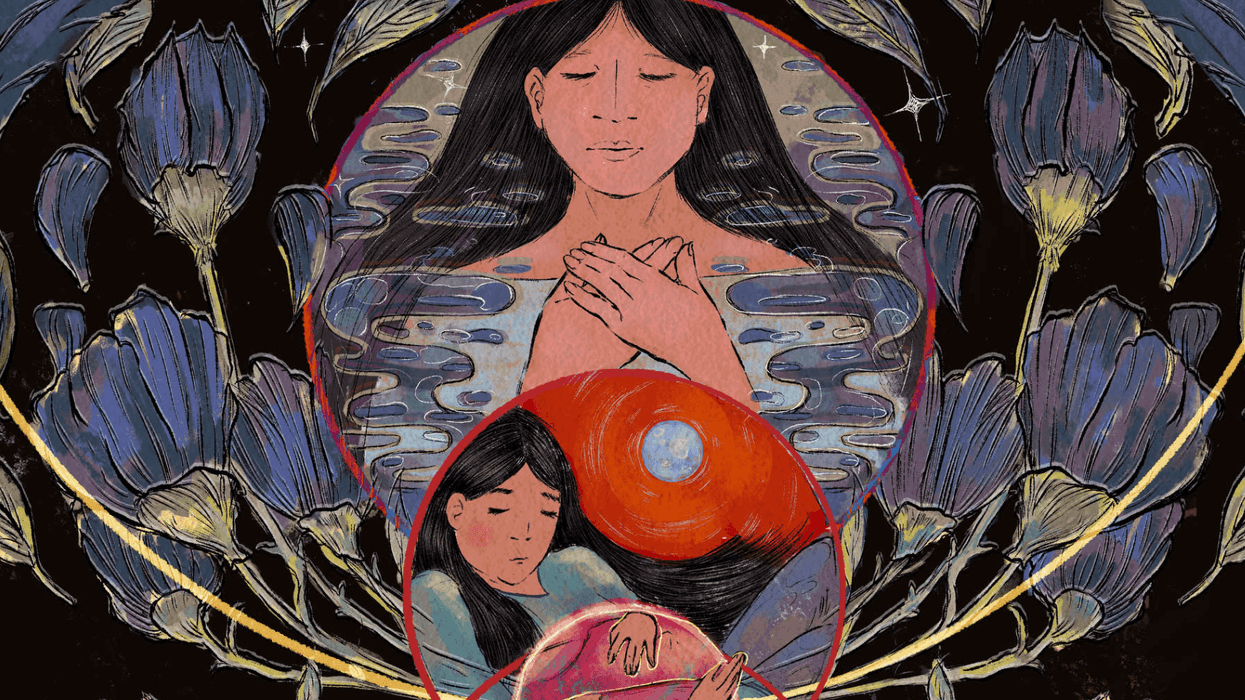
 Native American women face higher rates of death than other demographics. (Oona Zenda/KFF Health News)
State committees have received federal money through the Preventing Maternal Deaths Act, which President Donald Trump signed in 2018.
But the money is scheduled to dry up on January 31, when the short-term spending bill that ended the government shutdown expires.
Funding for the committees is included in the Labor, Health and Human Services, Education, and Related Agencies appropriations bill for fiscal year 2026. That bill must be approved by the House, Senate, and president to take effect.
Native American leaders said including members of their communities in maternal mortality review committee activities is an important step in addressing mortality disparities.
In 2023, tribal leaders and federal officials met to discuss four models: a mortality review committee for each tribe, a committee for each of the 12 Indian Health Service administrative regions, a national committee to review all Native American maternal deaths, and the addition of Native American subcommittees to state committees.
Whatever the model, tribal sovereignty, experience, and traditional knowledge are important factors, said Kim Moore-Salas, a co-chair of the Arizona Maternal Mortality Review Committee. She’s also the chairperson of the panel’s American Indian/Alaska Native mortality review subcommittee and a member of the Navajo Nation.
“Our matriarchs, our moms, are what carries a nation forward,” she said.
Mental health conditions and infection were the leading underlying causes of pregnancy-related death among Native American and Alaska Native women as of 2021, according to a CDC report that analyzed data from maternal mortality review committees in 46 states.
The CDC found an estimated 68 percent of pregnancy-related deaths among Native American and Alaska Native people happened within a week of delivery to a year postpartum. The majority of those happened between 43 days and a year after birth.
The federal government has a responsibility under signed treaties to provide health care to the 575 federally recognized tribes in the U.S. through the Indian Health Service. Tribal members can receive limited services at no cost, but the agency is underfunded and understaffed.
A study published in 2024 that analyzed data from 2016 to 2020 found that approximately 75 percent of Native American and Alaska Native pregnant people didn’t have access to care through the Indian Health Service around the time of giving birth, meaning many likely sought care elsewhere. More than 90 percent of Native American and Alaska Native births occur outside of IHS facilities, according to the agency. For those who did deliver at IHS facilities, a 2020 report from the Department of Health and Human Services’ Office of Inspector General found that 56 percent of labor and delivery patients received care that did not follow national clinical guidelines.
The 2024 study’s authors also found that members of the population were less likely to have stable insurance coverage and more likely to have a lapse in coverage during the period close to birth than non-Hispanic white people.
Cindy Gamble, who is Tlingit and a tribal community health consultant for the American Indian Health Commission in Washington, has been a member of the state’s maternal mortality review panel for about eight years. In the time she’s been on the state panel, she said, its composition has broadened to include more people of color and community members.
The panel also began to include suicide, overdose, and homicide deaths in its data analysis and added racism and discrimination to the risk factors considered during its case review process.
Solutions need to be tailored to the tribe’s identity and needs, Gamble said.
“It’s not a one-size-fits-all,” Gamble said, “because of all the beliefs and different cultures and languages that different tribes have.”
Gamble’s tenure on the state committee is distinctive. Few states have tribal representation on maternal mortality review committees, according to the National Indian Health Board, a nonprofit organization that advocates for tribal health.
The National Council of Urban Indian Health is also working to increase the participation of Urban Indian health organizations, which provide care for Native American people who live outside of reservations, in state maternal mortality review processes. As of 2025, the council had connected Urban Indian health organizations to state review committees in California, Kansas, Oklahoma, and South Dakota.
Native leaders such as Moore-Salas find the current efforts encouraging.
“It shows that state and tribes can work together,” she said.
In March 2024, Moore-Salas became the first Native American co-chair of Arizona’s Maternal Mortality Review Committee. In 2025 she and other Native American members of the committee developed guidelines for the American Indian/Alaska Native subcommittee and reviewed the group’s first cases.
The subcommittee is exploring ways to make the data collection and analysis process more culturally relevant to their population, Moore-Salas said.
But it takes time for policy changes to create widespread change in the health of a population, Gamble said. Despite efforts around the country, other factors may hinder the pace of progress. For example, maternity care deserts are growing nationally, caused by rapid hospital and labor and delivery unit closures. Health experts have raised concerns that upcoming cuts to Medicaid will hasten these closures.
Despite her experience and the ongoing crisis among Native American and Alaska Native people, Swaney hopes for change.
She had a second complicated pregnancy soon after her stillbirth. She went into labor about three months early, and the doctors said her son wouldn’t live to the next morning. But he did, and he was transferred about 525 miles away from Missoula to the nearest advanced neonatal unit, in Salt Lake City.
Her son, Kelly Camel, is now 48. He has severe cerebral palsy and profound deafness. He lives alone but has caregivers to help with cooking and other tasks, said Swaney, 73.
He “has a good sense of humor. He’s kind to other people. We couldn’t ask for a more complete child.”
Native Americans Are Dying From Pregnancy. They Want a Voice To Stop the Trend. was originally published by KFF Health News, published by the 19th, and is republished with permission.
KFF Health News is a national newsroom that produces in-depth journalism about health issues and is one of the core operating programs at KFF— the independent source for health policy research, polling, and journalism.