The record of the Trump 2.0 administration is one of repeated usurpations and injuries to the body politic: fundamentally at odds with the principles of democracy, without legal or ethical restraint, hostile to truth, and indifferent to human suffering. Our nation desperately needs a stout and engaging response from the party out-of-power. It’s necessary but not sufficient for Democrats to criticize Trump, rehearsing what they are against. If it is to generate renewed enthusiasm among voters, the Democratic Party must offer a compelling positive message, stating clearly what it stands for.
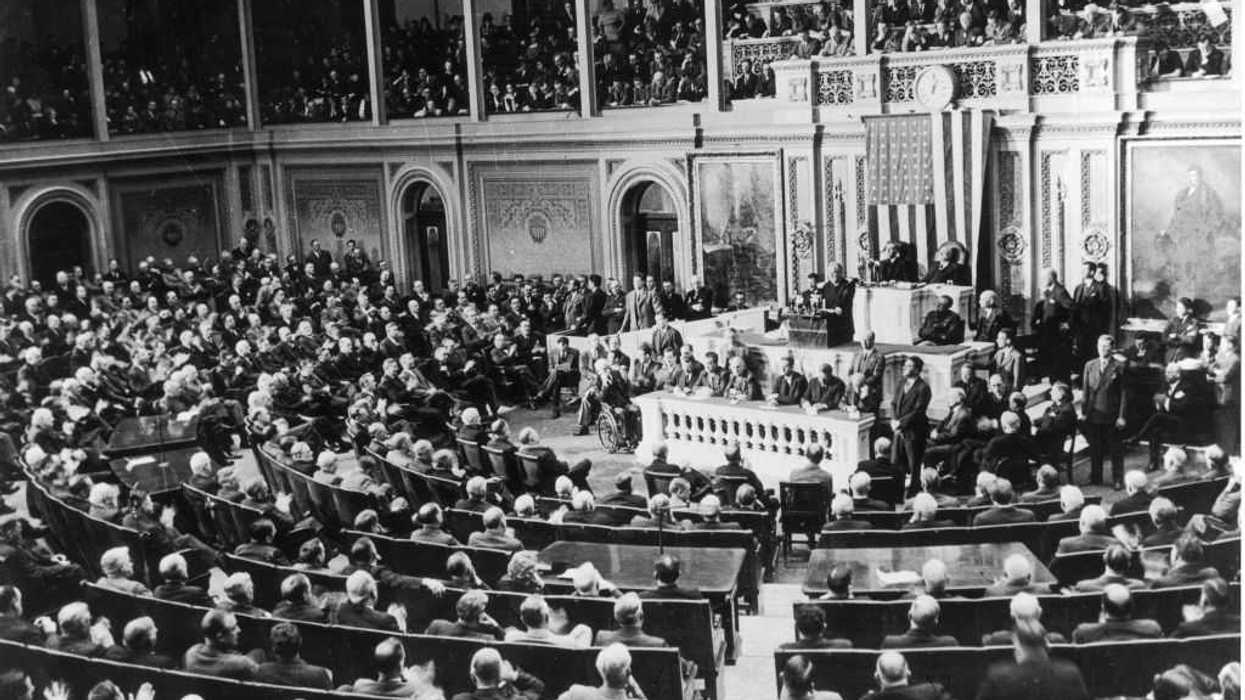
Fortunately, Democrats don’t need to reinvent this wheel. They can reach back to a fraught moment in our history when a president brought forward a timely and nationally unifying message, framed within a coherent, memorable, and inspiring set of ideas. In his address to Congress on Jan. 6, 1941 – a full 12 months before Pearl Harbor – Franklin Delano Roosevelt termed the international spread of fascism an “unprecedented” threat to U.S. security. He also identified dangers on the home front: powerful isolationist leanings and, in certain quarters, popular support for Nazi ideology. Calling for increased military preparation and war production (along with higher taxes), he reminded citizens “what the downfall of democratic nations [abroad] might mean to our own democracy.”
Roosevelt framed his speech by naming four “essential human freedoms,” applicable not just domestically but “everywhere in the world”:
- “Freedom of speech and expression.”
- “Freedom to worship God in one’s own way.”
- “Freedom from want.”
- “Freedom from fear.”
The first are First Amendment guarantees. The last two spoke directly to a nation still emerging from the Great Depression and anxious about international turmoil. The idea that Americans could escape the stain of want and the paralysis of fear resonated across the country. The popular artist Norman Rockwell executed a series of four paintings illustrating each idea. When they appeared as covers on the Saturday Evening Post, the magazine received 25,000 requests for reprints. After we entered World War II, all four ideas served as touchstones, illuminating what we were fighting for.
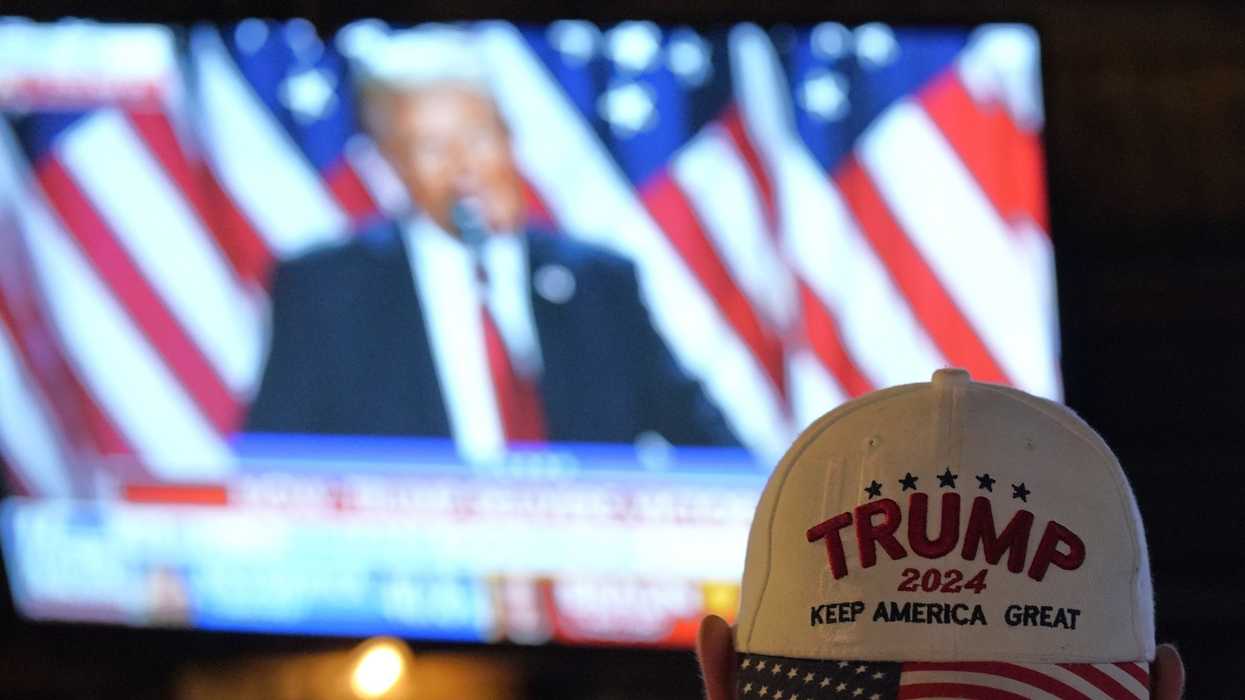
Fast-forward to the present, which bears an uncanny resemblance to Roosevelt’s world. Along with a terrible disconnect: For FDR, the threats to our nation and its values overwhelmingly emanated from abroad. He could scarcely have imagined that 85 years later the menace would reside in the White House. The 32nd president would be aghast at how the 47th has, in the words of Fareed Zakaria, “declared war on civil society.” Trump has normalized criminal behavior and criminalized constitutionally protected actions – systematically undermining each of the Four Freedoms:
- Freedom of speech and expression: Trump has attacked those who would exercise their right of free speech when that speech is critical of him. He has labeled critics “internal enemies” and protesters “domestic terrorists.” He has denigrated the working press as a foe: mocking, belittling, and attacking journalists; spreading falsehoods to confuse the public; and undercutting a vital safeguard of democratic accountability. He has sought to intimidate colleges and universities into restricting academic freedom and campus speech.
- Freedom to worship: He has sided with the forces of Christian Nationalism, which favor selected religious groups over others. Undermining the First Amendment’s establishment clause, he has encouraged efforts to interject sectarian Christian content into public education and has multiplied attacks on Islam in the pretext of opposing anti-Semitism. And of course, he gives no quarter to those whose choice not to worship enjoys equal constitutional protection.
- Freedom from want: Trump has assailed the social safety net that provides material assistance to those in greatest economic need – both domestically and internationally. DOGE’s reckless assault on governmental offices and civil servants, the demise of USAID, and the stunning incompetency of Trump’s cabinet have undercut the ability of key agencies to fulfill their statutory functions on behalf of the American people. Trump’s ill-considered tariffs have demonstrably weakened the U.S. economy, costing jobs and raising prices for domestic consumers. By reversing measures addressing climate change, he has weakened future economic prospects for everyone on the planet.
- Freedom from fear: Roosevelt focused on international arms reduction. But Trump has brought this concern home by his agents’ continued disregard of the Fourth Amendment, the Eighth, and, arguably, others. He has repeatedly threatened his perceived political enemies with deportation, imprisonment, and even death. His campaign of political retribution features both selective prosecutions and economic intimidation. He has encouraged physically aggressive tactics by inadequately trained ICE agents deployed in targeted communities. (The recent killings of two Minnesota citizens by ICE have raised the level of alarm.) He has scorned crucial constitutional safeguards for people in custody. He has ignored court decisions and the need for judicial warrants. It is hard to imagine any undocumented immigrant – or anyone pursuing the legal process of naturalization – feeling safe right now. It is hard to imagine any non-violent dissenter experiencing solace. But in fact, every U.S. citizen is potentially at risk.
Democrats must not lose sight of pressing kitchen table issues and, above all, the existential threat facing our democracy. But they need to put forward a clearly drawn and detailed plan – couched in the kind of unadorned language Roosevelt used so effectively – to demonstrate how a properly functioning government can restore and extend each of these four fundamental freedoms; How a new generation of enlightened, ethical, and compassionate political leaders can repair the Trump administration’s damage through legislation and responsible governing; And finally, how this “Project 2029” can spark a rebirth of liberty, equality, and prosperity. If properly articulated, such a pledge will resonate with everyday citizens, as it did in Roosevelt’s era. The American people thirst for a forward-looking, hopeful, and elevating message to reawaken faith in our institutions and our deepest values. The scaffold is here, just waiting to be given voice.
Philip A. Glotzbach, Ph.D. is president emeritus of Skidmore College. He is the author of Embrace Your Freedom: Winning Strategies to Succeed in College and in Life, a book of guidance for college students and their parents in these troubled times.
Beau Breslin, Ph.D. holds the Joseph C. Palamountain Jr. Chair in Government at Skidmore College.