

Skip to content
Search

Latest Stories

Follow Us:
Top Stories

Why Judicial Decisions Deserve More Than Political Spin

Understanding how research, precedent, and burdens of proof—not bias—drive rulings.

Opinion

Why Judicial Decisions Deserve More Than Political Spin
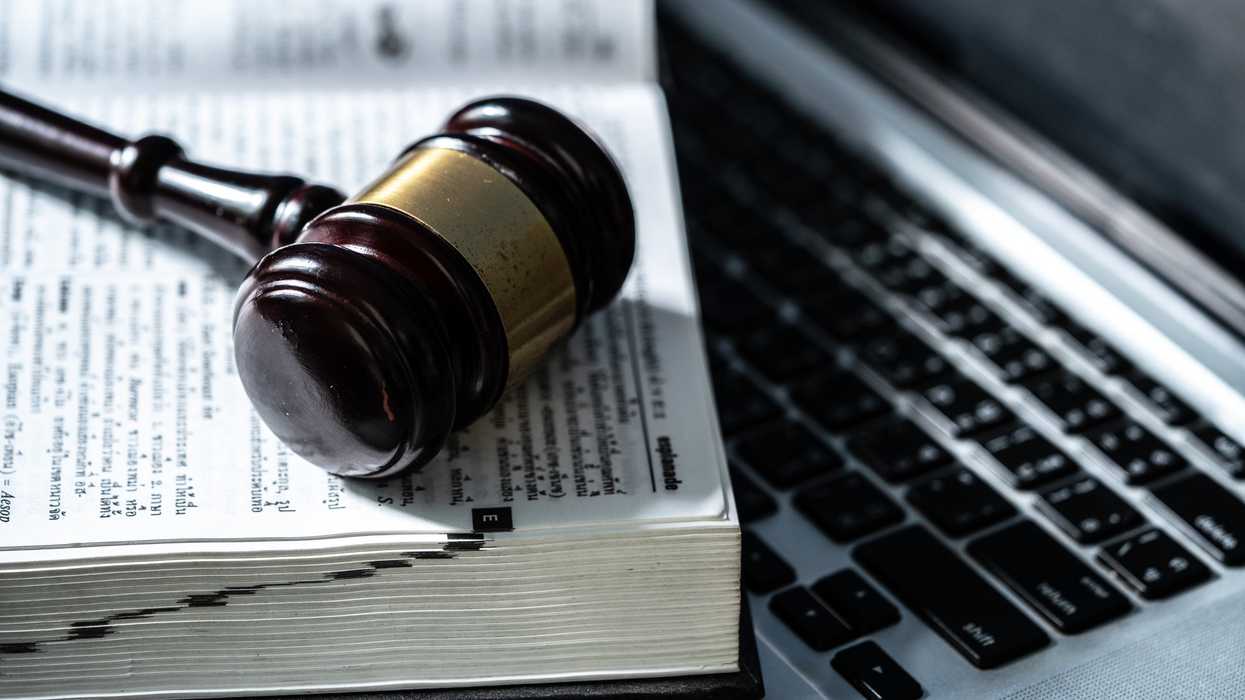
Judge gavel and book on the laptop
Getty Images/Stock

The Scene: The State of the Union Address, front row.

Thought bubble above the head of Chief Justice John Roberts:


“Where does this guy come off criticizing our decisions when he hasn’t the slightest idea of how we come to them?”

We all know of people who disparage judges when they are on the losing side of a decision, and without any understanding of the decision beyond that it was against them. They apparently believe that judges decide issues according to their own biases. Some may even think that judges employ dartboards to decide cases. Because these beliefs are drastically uninformed, I ask that the next time you hear a sore loser deride a judge and demand the judge’s impeachment, consider the typical decision-making process of a judge.

Our nation is governed by the rule of law, so litigants may have reasonable expectations about the merits of their legal positions on cases brought by and against them. Without the rule of law, decisions would be wildly unpredictable because cases and issues would be decided by whim, chance, or connections. Accordingly, judges do not decide cases based on anything other than the law, which requires that they must perform legal research to unearth the pertinent law or “binding precedent.” If research does not unearth such precedent, it will at least guide the judge’s discretion in fashioning a resolution of the issue based on analogous law or similar cases. Even if an experienced judge knows the recent governing precedent, research must still be performed to ensure that the precedent has not been overruled or altered. Judges also want to cite in their decisions at least one case that is factually similar to the case at bar, which requires further research. It is all about assuring litigants and the public that the rule of law is stable and based on precedent and reason.

While anyone can be trained to perform legal research, it is a craft that requires a thorough understanding of the facts of the case and the legal issues arising from those facts. Absent such an understanding, the results of the research will likely be skewed and not on point. Such results may be reversed on appeal, thereby assuring the public that errors in judgment may be rectified. Of course, even if the judge’s search for the law is properly based on the facts of the case, the law may still be unclear as to the proper resolution, requiring further research to find analogous cases and issues which may provide guidance as to the proper result.

There are rules of evidence that provide needed guidance, and judges are grateful for them, as each decision is of crucial importance not only to the litigants but to the rule of law as well. So much for biases and predilections. These rules of evidence include “burdens of proof.” Burdens of proof facilitate the decision-making process and foster reasonable expectations as they set forth legislatively enacted standards that must be met before a judge may determine whether evidence presented by a litigant is sufficient to prove the litigant’s position in a case.

To adequately support a criminal conviction, the burden of proof that must be met is “guilt beyond a reasonable doubt.” The onerousness of that burden is warranted by the potential penalties for a criminal conviction, often including incarceration. In a civil case, by contrast, the burden of proof is “the preponderance of the evidence,” or the greater part of the evidence. Between these two extremes is “clear and convincing evidence,” which is applied in certain civil wrongs where the Legislature has determined that a person cannot be held liable on merely the preponderance of the evidence. Judges and juries are, therefore, required to decide cases and issues by applying the pertinent burden of proof to the evidence presented. A failure to do so renders the decision-making process unpredictable, thereby eroding the rule of law.

And so, the next time you hear someone, whether the president of the United States, a member of Congress, or anyone else, disparage a judicial decision as the product of bias or call a judge anti-American for following the Constitution, consider whether his or her own bias inspires the disparagement or whether there is a darker motive in play. If enough people are alert to the biases of those disparaging well-reasoned judicial decisions, respect for the rule of law may be maintained.


Hon. Barbara Jaffe is a retired Justice of the New York State Supreme Court and volunteer for Lawyers Defending Democracy.


Read More

The Unitary Executive Myth Is Fueling Dangerous Overreach

Chief Justice of the United States John G. Roberts, Jr attends U.S. President Donald Trump's address to a joint session of Congress at the U.S. Capitol on March 04, 2025 in Washington, DC.

(Photo by Win McNamee/Getty Images)

The Unitary Executive Myth Is Fueling Dangerous Overreach

The “Unitary Executive” doctrine has become a talisman for expanding the sphere of Presidential prerogatives. Chief Justice John Roberts has been a key architect of this doctrine. It underlies the Supreme Court’s use of its shadow docket to reverse many detailed, well-reasoned lower federal court decisions over the last year. Those decisions, after carefully hearing and assessing the facts and the law, had enjoined unprecedented, far-reaching presidential actions (including the imposition of tariffs) that were almost certain to inflict immediate and substantial harm on millions of people and on the functioning of government itself.

As a lawyer, I have grave concerns about the so far unconstrained actions of this Executive branch and what they mean for the rule of law and the survival of our personal liberties. But even those too jaded to care or who think naively, “it will never happen to me,” should be concerned about ineptitude, greed, and waste. These are the costs imposed on all of us when government resources and employees are deployed on personal vendettas or redirected from critical government functions to support impulsive, arbitrary, and often futile actions.

Keep Reading Show less
Elite Insulation and the Fragility of Equal Access

A protest group called "Hot Mess" hold up signs of Jeffrey Epstein in front of the Federal courthouse on July 8, 2019 in New York City.

(Photo by Stephanie Keith/Getty Images)

Elite Insulation and the Fragility of Equal Access

In America: What We Want, What We Have, What We Need, I argued that despite partisan division, Americans share core expectations. They want upward mobility that feels real. They want elections that are credible. They want markets where new entrants can compete. They want rules that bind concentrated wealth. They want stability without stagnation.

The Epstein case directly tests those expectations.

Keep Reading Show less
The back of a person's head, they are holding a small rainbow colored flag.

Over the past year, the administration has faced a number of high-profile lawsuits over the ban on LGBTQ+ pride expression and refusal to let transgender workers use bathrooms that align with their genders.

Calla Kessler/The Washington Post/Getty Images

​A pride flag, a bathroom ban, a job change: LGBTQ+ federal workers challenge Trump in court

Sarah O’Neill loved her job as a data scientist at the National Security Agency (NSA).

“The government before last year was what I would consider to be a model employer,” O’Neill said.

Keep Reading Show less
A plane flying above.

Analysis of Donald Trump’s second-term immigration crackdown, mass deportation plan, and ICE policies, examining human rights concerns, due process, and historical parallels.

Getty Images, SCM Jeans

Are Trump’s Mass Deportations Leading to State‑Sanctioned Persecution?

For the past 14 months, Americans of all political persuasions have witnessed how Trump’s ICE-related actions have involved aggressive detention and demonization of immigrants and minorities. Historians have not observed this large-scale scope of discrimination behavior since 1953-1955, when President Dwight Eisenhower (R) deported ~1.3 million Mexicans from America, including U.S. citizens of Mexican descent and, in some cases, anyone of Mexican appearance, because agents assumed they were undocumented.

Actions by Mr. Trump and personnel within the Department of Homeland Security, Customs and Border Protection, ICE, and the FBI have been widely criticized as violating the core American values of equal protection for all families and respect for basic rights. Across the political spectrum, many see these actions as targeting immigrants and minorities in ways that undermine our nation’s shared commitment to fairness, justice, and constitutional equality. Knowing Americans have witnessed two citizens being killed in Minneapolis and one person in Texas by ICE agents, we may be on the verge of systemic persecution and state‑sanctioned violence on a scale not seen in modern American life.

Keep Reading Show less