



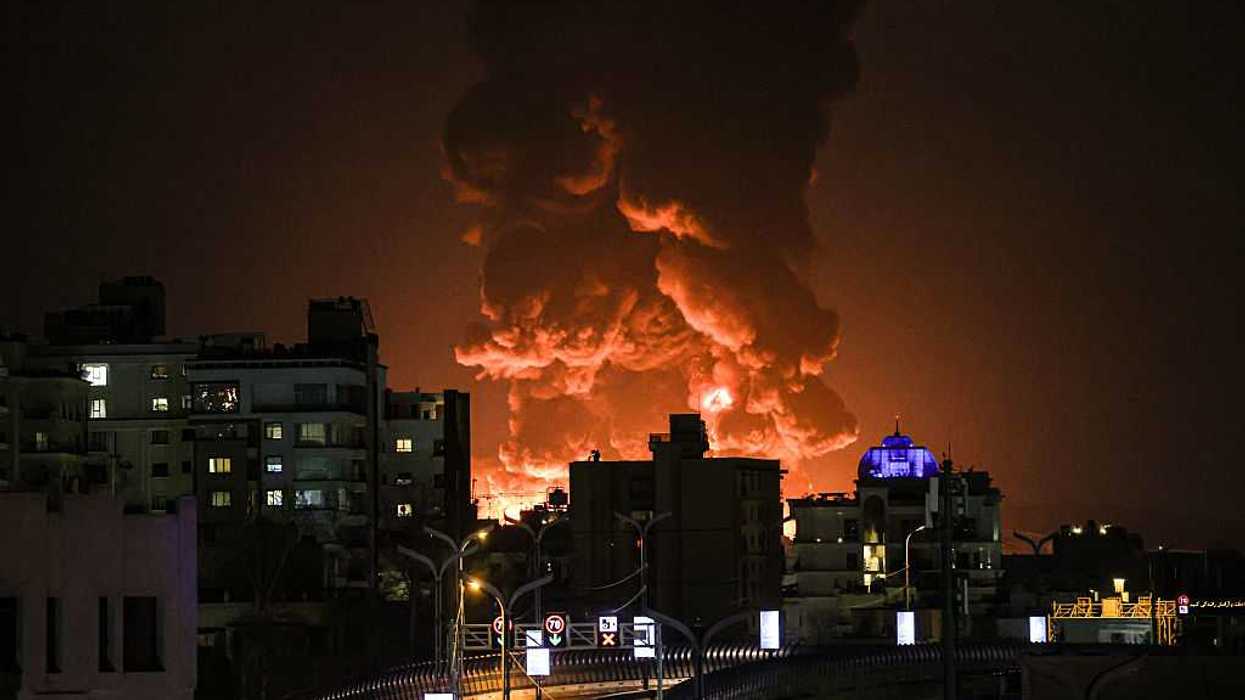
In what is being called “Trump’s War,” the United States has increased attacks against Iran recently, after the initial attack killed Ayatollah Ali Khamenei, the nation’s Supreme Leader.
Congress did not approve the action, nor was informed of it—as is the law. Later, both the Senate and the House of Representatives rejected a bid to rein in actions pertaining to the Iran war.
Following retaliation from Iran against the U.S. and its ally Israel in the region, which led to the deaths of six U.S. troops, the question of legality and ethical process looms over the Department of Defense and the world.
Under the Uniform Code of Military Justice (UCMJ), disobeying lawful orders could result in various punishments, including court-martial, confinement, and dishonorable discharge.
Even if the war is later considered illegal, this does not necessarily protect servicemembers from punishment for disobeying otherwise lawful orders. For example, during the Vietnam and Iraq War military courts rejected claims that the war’s legality justified disobeying orders.
Military courts routinely held that whether a war is legal is a decision for politicians, not rank-and-file servicemembers.
This brings up the question of whether U.S. service members can refuse to engage in what may be seen as unlawful orders, a concern that goes back more than three months to the FBI’s investigation of Democratic Congressmen Sen. Mark Kelly (D-AZ) and Sen. Lisa Murkowski (R-Alaska), who reminded leaders of the legal option to refuse.
The now-abandoned FBI’s investigation was an attempt by the Trump administration to tighten its hold on how servicemembers perceive President Trump’s commands. Whether framed as oversight or discipline, these actions risk chilling lawful dissent and eroding a core American principle: obedience to the Constitution, not to any one individual.
The question facing the country now is whether or not the war is legal. This is the most severe action so far in a year of this administration’s military moves that are unethical and inhumane.
This comes months after Defense Secretary Pete Hegseth summoned hundreds of military leaders to Quantico when it immediately became clear that he planned to reimagine the military in his own image – cis, white, and male.
The purging of trans people, black men, and women from the armed services has been maliciously methodical. From enlisted servicemembers to officers, diversity of thought and person are not safe. The message being sent to the ranks is unmistakable: conformity is loyalty and difference is suspect.
The administration has been primarily focused on eliminating all diversity, equity, and inclusion efforts as it relates to gender and race.
The pattern is difficult to ignore. During Trump’s first month in office, he issued an executive order claiming that transgender people lacked the “humility and selflessness required of a servicemember.”
He dismissed Gen Charles Brown, the first African American to lead a branch of the United States Armed Forces, as Joint Chiefs of Staff. He also removed Admiral Linda Fagan, the Coast Guard Commandant as the first woman to lead a branch of the U.S. military.
Beyond individual firings, the administration eliminated the Defense Advisory Committee on Women in the Services—a body designed to study and address systemic challenges facing women in uniform. Each action, taken individually, could be framed as a routine leadership change or restructuring. Taken together, however, they signal a shift towards a narrower conception of military leadership and service.
The consequences of exclusionary policies are tangible. Reports that Black male servicemembers are being pushed out of service under stricter grooming standards due to pseudofolliculitis barbae are rising.
Historically, the military adopted accommodations recognizing that such conditions are legitimate health issues, not grooming failures. Abruptly enforcing policies that disproportionately impact specific racial groups risks undermining morale.
The broader implications extend beyond the military itself. Civil-military relations in the United States depend on the military remaining professional, nonpartisan, and reflective of the population they defend. Moreover, recruitment challenges may deepen if potential service members believe that their identity or viewpoint makes them unwelcome.
The United States faces a critical choice about the future of its military. Especially now when war has been initiated and U.S. troops have been killed—the first deaths in Trump’s second administration.
Will the U.S. play by the Constitution and the ethics of the founding of this country?
Yes, the administration can embrace a force that reflects the nation's complexity and diversity, or it can pursue a narrow vision that prizes uniformity of identity and thought over the strategic advantages that diversity provides.
The launching of a war sidestepping legal process, the earlier firings of senior leaders, and the implementation of policies that disproportionately impact Black service members all point towards the latter. The nation deserves better, and so do the servicemembers who have sworn to defend it.
Especially now that the U.S. is escalating this war.
Yulanda Curtis is the founder of a Veterans Legal Clinic at the University of Illinois, which provides free legal assistance to veterans and their family members. She is a Public Voices Fellow through The OpEd Project.









The President Invited Iran to Bomb My Home