


“Kalshi Offers $1 Billion for a Perfect March Madness Bracket.” The company’s recent website headline is exactly what you would see on a sportsbook ad to lure in zealous gamblers and soon-to-be gamblers. But despite the marketing blitz aimed at the public, in legal circles and before government regulators, Kalshi and competitor Polymarket claim to be financial exchange platforms. For everyday Americans, the pitfalls are troubling.
Prediction market companies like Kalshi are selling their services as investment tools, prodding Americans to use their knowledge of world events, political dynamics, sports, and other topics to pad their pockets.
There was a fair amount of attention to these markets when reports came out showing how a small handful of users made large sums of cash, $2.4 million in one case, wagering on operational details of President Trump’s military actions against Iran.
For Americans with much less insider knowledge, the rapid rise of these platforms represents a new and unsettling “get-rich-quick” scheme that is separating families from their hard-earned money at a time when they can least afford it.
The prediction platforms allow users to place wagers on the outcomes of various sporting contests and events within games. Users can wager on point spreads, “over/unders”, and player proposition bets (“props”).
At the same time, the platforms present sports betting as “investing,” lowering users’ guard and masking the risks. The unassuming user would have no idea that they are using a platform that isn’t held to the same regulatory standards as legal sportsbooks. Even the user interface mirrors a sportsbook.
The sheer volume of this unregulated activity is enormous. During this year’s opening round of the Men’s and Women’s March Madness college basketball tournaments, Kalshi alone saw more than $800 million wagered on its "contracts."
Indeed, the overwhelming majority of activity on U.S. prediction markets is just plain old sports gambling.
Meanwhile, the platforms are wrapping themselves in financial terminology before regulators to claim their products are akin to financial derivatives tied to commodities like wheat and copper futures. Regulators at the Commodity Futures Trading Commission (CFTC) have lent their credibility to this view.
In addition to the platforms' faulty substantive claims, the CFTC lacks the commensurate resources to govern the rapidly evolving prediction market space. For example, the Chicago enforcement division of the CFTC recently went from 20 trial attorneys to zero—not an especially encouraging sign for the agency.
The CFTC decision suddenly made prediction markets available to anyone 18 or older anywhere in the country—even in states that have not legalized sports betting.
In states that have legalized sports betting, prediction market platforms can now avoid age restrictions, gambling taxes, requirements for responsible gaming resources, and other regulations that lawmakers and voters established as part of decisions to greenlight sports betting in their jurisdictions. Prediction markets completely lack the consumer safeguards that apply to legal sportsbooks.
By magnifying the problem for users, this regulatory backdoor is paving the way for an alarming lack of transparency, allowing prediction market platforms to mislead people into believing they are making financial investments while providing a wild-west of gambling options.
Of course, prediction market platforms say they are providing an innovative service and increasing access to financial opportunities for normal people. That would be nice, except for the discrepancies between what they say to policymakers and how they present themselves to consumers, which show otherwise.
Wrapping gambling activity in investment terminology serves only to mislead Americans. Muddying the distinctions between these two activities allows platforms to prey on Americans with lower levels of financial literacy and lower incomes—populations where even relatively small financial losses can have significant long-term consequences.
True innovation in the financial services industry should be about expanding pathways for wealth creation and opportunity.
With the economic effects of tariffs, war, and inflation, families across the country are increasingly facing substantial headwinds as they struggle to pursue the American dream.
Without meaningful regulatory change, users will continue to be too easily lured into repeatedly funneling more money into their accounts, diverting funds from real investments, such as savings, education, or other long-term financial goals.
Policymakers need to close the regulatory gap between how prediction markets actually function and how they are marketed once and for all, starting with putting the brakes on so-called “sports event contracts,” sports betting by another name.
The lines between gambling and investing are being blurred to an indistinguishable degree, leaving everyday Americans, especially those who are financially vulnerable, at risk.
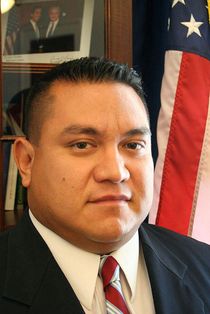
Mario H. Lopez is the president of the Hispanic Leadership Fund, a public policy advocacy organization that promotes liberty, opportunity, and prosperity for all.