


Skip to content
Search

Latest Stories

Follow Us:
Top Stories

Veterans Caught in the Justice System Need Support, Not Neglect

How a National Center on Veterans Justice can drive smarter policy and stop veterans from falling deeper

Opinion

Veterans Caught in the Justice System Need Support, Not Neglect
Worn american flag with white embroidered stars and red stripes.
Photo by Tim Mossholder on Unsplash

Roughly 200,000 service members leave the military each year. As a retired brigadier general who spent more than three decades in the U.S. Army, I know that most of them return home stronger from their service with a greater sense of pride and purpose.

But many veterans also carry invisible wounds. Suffering from post-traumatic stress disorder, traumatic brain injury, or other combat-related trauma, too many fall into the criminal justice system and still need our help.


Nearly one-third of veterans have been arrested and booked into jail at least once, compared to one in five non-veterans. Veterans are now twice as likely as non-veterans to face incarceration, and tens of thousands are currently imprisoned. The suicide rate for veterans is approximately 1.5 times higher than the rate among the general population, and it’s especially high for veterans leaving incarceration.

Unfortunately, the way we currently manage struggling veterans undermines recruitment and jeopardizes the health and safety of our veterans, their families, their communities, and, ultimately, our country.

The federal government recognizes this problem. In April, the U.S. Senate Committee on Veterans’ Affairs held a bipartisan hearing exploring how to help justice-involved veterans.

I was there testifying on behalf of the Council on Criminal Justice Veterans Justice Commission. Launched in 2022, the Commission was chaired by former U.S. Defense Secretary and U.S. Sen. Chuck Hagel and included former Defense Secretary and White House Chief of Staff Leon Panetta, as well as other leaders representing veterans, the military, the Veterans Administration, community advocates, and various sectors of the justice system.

Its aim was to examine the extent and nature of veterans’ involvement in the criminal justice system and develop recommendations for evidence-based policy changes that enhance safety, health, and justice for veterans and their families.

I outlined several of those recommendations in my testimony.

To start, we need more support for veterans when they reenter civilian life. Changes must start at the Pentagon by creating a dedicated office to support transition, adopting evidence-based programs to help at-risk service members, and expanding access to VA health benefits.

Next, we need more effective responses when veterans do break the law. That means expanding alternatives to prosecution and incarceration—such as diversion and treatment programs—and doing a better job of identifying veterans who end up in the system.

Finally, we need more resources for veterans during incarceration and when they re-enter their communities. This includes providing VA health care for those behind bars, prioritizing hiring of justice-involved veterans, and removing barriers that make it harder for veterans to access housing and benefits after release.

Beyond the Senate hearing, we’ve seen other encouraging signs that both the federal government and states are prioritizing veterans.

Earlier this year, Congress provided $4 million in the Justice Department budget for a National Center on Veterans Justice, as recommended by the Commission. The Center should act as a hub to improve the success of justice-involved veterans by identifying and replicating best practices nationwide and establishing robust program evaluation so we can invest in what works. If implemented properly, it will revolutionize how the justice system treats the unique cases of our veterans. States are also taking action. Following a Commission recommendation, Nebraska passed a law creating alternative sentencing options for veterans, and similar legislation is pending in several other states.

To be sure, veterans who break the law must be held accountable for their actions. But as a nation, we must also recognize our responsibility for the circumstances of military service that can contribute to criminal behavior. Our response should emphasize restoration, not punishment alone.

It is nothing short of tragic when those who once wore the cloth of our nation now wear the cloth of incarceration. We have a duty to uphold our military’s commitment that no man or woman who served our nation be left behind.

David MacEwen, a retired brigadier general, spent more than 30 years in the U.S. Army, concluding his service as the 59th Adjutant General. He is the director of the Council on Criminal Justice Veterans Justice Commission.


Read More

Preschool children playing with colorful shapes

Childcare providers warn that Trump administration rollbacks and rising costs are pushing America’s fragile child care system toward collapse, leaving families and workers struggling to survive.

Lourdes Balduque / Getty Images

America Keeps Turning Its Back on Childcare; Families are Paying the Price.

Earlier this month, the Trump Administration sent a clear message to American families: child care is a personal problem, not a public responsibility.

The president’s executive order repealed federally mandated provisions that helped stabilize the child care industry after the COVID-19 shutdown. Without these safety nets, more programs will close their doors. What little federal support childcare providers had was already inadequate. I know this firsthand because, after three decades in the child care field, I was forced to face a harsh reality and close my doors.

Keep Reading Show less
Tensions were High as Representatives Debated Allegations Against the Southern Poverty Law Center

Members of the House Judiciary Committee during the hearing on the Southern Poverty Law Center.

Credit: Olivia Ardito

Tensions were High as Representatives Debated Allegations Against the Southern Poverty Law Center

WASHINGTON, D.C. – The House Judiciary Committee held a hearing last Wednesday examining claims that the Southern Poverty Law Center had funded the very hate groups the center aims to dismantle. Tensions were high as Republicans and Democrats fired back at each other. Noticeably absent was a representative from the center, a non-profit that since 1971 has fought for racial justice and against white supremacy.

The hearing came after the Texas Attorney General Ken Pax­ton announced last Monday that he was investigating the center. The U.S. Justice Department indicted the Southern Poverty Law Center in April for allegedly funneling money to people associated with violent extremist groups. The group has flatly rejected the accusations. While Republicans backed these claims, Democrats viewed the allegations as part of the Trump-backed efforts to hinder “DEI” and other racial justice initiatives.

Keep Reading Show less
Trump Is Protecting Insurrectionists But Not Your Kids

An analysis of gun violence, political extremism, Islamophobia, and community resilience in America after the San Diego Islamic Center shooting.

GemaIbarra / Getty Images

Trump Is Protecting Insurrectionists But Not Your Kids

Last Monday, two teenage gunmen opened fire outside the Islamic Center of San Diego, murdering three Muslim men. Unfortunately, this is the type of horror Americans have been conditioned to expect. After years of political stagnation on gun safety and ongoing hateful acts of violence, our president has signaled once again to children, to the Muslim community, and to everyone else: he does not care if you get shot.

Gun violence has been on the rise in the United States for too long. Perhaps the most harrowing consequence is that gun violence is now the leading cause of death among children. Whether from school shootings, homicides, suicides, or accidents, the gun-death rate for children is nearly five in every 100,000. In fact, the number of domestic deaths due to gun violence is about as many as U.S. military deaths in every war since World War I combined. More children have been lost to gun violence since 2020 than troops lost since 9/11. Yet even with such a striking death toll—and one affecting children no less—happening on our own soil, Vice President J.D. Vance calls it a “fact of life.

Keep Reading Show less
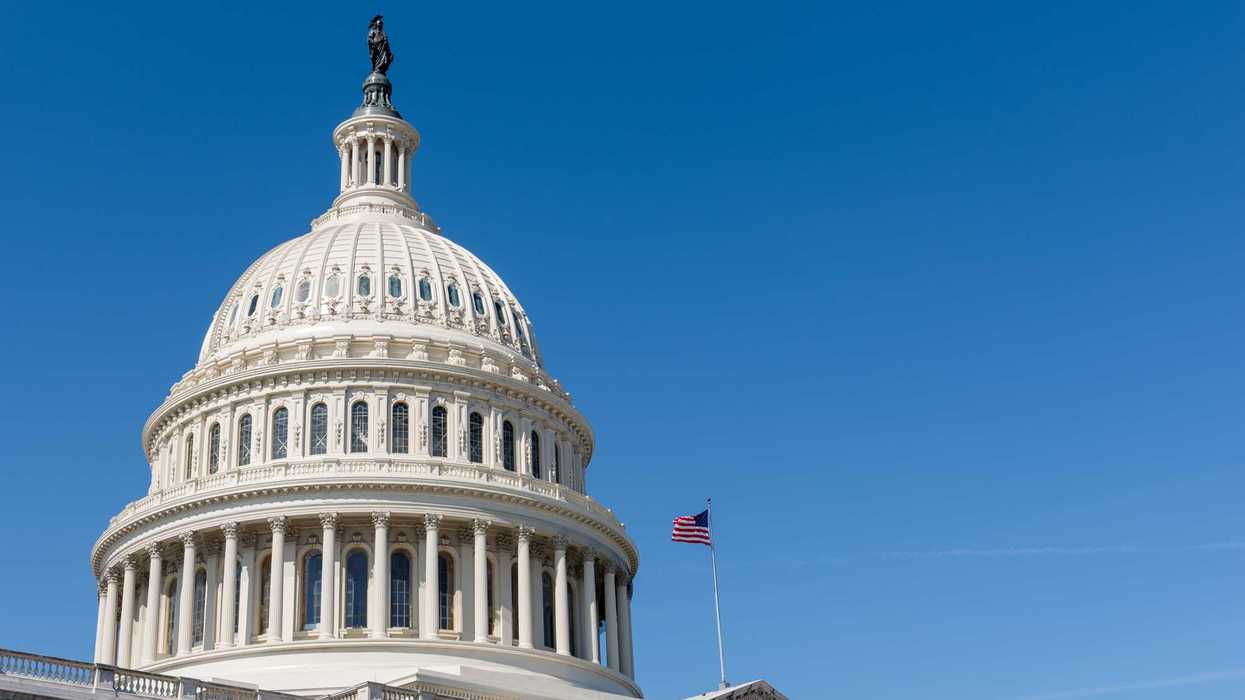
The dome of the United States Capitol Building in Washington, D.C., stands tall against a blue sky with the American flag waving proudly

Congress faces growing pressure to pass redistricting reform as lawmakers debate banning gerrymandering, independent commissions, and mid-decade map changes amid renewed national controversy over fair elections.

Getty Images, aire images

Congress's Missed Opportunities on Redistricting Reform

On April 29, Issue One posted an image on Facebook and Instagram: CONGRESS CAN FIX THIS WITH THREE SIMPLE STEPS:

  1. Establish Clear National Criteria for Fair Maps
  2. Require Independent Redistricting Commissions in Every State
  3. Ban Mid-Decade Redistricting.

Issue One added below: “… but it needs 60 Senate votes to do it.”

Keep Reading Show less