


When Graham Platner’s senate campaign imploded last month, the first thing that came to mind was a comment by one of his campaign strategists, who also advises many other major political figures today. They said, “Part of our thesis here is that people do not want their candidates grown in vats… they want people who do not look and sound like the vat-grown people who’ve been leading this country off the cliff for the past century.”
Meanwhile, the Democratic primary for a Michigan Senate seat has been defined by candidates endlessly taking shots and hurling insults at each another. If recent history is a guide, things will only get nastier and more divisive in Michigan and elsewhere from here until November.
It’s all playing out against a backdrop of voices claiming Americans want a different kind of politician right now: “fighters.” Indeed, the Platner campaign staffer also said many Americans are willing to overlook personal integrity and other key values if they think their “fighter” can win.
It’s a dangerous bargain. It’s also dead wrong.
I’ve written before how I believe Americans are stuck in a fight or flight mode. They’re disgusted that their concerns are being ignored. They’re angry, exhausted, even disoriented by all the acrimony, division, and noise engulfing politics right now. When you're in that headspace, it’s natural to gravitate toward candidates who come out swinging and embrace a “take no prisoners” approach.
It is leading candidates and their consultants to raise money off of fear, stoke Americans’ anxieties for their own gain, and seek to win at all costs. We can’t go on like this.
Some will no doubt note how today’s political fights pale in comparison to the kind of campaigns that riddle American history right back to our founding. The elections of 1800 and 1828 must rank as some of the nastiest and most divisive elections in history. But history isn’t destiny. Nor did earlier campaigns contend with 24/7 news, social media, and AI.
Part of being American is having aspirations and striving toward ideals. It can seem that Americans have given up on those ideals and are giving in to an “anything goes” approach. But based on my travels across the country, they have not.
There’s a better way.
Some two decades ago, The Harwood Institute, with support from the Pew Charitable Trusts, deeply engaged Americans nationwide—from Baltimore to Louisville to Fresno—around the question, “What are your aspirations for our politics?” When it came to political candidates, Americans named these five factors:
- Tell us who you are—tell us what inspires you to seek office, what your values are, who supports you and why, and about your past.
- Know us—genuinely know how people in your community live and the challenges they face; show a deep understanding of people and their concerns.
- Explain where you stand—offer a vision for what you want to achieve and why, without overblown promises, and put the tough issues and trade-offs on the table.
- Be forthright—tell us what you’re about from the start and take on questions and challengers in direct, honest, straightforward ways.
- Set the right tone—pursue a tone that is respectful, not mean-spirited or negative.
These are different from simply saying we need more civility in public discourse; and no one should confuse them with the kind of kumbayah politics that some groups promote. Americans told us they wanted tough-minded, give-and-take campaigns, but ones that focused on what matters to them and strengthened our civic culture.
We turned these aspirations into a “Political Conduct Barometer” that people all across the country used as a type of scorecard to measure whether or not candidates were meeting their aspirations and contributing to a more productive culture.
Let me be clear: the vast majority of politicians today would fail the political conduct test on every measure. The thing is, as I’ve crisscrossed the country engaging Americans of all political persuasions, these five factors, while being obscured by all the current noise, remain people’s aspirations for political conduct today.
Platner’s strategist was right about one thing: people are looking for something different. They just deserve better than swapping one kind of inauthenticity for another.
Now is not the time to surrender to a politics that further destroys hope and will indeed lead us off the cliff. People’s yearning for a different political culture in this country grows by the day. We cannot let politicians and their consultants take our politics hostage. Americans want something better.
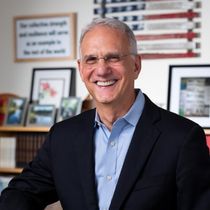
Rich Harwood is the president and founder of The Harwood Institute.


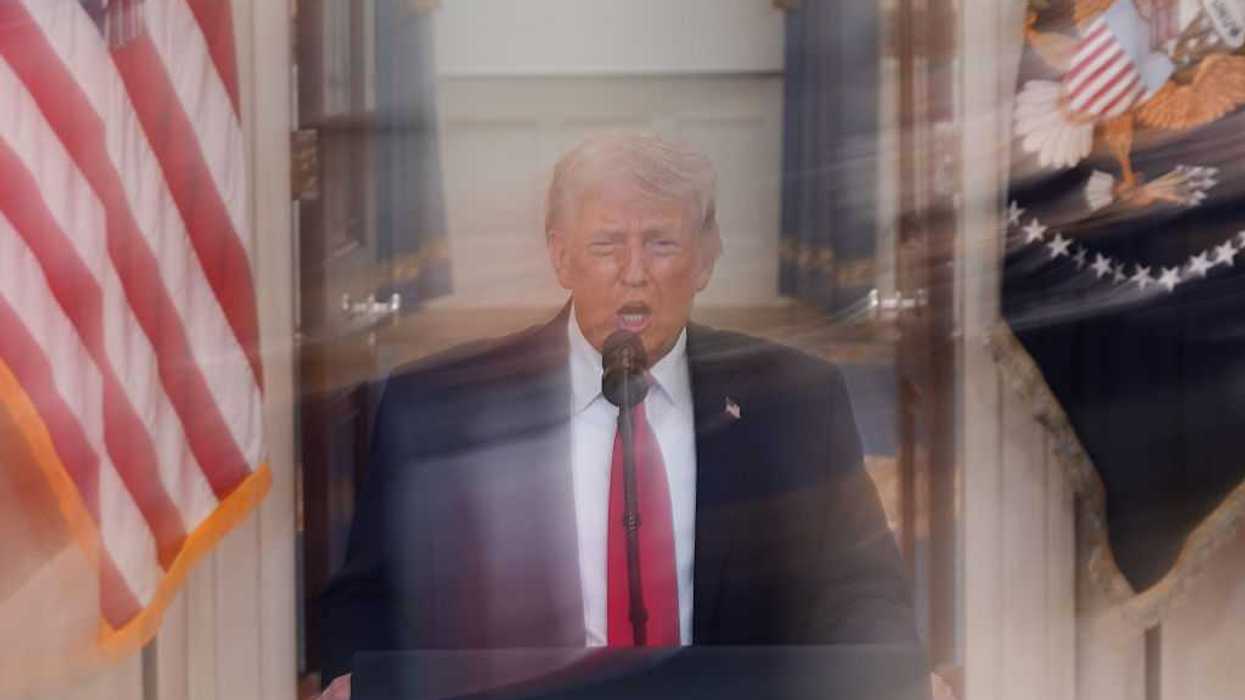








U.S. President Donald Trump speaks during a“ Steel Across America” event ahead of the 25th anniversary of the Sept. 11th attacks on the Ellipse near the White House on Sept. 8, 2026 in Washington, D.C. President Trump welcomed 9/ 11 first responders to the Tunnel to Towers Foundation’ s“ Steel Across America” event featuring a 16,900- pound, 21- foot steel beam recovered.
For Trump, even 9/11 is an opportunity
There was a reason organizers of the 9/11 ceremony in Manhattan told President Trump he could not speak at this year’s memorial service.
A good one, it turns out.
Because in a speech he gave on Tuesday in Washington, he did exactly what they were presumably worried about — he made it about himself.
According to The New York Times, Trump had wanted a speaking role at the service, but the National Sept. 11 Memorial and Museum, which oversees the site, said no, as they’ve maintained for the past decade-plus that the venue and event should be nonpartisan.
Trump has long used awful tragedies to either puff himself up, trash political opponents, or sell lies to the American people.
He blamed a deadly plane crash at Washington National Airport last year on diversity, equity and inclusion policies. He blamed Puerto Ricans for the devastation they endured after Hurricane Maria in 2017. He reportedly considered withholding disaster relief after the California wildfires based on the way affected regions voted. In an interview on Fox News meant to commemorate the 75th anniversary of D-Day in Normandy, he used the occasion to slam former House Speaker Nancy Pelosi…with graves of the dead behind him.
And now, as we approach the 25th anniversary of what many New Yorkers consider the darkest day in modern history, Trump has done it again.
He told a rambling, nonsensical story — one he’s told before — about going to Ground Zero just after terrorists flew two commercial jets into the twin towers. In the story, which no one has been able to verify, despite multiple attempts, he says firefighters had to carry him out of One Liberty Plaza, also known as the U.S. Steel Building, because they thought it was about to collapse.
As CNN fact checker Daniel Dale notes, there’s no evidence Trump went into this building, especially at a time when NYPD and NYFD had locked down the area. There’s no evidence that building was collapsing — in fact, it was deemed structurally sound and reopened within two months of the attacks. There’s no evidence he was carried out of it by firefighters.
But the lie isn’t even the worst part. Pretend it was all true — why would the leader of our country, and a New Yorker, decide to make that tragic day about himself?
Because that’s who Donald Trump is. He’s a malignant narcissist.
He’s also, incidentally, a terrible and ineffectual president, who’s made ill-fated decisions that he has to keep defending, and there’s nothing he won’t do to make himself look and feel better.
Within the first two minutes of his speech, he was cravenly using 9/11 to justify and promote his dumb war in Iran — two events separated by 25 years and 6,000 miles.
“And I will tell you, we’re right now fighting because we have a certain nation that wanted a nuclear weapon, they were very close to getting it, and now they have no chance at getting it. They will never have a nuclear weapon. Iran will not have a nuclear weapon. And they’ve been punished greatly. As you know, we’ve really taken it to them.”
As a New Yorker who lived through 9/11, still one of the worst days of my life, I’m utterly sickened by Trump’s crass, political, and self-promotional framing of that awful day.
And I’m relieved he won’t be given a platform to do it again on Friday’s anniversary in lower Manhattan.
Because for Trump, everything is his for the taking, and absolutely nothing is sacred.
S.E. Cupp is the host of "S.E. Cupp Unfiltered" on CNN.