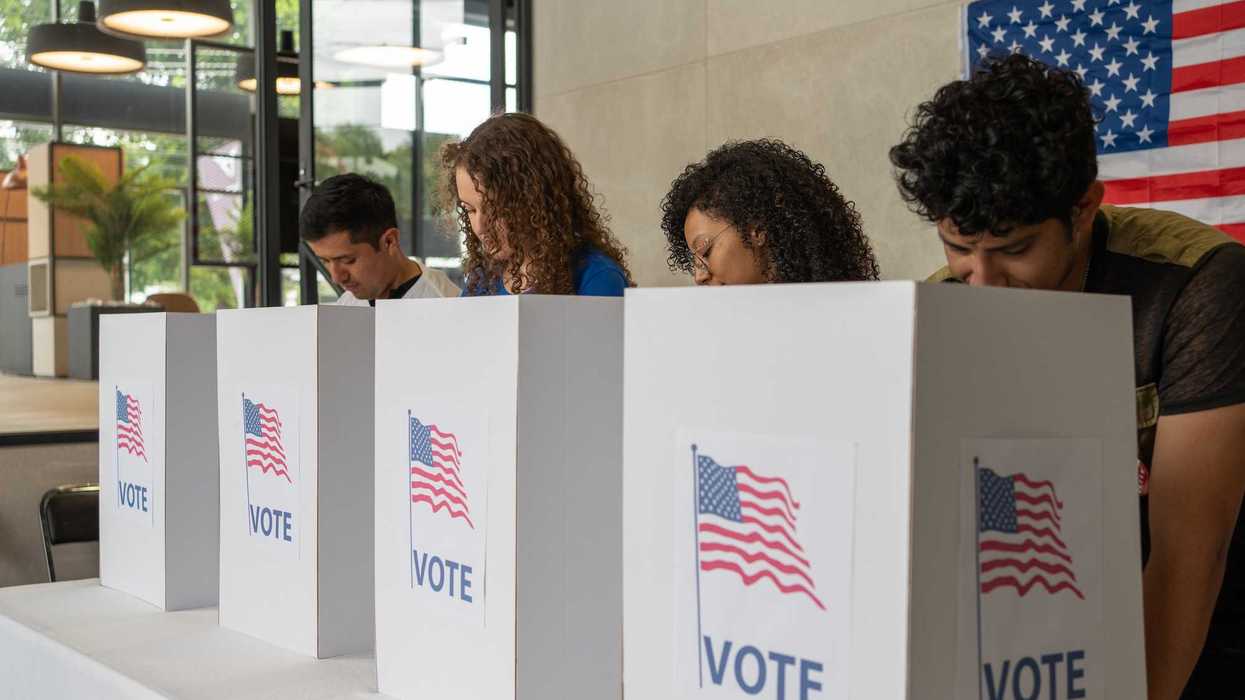



For nearly ten years, claims that our elections are riddled with fraud have threatened the foundation of our democratic republic.
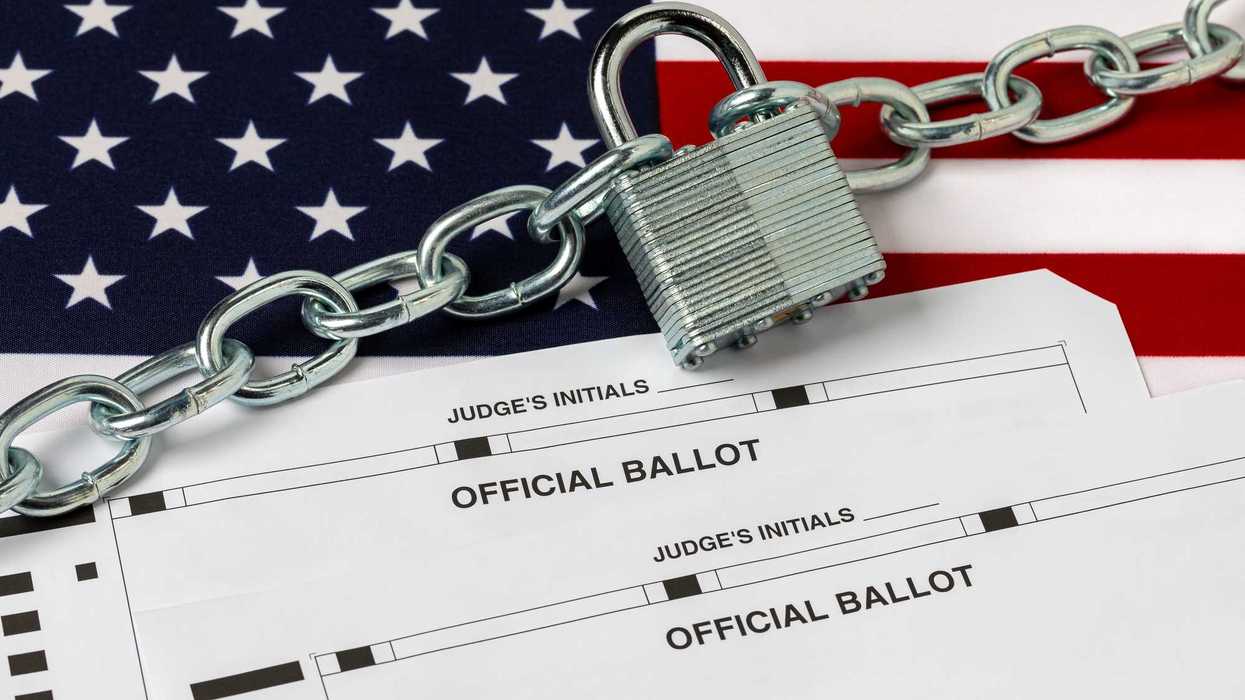
It is alleged that Democrats have flooded the country with illegal immigrants who then illegally vote for Democrats. Purportedly to protect the country from this, Republicans seek legislation that would, among other provisions, restrict vote-by-mail, require potentially expensive and onerous proof of citizenship to register to vote, and require potentially expensive photo identification to vote.
However, the evidence does not support that election security is the issue. Instead, the proposed legislation aims to suppress lawful voting and cement dictatorship. Multiple court cases and investigations have shown that no significant fraud has occurred in the nation’s elections.
The Speaker of the House views as suspicious California’s acceptance for seven days after the election of ballots mailed on or before election day. He may have California Elections Code 3020 in mind and similar state laws.
Section 3020 states in part, “(2) If the ballot has no postmark, a postmark with no date, or an illegible postmark, and no other information is available from the United States Postal Service or the bona fide private mail delivery company to indicate the date on which the ballot was mailed, the vote by mail ballot identification envelope is date stamped by the elections official upon receipt of the vote by mail ballot from the United States Postal Service or a bona fide private mail delivery company, and is signed and dated pursuant to Section 3011 before election day.
(c) For purposes of this section, ‘bona fide private mail delivery company’ means a courier service that is in the regular business of accepting a mail item, package, or parcel for the purpose of delivery to a person or entity whose address is specified on the item.”
This basic provision appears to have existed with different post-election mail receipt time periods since before 2020. On audit and investigation, it should not be difficult to prove that Democrats had ballots signed, backdated, and delivered after election day to defeat a Republican House candidate who was leading on election day. But despite the massive financial resources of his party, the Speaker admits he can’t prove it. People, especially undocumented immigrants trying to lay low, do not want to be thrown in prison for voting illegally.
The façade of acting peacefully and lawfully in proposing legislation and constitutionally dubious executive orders to disenfranchise the opponent’s voters belies, as was demonstrated on January 6, 2021, that certain elements will, when these fail, act lawlessly and violently to keep power.
In order to intimidate citizens of color from voting, expect to see paramilitary forces of ICE, including local police co-opted by lucrative payments to be deputized ICE agents, dispatched to California and other blue states’ polls. After the election, ICE may be ordered to seize ballots and voting machines. Asserting that armed ICE agents are merely enforcing immigration law, the administration would claim that ICE is not subject to restrictions on use of the U.S. military at the polls. Expect a related prohibition on armed federal agents at polling places to be ignored until a court order is obtained that requires them to be unarmed, which order, if obeyed, would only marginally reduce intimidation.
Assembly Bill 2230 (Farias) is currently advancing in the California Legislature. It states in part, “Any person in possession of a firearm,…or any person who is wearing or displaying a uniform or other clothing or insignia that reasonably conveys an association with any local, state, or federal law enforcement agency…who is stationed in the immediate vicinity of, or posted at, a polling place without written authorization of the appropriate city or county elections official, is guilty of a felony,…An elections official shall not authorize any agency or officer responsible for immigration enforcement or federal law enforcement to be stationed or posted in the immediate vicinity of a polling place…for purposes of this section ‘immediate vicinity’ includes a building in which a polling place is situated, and 100 feet from any entrance or exit to the building, a parking facility for the building, and the ingress or egress for a vehicle to the parking facility.”
One might wonder whether 100 feet should be 2500 feet or more, but if local police are insufficient to enforce laws like this, can state National Guards do it? The Guard is under the control of the governor unless the president federalizes the Guard. The president’s federalizing the Guard to prevent the governor from blocking ICE, or his invocation of the Insurrection Act, could raise the issue of unlawful use of the U.S. military at the polls. U.S. military leaders, whose oath is to the Constitution and not a particular president, would then need to assess whether they can legally comply with the president’s orders.
The president, his party, and their supporters created this mess. Vote them out.
Daniel O. Jamison is a retired attorney. He is the author of the forthcoming book from McFarland & Company, Inc., Publishers, titled, “The Birth of Jim Crow: Racism, Reconstruction and the Pivotal Supreme Court Cases of 1857-1908.” Jamison’s op-eds have been widely published around the nation.