




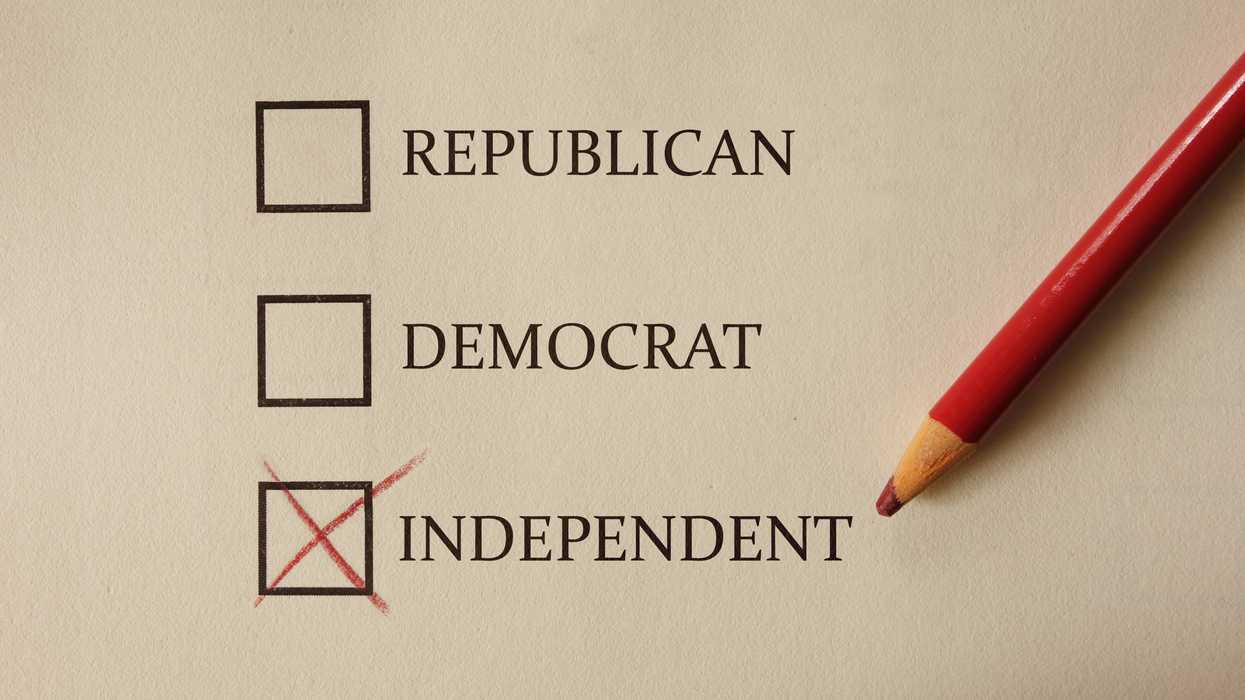
Both before and after Eric Swalwell’s resignation, the California Gubernatorial race has partisan insiders screaming that California’s innovative, voter-friendly, open primary system should be scrapped. Why? Seven Democrats and two Republicans are running. If all the Democrats stay in the race, and none surges, there is a statistical possibility that the two Republicans advance to the general election.
The attacks are pure opportunism, from people who oppose open primaries, period. Never mind that seven million independent voters have been enfranchised and elections are much more competitive, according to these critics, the fact that the Gubernatorial race might feature two Republicans is absolute proof that the old system needs to be restored.
The critics don’t say it directly, but the motivation for their attacks is that they want to go back to the good old days when voters were powerless and California was the most politically dysfunctional state in America.
Don’t be fooled.
25 years ago, Sacramento was ground zero for zombie politics. Late budgets, partisan gamesmanship on every issue, brownouts, public approval below 25%. But closed primaries and gerrymandered districts insulated Democratic and Republican lawmakers from any consequences.
Until 2003, when voters erupted.
Governor Gray Davis was recalled and replaced by Arnold Schwarzenegger in a nonpartisan election. Arnold spent his tenure looking to uproot the rotten core of partisan control, which had crippled California for a generation. In 2010, voters passed top-two open primaries and nonpartisan redistricting. Both had an immediate positive effect on voter inclusion—millions of independent voters finally had full voting rights—competition, and legislative functionality.
The partisan machines, from Nancy Pelosi and Kevin McCarthy on down, fought both efforts, calling them an existential threat. And for the last 15 years, they have been looking for a way to go back to closed primaries, a task made difficult by the fact that 73% of California voters prefer an open system to a closed one.
Today, Californians are once again unhappy with the status quo. Yes, they went along with Governor Newsom’s tit-for-tat temporary dismantling of the people’s redistricting commission, but on taxes, schools, housing, homelessness, and many other issues, Californians are deeply frustrated with how unresponsive the ruling Democrats (out of touch) and opposition Republicans (out of their minds) are to their concerns.
Party stalwarts want to use this discontent to restore a party-controlled system that didn’t work and that voters hated.
Here are two things they won’t say. First, the Schwarzenegger reforms were designed to shift power from parties to voters. That the Democratic Party (or any party) is not guaranteed a spot on the ballot is a feature, not a bug. If the Democrats cannot screen candidates and make behind-the-scenes endorsements to better their chances of advancing, that is on them, not on us.
Second, open primaries enfranchised millions of independents, the fastest-growing segment of the electorate. Under the old system, they were completely sidelined. Partisans would like to return to a system where independents have no voice, no choice, no seat at the table.
The top two primary did not solve all of humanity’s ills. Our mistake was in thinking that structural reforms have magical qualities. Enacting open primaries and nonpartisan redistricting enfranchised independents and created new dynamics, but the partisan apparatus has time, money, and experience. They reasserted their authority while the “give power to the people” rebellion withered. We can’t wait for the opportunists to attack our accomplishments to ask the question, “What more can we do to empower the people of California?”
Here is the most likely scenario. The Democrats get their act together. Several candidates drop out, and several surge to the front. The general election features two Democrats or a Democrat versus a Republican. The opponents of open primaries go silent until the next opportunity arises to trash the system. But what’s the “listen-to-the-people” plan going forward? California had a net loss of 220,000 people last year, driven by the runaway cost of living. There is a dramatic need for sweeping change in how California is governed. The reform movement needs to think big, get creative, and really listen.
I don’t know what the next voter empowerment wave looks like. But it doesn’t start by reverting to the old party-run system that disenfranchises voters and concentrates power in the hands of tiny groups of self-interested parties.
John Opdycke is the president of Open Primaries, a national election reform organization.











The President Invited Iran to Bomb My Home