



This nonpartisan policy brief, written by an ACE fellow, is republished by The Fulcrum as part of our partnership with the Alliance for Civic Engagement and our NextGen initiative — elevating student voices, strengthening civic education, and helping readers better understand democracy and public policy.
What Happened at the May 2026 Trump-Xi Summit?
The May 2026 Trump-Xi summit signaled a continuing peace period in the ongoing United States and China trade war. Prior to the summit, both countries stated intentions to reinforce strategic cooperation and strengthen bilateral trade through a comprehensive trade deal. Major discussion points included the imposed tariffs from the United States, the reciprocal tariffs from China, core minerals, the Iran war, relations with Taiwan, and the U.S.’s domestic industries.
The Timeline of the U.S. and China Trade War
In 2018, the United States implemented Section 301 and Section 232 tariffs under the first Trump administration. Tariffs are a tax on imported goods and services from foreign countries. Section 301 of the Trade Act of 1974 allows for tariffs on a foreign country deemed to have discriminatory trade practices. Section 232 of the Trade Expansion Act of 1962 allows for tariffs on goods or services deemed a threat to national security. The U.S. Office of the Trade Representative initiated an investigation into China’s trading practices in August 2017. They claimed there was intellectual property theft and a surplus of Chinese goods in the U.S. consumer base. China reciprocated the tariffs with their own on American imports.
Moving forward, the Biden administration maintained the tariff policies, and enacted additional tariffs. They found that China was practicing discriminatory practices through another Section 301 investigation in 2024. Tariffs were expanded to additional Chinese goods, such as semiconductor chips and electric vehicles. Under the Biden administration, the tariffs impacted $18 billion of Chinese imported goods.
Protectionism has been a central focus of the second Trump administration’s economic and international trade strategy. The administration implemented significant tariff hikes in 2025 and 2026, with many goods facing a 50 percent tariff. Additionally, the Trump administration rescinded the de minimis exception. This means imports valued under $800 are no longer exempt from import duties.The Trump administration then moved forward, placing a baseline tariff of 10 percent on all Chinese imports.
In October 2025, President Donald Trump and President Xi Jinping met in Busan, South Korea. For 100 minutes, they agreed on various trade negotiations, such as combatting the fentanyl crisis and China resuming purchasing American soybeans. Both leaders agreed to continue the truce of the trade war and extend the peace period.
Have U.S. Industries Benefited?
Some argue that tariffs support U.S. industry, and specifically manufacturing. The implementation of the tariffs intends to protect domestic markets from overexposure to cheap Chinese goods, which threatens the valuable domestic manufacturing industry. Investigations by the United States concluded China was involved in discriminatory economic practices, especially intellectual property theft. This theft includes pirated software, illicit acquisition of technology, and imitation of manufacturing designs. Reports claimed that these practices cost the United States an estimated $600 billion annually. These losses have weakened the domestic industry by reducing innovation and employment. The protectionist policies support U.S. industry by reducing foreign interference and limiting intellectual property theft, reducing costs for domestic firms and workers.
The May 2026 Trump-Xi summit is expected to benefit U.S. industries, as trade negotiations have supported the expansion of U.S. industry into China’s markets. Key industries, such as agriculture, aircraft machinery, and manufacturing are expected to see gains. Additionally, the summit allowed for continued discussion of reducing trade tensions. These discussions motioned the charter of two trade institutions: the U.S.-China Boards of Trade and Investment. The implementation of these trade organizations, along with other discussions held during the summit, supports the expansion of U.S. industry.
Have U.S. Industries Been Harmed?
Arguments against the imposed tariffs claim the action was confrontational and unconstitutional. The implementation of the 2018 tariffs was criticized for its unilateral aggressiveness, which incited the trade war. Moreover, the imposed tariffs by the United States are reciprocated by China, decreasing U.S. exports. There have also been critiques claiming U.S. industries and manufacturing have not benefited from the tariffs. Research suggests that, while imports of Chinese goods have decreased, domestic reliance is not filling the gap. Rather, imports from other international partners have increased, alongside U.S. firms offshoring manufacturing in other countries.
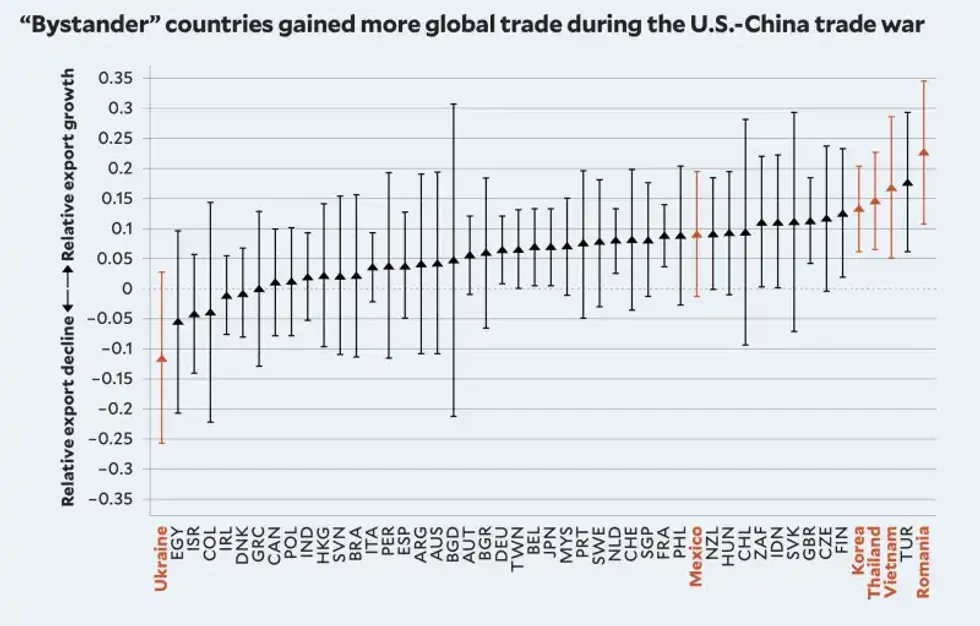 Figure 1: Yale Economic Growth Center, 2024
Research shows that the costs of the trade war fall back onto U.S. manufacturing. The Budget Lab at Yale finds that the consumer prices of both core and durable goods have increased by 1.5 percent. These results are based on tracking price increases of consumer goods from January 2025 to April 2026 at the time of writing. U.S. importers bear the costs of tariffs; in an interview with NPR, U.S. manufacturer Dan Digre discusses shifting the manufacturing of speakers to China as a result of tariffs increasing costs for his business.
Summit Conclusions and Future Developments
Following the May 2026 Trump-Xi summit, there have been both satisfied and dissatisfied perspectives. It is still up for debate if the goals of the summit have been fulfilled.
Some who were satisfied claimed that both countries seemed to reach a consensus, working towards building a relationship of “constructive strategic stability.” They argue the cooperation between the two countries points to future developments in healthier competition and stability, as well as other mutual benefits.
Comparatively, those who were dissatisfied argued that the main goal of the summit, finalizing a joint comprehensive trade deal, was not achieved. They also argue there were inconsistencies in the two countries’ takeaways from the summit. These uncertainties further question how a resolution between the two countries could boost U.S. industry in the future.
There is uncertainty on the imposed tariff policies following the Supreme Court’s ruling on the International Emergency Economic Powers Act (IEEPA) in February 2026. The court ruled that the imposed Section 301 tariffs under the IEEPA were unconstitutional, on the grounds that the IEEPA does not grant the president the authority to impose tariffs. Additionally, the decision argued the United States’ current “peacetime” conditions do not warrant invoking the IEEPA. Following the Supreme Court’s ruling, the Court of International Trade (CIT) ordered refunds of the unconstitutional tariffs. These decisions seemingly put China in a leveraged position in negotiations.
As of June 2026, the United States Trade Representative (USTR) has proposed an alternate strategy under Section 301 related to the foreign use of forced labor. Following this proposal, the USTR will move to impose up to 12.5 percent tariffs on over 60 countries. This follows an investigation that began in March 2026, after the previous Supreme Court ruling.
Following the May 2026 Trump-Xi summit, the negotiations proposed a landscape where U.S. industries can thrive by expanding into Chinese markets and building stronger domestic reliance. However, with no joint trade agreements and economic pains from the trade war, U.S. industries and firms have no concrete solution to growing trade imbalances and rising costs.
What Does the China–U.S. Trade Truce Mean for American Industry? was first published by ACE and republished with permission.
Kylie Maddox is a recent graduate of the University of South Carolina and received a Bachelor of Arts in political science.