Skip to content
Search

Latest Stories

Follow Us:
Top Stories

How Presidential Primetime Addresses Shape Public Trust in Democratic Institutions

Trump’s primetime speech — framed around “restoring order,” immigration, and national security — influences public trust in institutions like Congress, the courts, and federal agencies.

Opinion

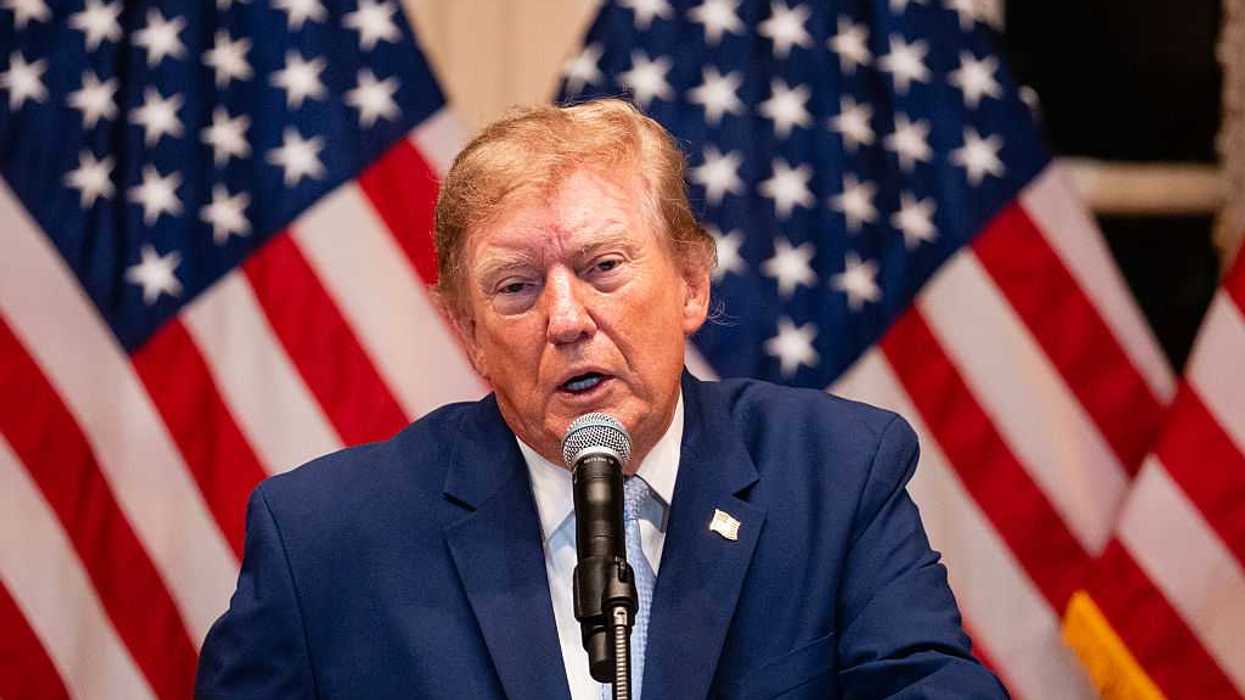
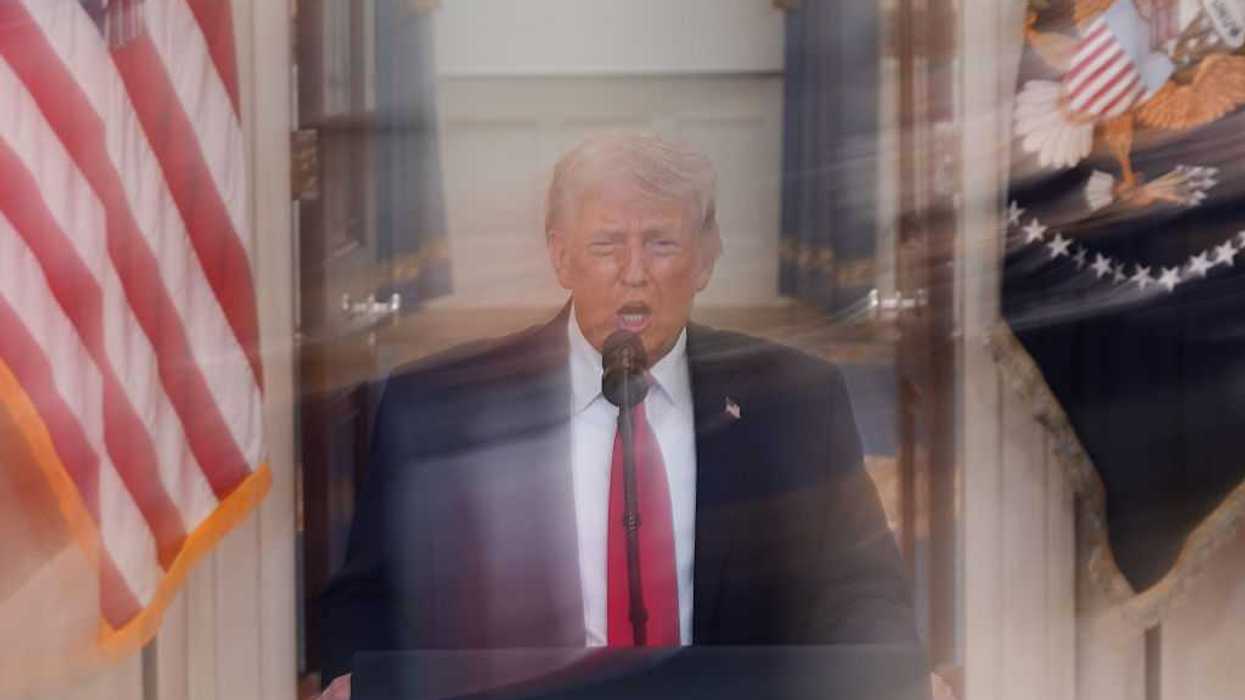
 U.S. President Donald Trump speaks from the Cross Hall of the White House on April 1, 2026 in Washington, DC.

U.S. President Donald Trump speaks from the Cross Hall of the White House on April 1, 2026 in Washington, DC.

Pool/Getty Images

A question still being studied is the effects on public trust when the head of the Executive casts doubt on the institutions that run elections, enforce laws, and decide legal disputes. The President of the United States is arguably the most powerful man in the world. He is the commander in chief of a nation #1 in nominal gross domestic product as well as #1 in military power, budget, and spending as of 2026. The actions he takes spew ripple effects across the world and follow many generations. A way you can measure the executive's power can also be measured in how much influence his speeches have on the markets, opinions of the masses, news outlets, lawmakers, social media reactions, etc. His framing of an issue can shape the next day’s political conversation.

These conversations become extremely dangerous/consequential when discussing a principle as embedded in our country as Democracy. In his July primetime speech, Trump continued to pedal the claims about election security and argued for stricter voting rules. He continued to portray the country as facing a moment of corruption and uncertainty, followed by presenting himself as the one prepared to restore order. The address continued with repeated claims about his loss in the 2020 election that have not been supported by the evidence compiled over years of investigation by many parties. Professional reviews, audits, and courts have yet to find significant evidence of foul play substantial enough to influence the outcome of that election.


Despite the facts of the matter, Trump continues his assault on our institutions through his words and actions. For decades, Primetime presidential speeches have been used to speak directly to the public during wars, economic crises, and moments of national grief. These addresses can be reassuring. They can make government action easier to understand and give people a sense that their leaders are responding to an emergency.

Ronald Reagan used television to project optimism and national confidence during the Cold War, a period of large paranoia and uncertainty. George W. Bush’s speeches after the terrorist attacks of 9/11 helped create an early sense of unity even across the world, although later questions about the Iraq War damaged trust in government claims. Barack Obama often used his national addresses to explain major policy decisions and encourage civic participation.

Trump constantly fails to do many of those positives. His primetime speeches heavily deepen the division this country has been experiencing in the last 20 years in particular; the president encourages people to believe that elections, courts, or civil servants are inherently corrupt, which then closes the door for the public to accept outcomes they do not like. That problem has never been confined to one party or one president. Democratic principles depend on more than laws to keep them accountable. They depend on a shared belief that institutions can be challenged, criticized, and improved upon without being dismissed as illegitimate whenever they produce an unfavorable result. No, that does not mean presidents should avoid criticism.

Yes, government institutions should be questioned, investigated, and reformed when they fail. But mindful criticism is most useful when it is specific, evidence-based, and paired with a realistic solution. Trump leans more on cynicism, whereas he displays much more personal bias, ego, and mental rigidity.

[INTERVIEW SECTION????]

Historically, primetime presidential speeches strengthen democracy when they help Americans understand a challenging topic and encourage them to participate at the local and federal levels. They weaken democracy when they turn routine political disagreement into a reason to reject the legitimacy of systems and institutions altogether.

For voters, the goal to aspire towards is knowing the difference between hearing and listening. The care that you put into analyzing these speeches is what separates the two. A president’s words matter, but they should never be accepted without questions: What evidence supports this claim? Who can verify it? Does the proposed solution protect democratic participation, or does it make power less accountable?

Those questions are not partisan. They are part of what it means to be an informed citizen.


Shon Eric Hernandez is a Fulcrum fellow and MDC contributor. He can be reached at shondesil06@gmail.com

Read More

unrecognizable businessman giving speech to professional audience

Brain science explains why voters reward charisma over results — and why the leaders who "fix" the most get credit for the least. A behavioral look at elections.

alvaro gonzalez/Getty Images

The Résumé Should Outvote the Smile

There's an old joke about a couple who finally solved years of arguing over decisions. "Since you're the man of the house," the wife said, "you handle the big things -- our stance on foreign wars, who we send to the Senate. I'll take care of the small stuff: groceries, the mortgage, where we live, what we eat." The husband agreed happily, certain he had won the better half of the deal. A few years later he realized the trade had gone entirely the other way. He held forth on geopolitics at dinner parties while his wife quietly ran every detail that actually touched his life: what he ate, where he lived, how his money was spent. What looked like ultimate authority was, in practice, near-total abdication over the things that shaped his days.

Voters make the same trade, and pay for it the same way. We keep hiring leaders for the qualities we would want in a spouse -- warmth, charm, a commanding voice, the sense that they see us -- instead of the qualities we would want in a mechanic: someone who can find what is broken and fix it before the whole system fails. We evaluate candidates the way we choose intimate partners, not the way we hire people to run complex, high-stakes systems.

Keep Reading Show less
US soldier with American flag patch on his arm.
a group of soldiers in uniform
Photo by Oleg Ivanov on Unsplash

Moral Leadership Can Protect Service Members' Psychological Well-Being

It has recently been reported that President Trump and Secretary of War Hegseth disparaged the mental health concerns, including suicide attempts, expressed by the sailors serving aboard the USS Abraham Lincoln during the carrier’s record deployment. Their comments brought back the disquiet I felt several months ago while attending a performance of the US Naval Academy Glee Club at the Church of St. Ignatius Loyola in Manhattan. Usually, when I attend choral concerts in the church’s imposing Baroque sanctuary, my mind quiets, and I find myself immersed in the music. But not on that occasion. Instead, as I enjoyed the exuberant singing, my mind filled with resentment. The Glee Club, handsome midshipmen in formal dress, is a multiethnic group of men and women. The harmonious singing of a chorus composed of individuals of widely varied backgrounds seemed a metaphor for how our country and its military should work.

My upset originated with the realization that during their time at the Naval Academy, these midshipmen had witnessed the firing of the Black Chairman of the Joint Chiefs of Staff, Air Force General C. Q. Brown, Jr., as part of an apparent purge of those supporting diversity in the military. Even uglier was the implication that Brown, a highly decorated officer, had been elevated to his position as a ‘DEI’ hire. They also had seen the firing of trailblazing women leaders in the military, including Admiral Linda Fagan, the first woman Coast Guard Commandant, and Admiral Yvette Davids, the first woman Superintendent of the Naval Academy at Annapolis, the very institution they were attending. I was offended and angered by the message these firings conveyed to the men and women of the Academy’s Glee Club, especially the women and minority midshipmen, who had volunteered to serve their nation and, ultimately, to place themselves in harm’s way for it.

Keep Reading Show less
Donald Trump

U.S. President Donald Trump speaks during a“ Steel Across America” event ahead of the 25th anniversary of the Sept. 11th attacks on the Ellipse near the White House on Sept. 8, 2026 in Washington, D.C. President Trump welcomed 9/ 11 first responders to the Tunnel to Towers Foundation’ s“ Steel Across America” event featuring a 16,900- pound, 21- foot steel beam recovered.

(Getty Images)

For Trump, even 9/11 is an opportunity

There was a reason organizers of the 9/11 ceremony in Manhattan told President Trump he could not speak at this year’s memorial service.

A good one, it turns out.

Keep Reading Show less
Donald Trump

Donald Trump, September 09, 2026

Getty Images

Trump, Kennedy, and the Monkey’s Paw

The hardest deal to judge is one you helped sell.

In 2024, I served as North Carolina state director for Robert F. Kennedy Jr.’s presidential campaign and co-founded We The People of North Carolina, the independent party that put him on our state’s ballot.

Keep Reading Show less