



They come by the hundreds, gathering from every corner of their land. Their ancestors were once hunted, but they roam free. They stretch across the forests and scrubland and mountains. They vary in size and color, but they bear the marking of shared identity.
They are the American people sporting their country’s flag at Yellowstone National Park.
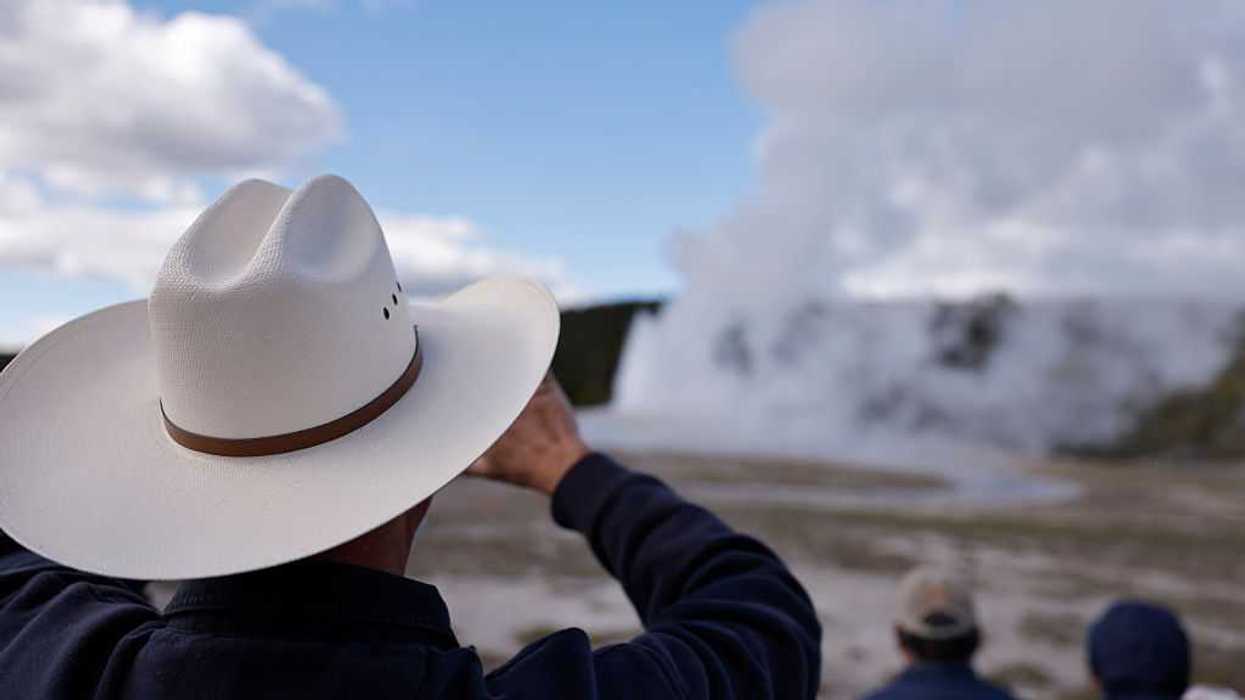
Visitors wear American flag-themed: socks, t-shirts with sequins for the stars, cowboy hats, sweaters, t-shirt with lightning bolts as stripes, t-shirt with an elk coming out of the stars, vests, t-shirt with fish as the stripes, visors, Under Armour t-shirts and sweatshirts, Columbia Sportswear t-shirt with trees instead of stripes, baseball caps, bandanas, construction services shirts, Tampa Bay Buccaneers Veterans Day camo shirt, and a dozen varieties of America’s 250th birthday t-shirts.
These patriotic sartorial choices adorn Americans of every race, ethnicity, sexual orientation, age, geography, and religion, because Yellowstone brings together a highly representative cross section of America:
·Half men, half women
·Evenly distributed across ages 0-18, 19-35, 36-51, and 52+ (with a slight skew older)
·Equal representation of Republicans, Democrats, and Independents
·All income levels but especially middle class: 56% of visitors earn between $50,000 - $150,000 annually
·More white and Asian Americans than the general population, though people of every ethnic and racial group are present everywhere.
·Hundreds of crosses as necklaces and pins and also people in yarmulkes, hijabs, and dastars.
The vast majority of license plates are from out of state. A sampling of two hundred license plates by my children and me revealed: Montana 20%, Wyoming 10%, California 5%, Texas 5%, Idaho 5%, Colorado 5%, Washington 5%, Massachusetts, Oregon, Illinois, Indiana, Florida, Utah, Arizona, North Dakota, South Dakota, Ohio, Missouri, Virginia, Minnesota, New Jersey, Michigan.
Yellowstone is the ingathering of Americans. And Americans are proud of their country.
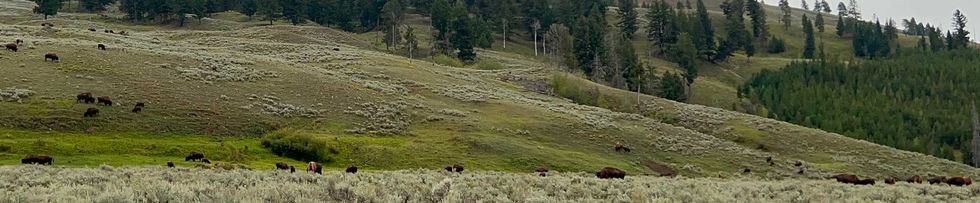 Photo Courtesy of Raphael Rosen
It’s worth celebrating. Thousands of people choose to advertise their appreciation for their country, exhibit kindness to each other, and make time to respect the natural bounty that their government and their ancestors protected from destruction.
American flag-themed clothing is an old phenomenon experiencing a resurgence with entire businesses dedicated to American flag t-shirts alone. Distressed and vintage tees have become top sellers. Lucky Brand and Nine Line Apparel move a lot of American flag product, and Old Navy is perhaps the leader, selling one million American flag t-shirts every summer. Discussions over who should wear the flag and how have become less partisan and more inclusive.
There is much pessimism in America today, outrage over policies pushed by left and right, political polarization, a petulant partisanship bogging down the country—but the greater reality of the American people is easier to see in the open meadows of American-flag-clad Yellowstone visitors than in the claustrophobic digitally divided universe hunched over phones and tablets.
The situation recalls Edmund Burke’s analogy from 235 years ago:
“Because half a dozen grasshoppers under a fern make the field ring with their importunate chink, whilst thousands of great cattle, reposed beneath the shadow of the British oak, chew the cud and are silent, pray do not imagine that those who make the noise are the only inhabitants of the field, that…. they are many in number, or that… they are other than the little, shrivelled, meager, hopping, though loud and troublesome, insects of the hour.”
Grasshoppers are indeed loud and interesting so it’s easy to chime in and like the irate statements of the hour.
But they are trivial beside the bison who rules the meadow. Massive, muscular, unyielding, independent and communal, brave and peaceful, defender of its territory but not aggressive—the bison symbolizes the best of America.
Those thousands of Americans who feel sufficient ownership over their country to wear its symbol will exert great efforts to protect it and its democratic ways. The love of one’s democracy is the greatest bulwark against its collapse.
Such is America’s fortuitous, felicitous fate.
“My country right or wrong,” the German-American Senator and Major General Carl Schurz proclaimed, “If right, to be kept right. If wrong, to be set right.” And he remarked: “If you want to be free, there is but one way; it is to guarantee an equally full measure of liberty to all your neighbors. There is no other.” Americans of all political and demographic backgrounds who, through their daily actions, invest in their freedom and their neighbors’ freedom—these are people who can set America right. They are democracy’s inexhaustible font of national renewal. We are lucky to have them.
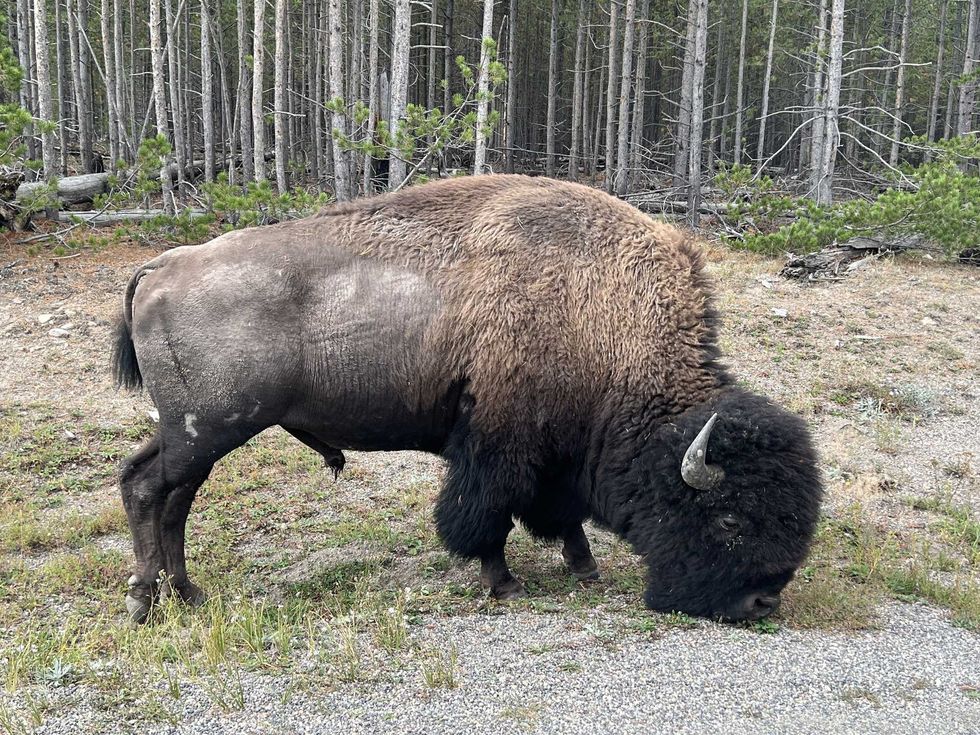 Photo Courtesy of Raphael Rosen
Raphael Chayim Rosen is the award-winning author of the book Pedestal: What Makes American Democracy Stable and the Substack newsletter Lady Liberty’s Pedestal, where he researches the culture, customs, and norms of democratic society. An accomplished social entrepreneur and inventor, he is the CEO and co-founder of Centinel, which he scaled from a bootstrapped startup into a national platform. Rosen has published academic papers in physics and history, holds degrees from Cambridge and Harvard, and resides in New York City, though a part of him always dwells in America’s National Parks.












The President Invited Iran to Bomb My Home