


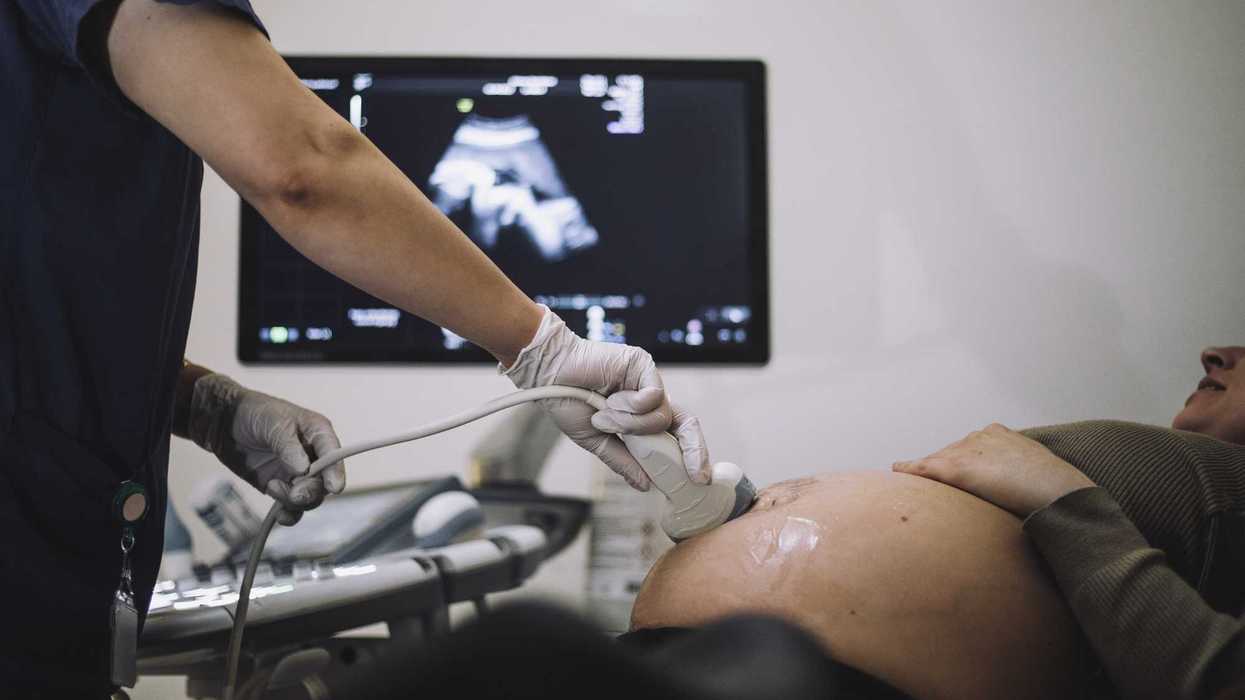

Today, less than half of rural hospitals in the U.S. still offer labor and delivery services, and since 2020, 139 of them have stopped delivering babies altogether. That's usually treated as public health statistic. It's also an economic one. Each closure doesn't just push expectant mothers into longer drives to the hospital, it pushes out physicians, jobs, young families, and the investment that follows them. So, what happens to a town after it loses its only labor and delivery unit?
The answer, it turns out, is a lot more than a longer drive to the hospital. More than a third of U.S. counties, 35.1 percent by the most recent national count, are now what researchers call maternity care deserts: places with no hospital or birth center offering obstetric care and no obstetric clinicians at all. Since the end of 2020, 139 rural hospitals have stopped delivering babies, and today less than half of rural hospitals nationwide still offer labor and delivery services.
A Closure Is Rarely Just One Loss
When Bonner General Health in Sandpoint, Idaho, ended labor and delivery services in 2023, the hospital cited a familiar mix of causes: fewer pediatricians, declining birth volume, and a legal climate that pushed physicians to leave the state. Residents were left with a drive of at least 46 miles to the nearest labor and delivery unit. In the years since, Idaho has lost roughly a third of its OB-GYNs statewide, a workforce departure that now makes it harder for other hospitals in the state to keep their own units open.
Missouri tells a slower version of the same story. The state has lost 11 hospital obstetric units since 2009, and hospital administrators there describe cross-subsidizing obstetric care with revenue from other departments because Medicaid, which finances most rural births, pays less than the actual cost of delivering a baby. One administrator put it bluntly: they are robbing Peter to pay Paul.
The Economics Are Real, Even If They're Uneven
Economists studying rural hospital closures generally don't all agree on the size of the local economic hit, and I think advocates should be upfront about that rather than overstate it. Some studies find no measurable effect on county income. Others, using longer national datasets, find real declines in employment, labor force size, and population after a closure. What is well documented is the workforce effect: one study found that a rural hospital closure was associated with an 8.3 percent drop in primary care physicians and a 4.8 percent drop in OB-GYNs practicing in the county afterward. That is not a rounding error. That is a community losing the people who would otherwise deliver its babies, staff its clinics, and spend paychecks at its businesses.
Nationally, the price tag is large. One peer-reviewed cost model put the societal cost of maternal morbidity for a single year of U.S. births at 32.3 billion dollars, and a separate analysis using value-of-statistical-life methods estimated the economic burden of maternal deaths at 27.4 billion dollars over just three years. These are not abstractions. They are the dollar value of a health system that keeps failing mothers in the same places, over and over.
A Federal Program Working Against Itself
Washington's current response is genuinely two-handed. The 2025 budget law that cut projected federal Medicaid spending by an estimated 911 billion dollars over ten years also created the 50 billion dollar Rural Health Transformation Program to help rural systems absorb the impact. States are now spending that money on exactly the kind of workforce and telehealth investments this problem needs. But the fund is explicitly a response to cuts made in the same bill, not new money layered on top of stable funding, and children's health advocates have warned it may not fully offset the coverage losses in states that expanded Medicaid. Whether this program nets out positive for rural obstetric access is, honestly, an open question, and it deserves to be tracked as closely as the closures themselves.
What Would Actually Help
Three changes would matter more than most of the current conversation acknowledges. First, raise Medicaid obstetric reimbursement, or take the value-based payment model CMS is already piloting in 15 states and make it available nationally, since reimbursement below the cost of care is the single most cited reason hospitals give for closing their obstetric units. Second, track obstetric unit closures as their own category, separate from overall hospital closures, since a hospital can quietly drop labor and delivery while staying open for everything else. Third, target new rural health funding specifically at the racial gap in maternal mortality, since Black mothers still die at more than three times the rate of White mothers, a gap that has not narrowed even as the national rate has fluctuated year to year.
None of this is a purely medical problem and treating it as one is part of why it hasn't been solved. It is a hospital financing problem, a workforce problem, and a rural economic development problem wearing a stethoscope. Communities don't just lose a delivery room when the obstetric unit closes. They lose the nurses, the anesthesiologists, and, eventually, the young families who decide it isn't worth staying somewhere, they can't safely have a baby.
Manisha Kaliaperumal is a sophomore at Creighton University studying Economics on the Pre-Medicine track. She is passionate about pursuing a career in medicine, with a particular interest in rural healthcare and maternal medicine. Her interests center on improving access to quality care and supporting the health and well-being of mothers and families in underserved communities.
Disclosure: The author researched and wrote this piece as a Health Economics intern at Aaliyah in Action, a nonprofit that provides bereavement support to families experiencing pregnancy and infant loss. The analysis, framing, and opinions above are the author's own.