



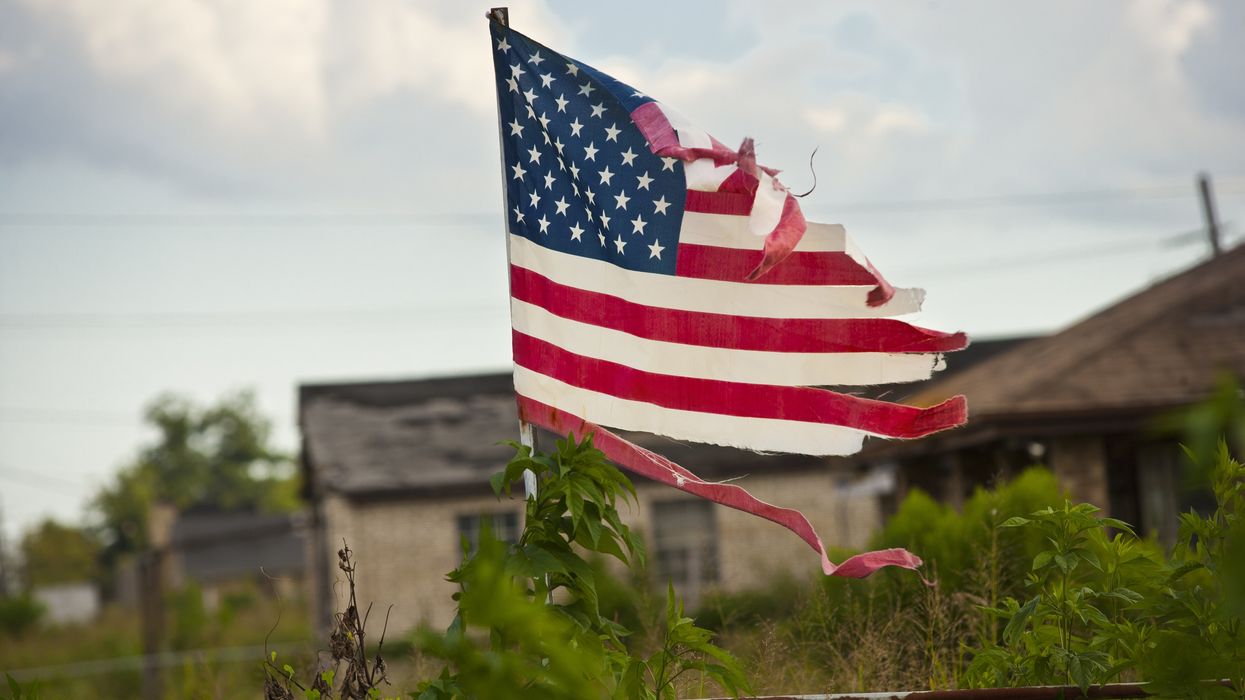

History is made of two parts. One is indisputable facts and the other is the interpretation of those facts. The history of history is filled with varying interpretations of the basic facts, usually tinted by the perspective of the historian or commentator. That perspective can be the writer's political leanings, his philosophy, or any number of personal biases.
All historians, however, whether conservative or liberal, regardless of philosophy generally agree on the basic facts. For example, while there are fringe groups and individuals who deny that the Holocaust happened—that 6 millions Jews were killed by the Nazis—no reputable historian disputes that fact.
There is one class of individuals, however, who seek to rewrite historical facts to suit their needs, to reflect what they feel are the true facts of the country they lead, that supports their version of what has either made their country great or what the obstacles to greatness have been. These individuals are the dictators, the autocrats, who have ruled a country with a combination of demagoguery, fear, and force.
Hitler and Stalin were well-known for rewriting the history of their countries to suit their purposes. For example, Hitler in his antisemitic rant denounced German Jews in every way possible, calling them vermin, despite the fact that it was generally acknowledged that Jews played an important role in the advancement of German culture and science. All references to the achievements of Germans who were Jewish were removed from textbooks and encyclopedias. He prohibited Jewish involvement in all areas of German life and culture. He blamed Jews for the defeat of Germany in WWI—the infamous "stab in the back."
Stalin literaly rewrote Russian history to make the Soviet state part of the arc of history that made Russia great, downplaying the role of the 1917 Bolshevik revolution while giving the Russian people a dominating role in that history, minimizing other nationalities.
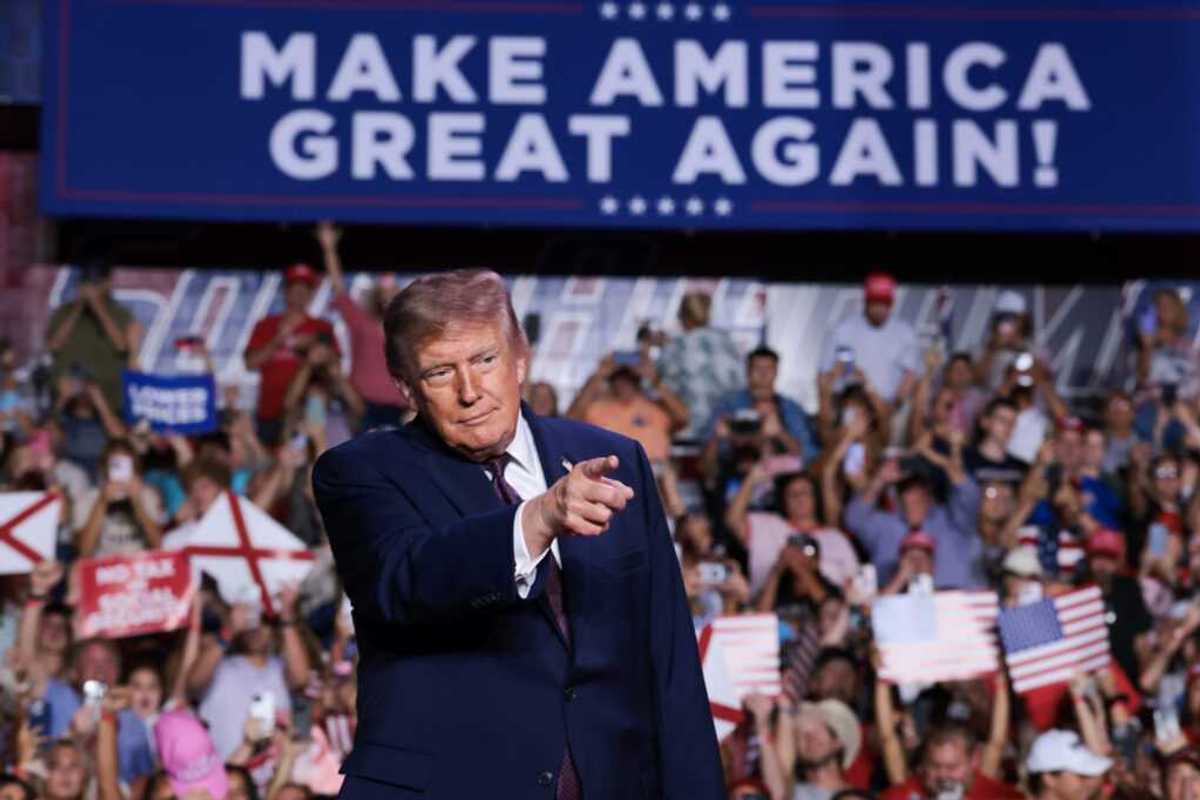
President Trump is seeking to rewrite American history in a typical Trumpian fashion. In his Executive Order, "Restoring Truth and Sanity to American History," he claimed that "revisionists' [liberals] have distorted American history for their ideological purposes and that he was restoring the truth. But in fact, Trump is the one who has distorted the truth of American history to suit his purposes and viewpoint.
In his Executive Order, he said that over the past decade, efforts have been made to rewrite American history, "replacing objective facts with a distorted narrative driven by ideology rather than truth." To reverse that trend, he has among other things instructed the National Park Service and a variety of museums and other sites to remove all information which "inappropriately disparage Americans, past or living." This includes information about slavery, treatment of Native Americans, and a host of other subjects.
But slavery is an objective fact whose parameters and particulars are well known. Yet American history for much of our existence has been short on the acknowledgment of the role that slavery and racism have played in the development of American culture. It is only in the last 4 or 5 decades that the ugly truth of these aspects of American history and culture have begun to be factually presented at our nation's historic sites and museums, and in our school textbooks.
And even so, much is white-washed. As an example, people who visited Mt. Vernon—George Washington's home on the Potomac River—years ago, saw and heard nothing of Washington's slaves when on the tour; in 2015 that was no longer the case, but the information presented about the slaves was not telling it as it was; it was definitely softened.
Trump's Executive Order accuses revisionists of "casting our founding principles and historical milestones in negative light." It accuses them of taking our "legacy of advancing liberty, individual rights, and human happiness" and instead calling that legacy "racist, sexist, oppressive, or otherwise irredeemably flawed."
Not so. Liberals, such as myself, are not muted in their praise of our founding principles and all the advances that America has made. At the same time, however, they are unflinching in recognizing the ways in which the country has not lived up to its founding principles and feel that America will only truly experience its greatness when it lives up to those values.
The Executive Order further states that history should be "uplifting." To the extent that the facts warrant that, I would strongly agree; in my writing, and that of other liberals, the uplifting facts of our founding and existence are prominently featured. Indeed, the uplifting nature of our founding principles as stated in the Declaration of Independence is the basis of our hope for the future. But important aspects of our history that are not uplifting must be stated as well so that history is a true learning experience.
Trump cannot tolerate recognizing anything negative about American history because he feels it places America in a bad light and brings with it an obligation to right past wrongs. But his White supremacist and nativist supporters do not support righting past wrongs against Blacks, regardless whether those wrongs still impact their lives in the 21st century.
Through Trump's Executive Order, he has sought and largely succeeded in removing all mention of slavery and racism from our historic sites and museums. This is hardly "restoring truth" to American history. This is a huge affront to millions of Americans, not just the 15% who are Black.
Perhaps the most shocking aspect of his rewriting our history in a way that panders to his White supremacist and nativist supporters is that there have been no real protests—comments yes, but no protests—by the Americans people let alone the Black community to Trump's attempt to sanitize our history. He seeks to remove the ugliness from American history and in so doing has removed the story of the incredible strength of character that slavery and racism gave rise to. What a sad commentary on our times.
(In this connection, it is interesting to note that the only massive protests during Trump's second administration have been to protest Trump's immigration enforcement policies (ICE) and to protest the ways in which Trump has rolled back the advancement of women by prohibiting all DEI programs among other means.)
This is my second article on this topic (see, "Trump's Perversion of American History"), so important do I feel it is that Americans understand their country, both its promise and greatness as well as its weaknesses. Americans should take to the streets to protest this perversion of American history. We will only make America greater if we acknowledge what has weakened America and take the necessary steps to right past wrongs.
Ronald L. Hirsch is a teacher, legal aid lawyer, survey researcher, nonprofit executive, consultant, composer, author, and volunteer. He is a graduate of Brown University and the University of Chicago Law School and the author of We Still Hold These Truths. Read more of his writing at www.PreservingAmericanValues.com