Skip to content
Search

Latest Stories

Follow Us:
Top Stories

Lawsuit Says Press Access Is Essential to Democratic Accountability

Revoking reporters’ access threatens transparency and weakens core democratic safeguards

Opinion

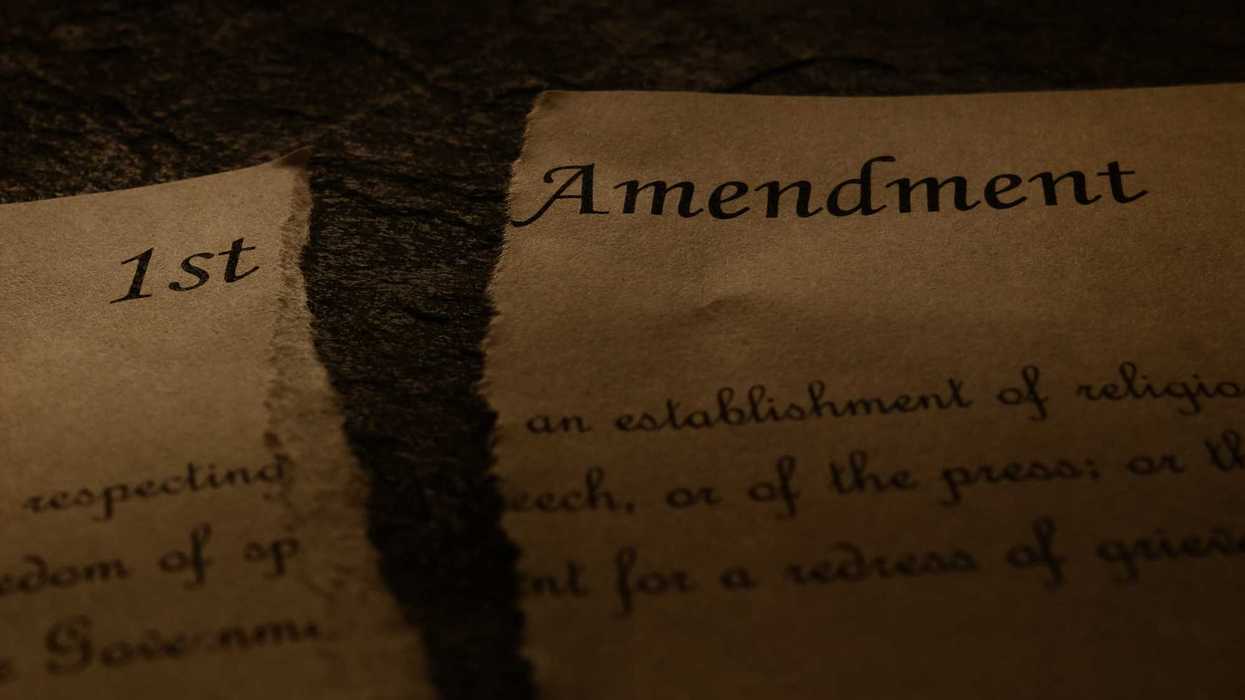
First Amendment being torn

First Amendment text of the US Constitution ripped in half -- Freedom of Speech , Religion or Press unconstitutional concept

Getty Images

When POLITICO, CNN, and MS NOW announced Monday that they were filing a federal lawsuit to restore their reporters’ access to the White House, they challenged more than the sudden and unexplained revocation of press credentials. They underscored a fundamental constitutional principle: a free press does not operate at the government's discretion.

According to their joint statement, the outlets are seeking urgent relief after the Secret Service denied their reporters entry to the White House complex on Saturday and confiscated their credentials. The action followed recent stories by these outlets examining the administration’s handling of classified documents and raising questions about transparency related to policy meetings. They wrote, “Without notice or process, the White House revoked our journalists’ credentials because it objected to our reporting. Left unchallenged, this threatens press freedom and the public’s right to independent journalism free from government interference.”


At The Fulcrum, we view this not simply as a dispute between the executive branch and three newsrooms, but as a test of whether democracy’s safeguards remain effective when power is used arbitrarily. Our mission is to provide a platform where all participants in politics can be informed, connect, and act to strengthen democracy in daily life. This work relies on a press corps that can ask difficult questions, pursue the truth, and report without fear of retaliation. You can help defend a free press by contacting your elected representatives to express support for press freedom, subscribing to or donating to independent outlets, and sharing trusted reporting with your community. Every action, even small ones, reinforces the foundation of accountable democracy.

A democracy cannot be repaired or maintained when those in power control information. Effective self-governance requires engaged citizens, transparent institutions, and journalists free to inform the public. Weakening any part of this ecosystem undermines the entire structure.

This lawsuit aims to reinforce the constitutional framework that protects everyone. It asserts that access to the White House cannot be granted or revoked based on political preference. It reminds us that journalism is a right secured by the First Amendment, not a privilege granted by government.

We support this legal challenge because its impact extends beyond the press room. It affects every community where Americans depend on independent reporting to understand government, assess its actions, and participate in civic life. Press freedom is not abstract; it is essential to democracy.

When that essential freedom is threatened, every American should take notice.

David Nevins is the publisher of The Fulcrum and co-founder and board chairman of the Bridge Alliance Education Fund.

Read More

Gavel on top of binders

A full rundown of this week's congressional action: 7 bills headed to the President, a stalled data center bill, and the votes lawmakers wanted on record.

May Lim / 500px/Getty Images

House Crams in Votes Before Extended Break

The House wasn’t expected to stay in session past this week and, in fact, they left a day early after Rep. Massie (R-KY4) introduced an impeachment resolution against Secretary of Defense Pete Hegseth. Nonetheless, they powered through many more votes than usual. We’ll cover the seven soon-to-be new laws and the bills of interest we highlighted in this week’s preview. As is its usual function, the Senate mostly acted as a break on legislation that had passed the House.

New Laws

These bills have all passed both chambers in identical form, so they next go to the President for signing.

Keep Reading Show less
Capitol building, Washington, D.C.
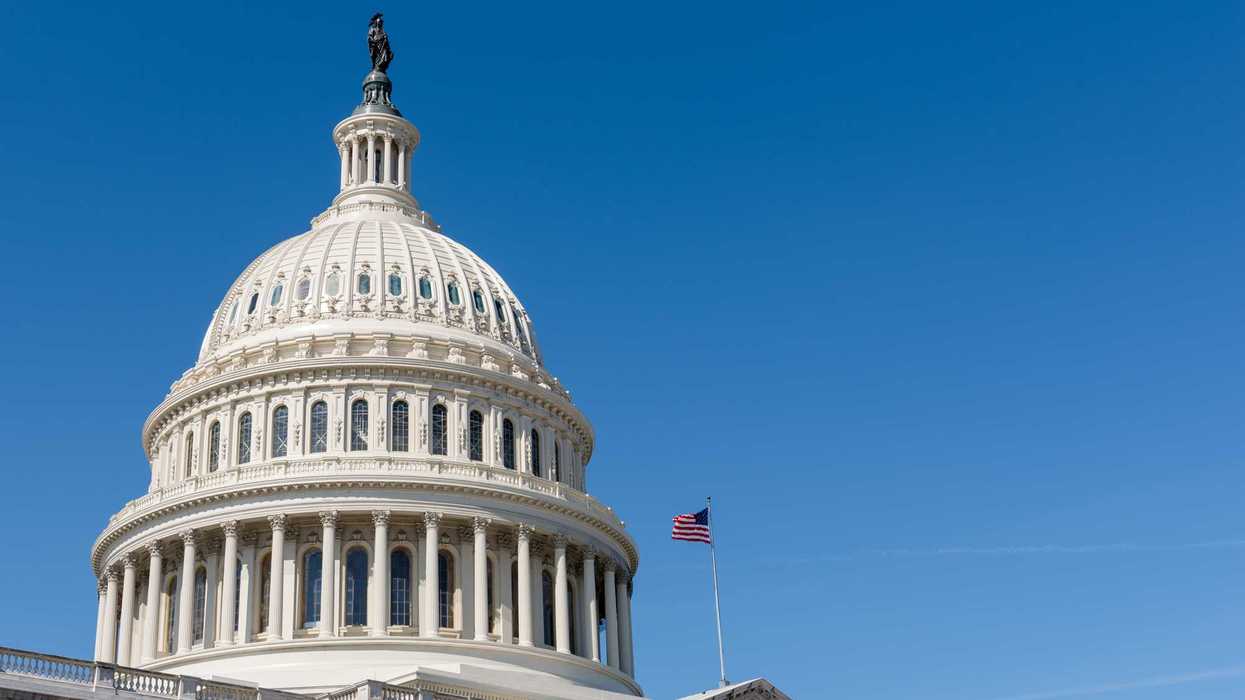
The United States Capitol building with its white dome against a blue sky

Republicans Are Walking Away From Congress’s Core Duties

The story of this political moment keeps getting written like President Donald Trump is the main character — his impulses, his conflicts, his latest post on Truth Social.

But the more important story is happening one branch over, where a Republican-controlled Congress has spent the last several weeks demonstrating, in real time, what it looks like when a legislature declines to legislate.

Keep Reading Show less
Cardboard ballot box with a voter slip being placed into it by a hand, with a blue and red coloured background.

Cardboard ballot box with a voter slip being placed into it by a hand, with a blue and red coloured background.

Getty Images

The Leverage Ethic and the Spirit of Tripartisanship

I made the immodest proposal in my edited interdisciplinary volume Leveraging: A Political, Economic, and Societal Framework that the contemporary analogue to what Max Weber called the "Protestant Work Ethic" in The Protestant Ethic and the Spirit of Capitalism was what I called "the Leverage Ethic."

Moreover, I suggested that the Leverage Ethic has more or less replaced what the late Harvard sociologist Daniel Bell called the "Consumer Ethic" in his classic book The Cultural Contradictions of Capitalism, which he argued more or less replaced the Protestant Work Ethic.

Keep Reading Show less
Lorraine Marquez Eiler

Lorraine Marquez Eiler, a Hia-C’ed O’odham elder, listens as Tohono O'odham Chairman Verlon Jose speaks during a news conference at the Quitobaquito Springs site on Monday, Aug. 24, 2026.

Stephanie Casanova

“We Will Not Let This Destroy Our Sacred Sites”: Indigenous Leaders Fight Trump Administration’s Border Wall

Standing near the pond at Quitobaquito Springs, Lorraine Marquez Eiler, a Hia-Ced O’odham elder, shared how her ancestors held ceremonies at the sacred site — a desert oasis in a national park that the federal government is set to bulldoze for a new border wall.

She pulled out a photo of her great-great grandparents and her great-grandparents, who would walk about 50 miles through the Sonoran Desert to the springs. The O’odham call the water flow A’al Vaipia. She showed the image of her ancestors to a group that included Indigenous leaders and a U.S. congressional representative — all there on Monday to condemn the border wall construction.

Keep Reading Show less