







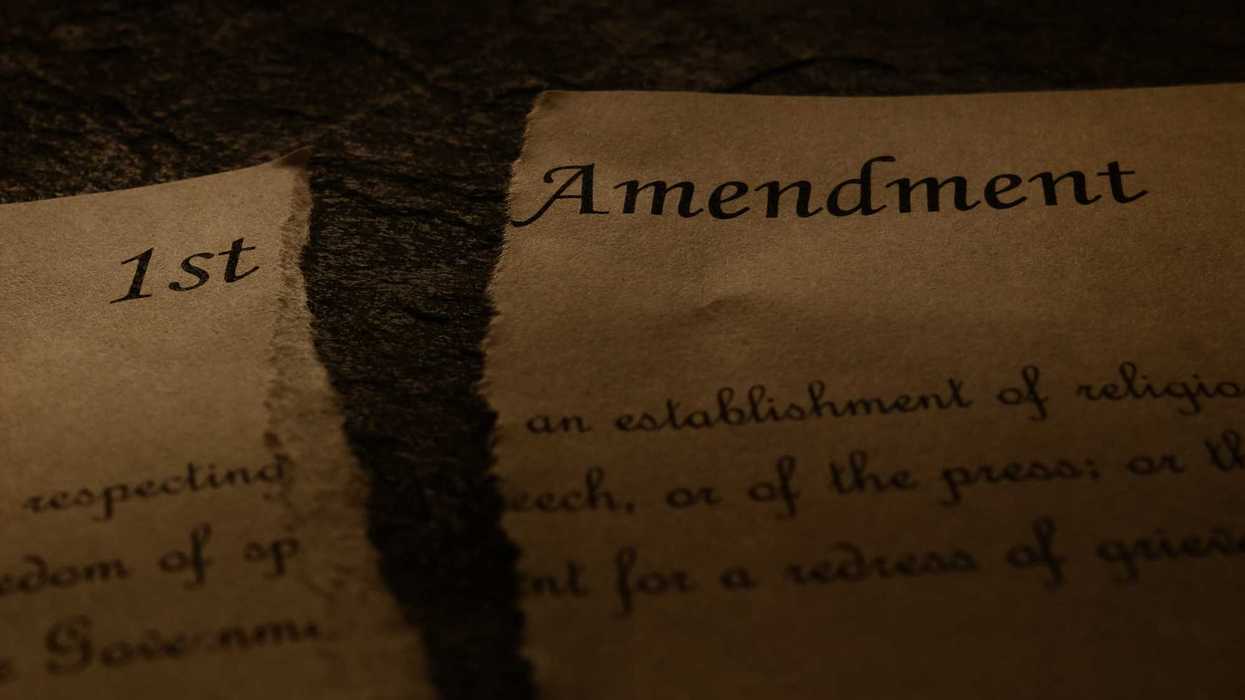
Beyond picking governors, state legislators, local officials and representatives to serve in Congress, voters in almost every state this year will have the opportunity to amend the language of their state constitution. In one state, they could potentially rewrite the constitution altogether.
Though the U.S. Constitution is rarely amended, voters frequently amend their state constitutions. In every election cycle, voters are asked to ratify constitutional amendments.
In recent years, around 100 amendments have been voted on in each cycle. Most of them are proposed by state legislatures, but some are proposed through the voter initiative process.
This year, however, voters in Michigan will decide whether to convene a state constitutional convention in 2027. At a constitutional convention, elected delegates consider editing or rewriting the state’s constitution, with virtually no limits on what they can do. Michigan’s constitution requires that voters be asked every 16 years whether to hold a convention, and the last three times the question appeared on the ballot, voters rejected the idea in landslides.
If Michigan voters do want to call a convention, an election for 148 delegates would be held in 2027, and the elected delegates would meet to discuss whether to completely overhaul the constitution or propose small changes, though they might not come to an agreement at all.
State constitutions play an increasingly important role in American politics, though voters may not know much about them.
 This fall, Michigan voters will cast ballots on whether to convene a constitutional convention in 2027. River North Photography, iStock/Getty Images Plus
Protecting rights
Every state has a constitution, and each constitution has an individual bill of rights that provides parallel – and sometimes greater – protections for the liberties guaranteed in the U.S. Constitution’s Bill of Rights. The federal Bill of Rights sets a minimum for the rights and liberties that states must recognize, but state constitutions can increase the protections – or provide different ones.
Following the U.S. Supreme Court’s decision in Dobbs v. Jackson Women’s Health Center, which overturned Roe v. Wade and held that the U.S. Constitution does not protect a right to abortion, abortion rights advocates have turned to state constitutions to recognize reproductive rights.
Attorneys and advocates have fought state abortion restrictions, asserting that state constitutions implicitly guarantee the right to an abortion. They have had mixed success with that tack, and better luck proposing amendments to state constitutions to expressly recognize rights to abortion. Conservative efforts to add abortion restrictions or bans to state constitutions have seen more limited success.
As a scholar of state constitutions, I know that turning to such constitutions to recognize rights and liberties is not a new project. It is not an exclusively liberal or conservative one.
Turning to states
After Richard Nixon was elected president in 1968, he appointed Warren Burger as chief justice of the U.S. Supreme Court, succeeding Earl Warren. Under Warren’s leadership, the court had strengthened the protections in the Bill of Rights, required states to fully recognize them and ushered in many of the rights and liberties we know today.
Among them: Miranda warnings – the standard warnings that police are required to give suspects of crimes before interrogations, as well as the requirement that indigent defendants be provided counsel in criminal trials and the rule that unconstitutionally obtained evidence cannot be used against defendants, came from the Warren Court.
Burger’s appointment, therefore, was concerning to criminal defense attorneys and civil rights activists, who feared that the Warren Court’s landmark decisions would be weakened or overturned.
So they turned to state courts and state constitutions.
A group of scholars, advocates and judges began arguing that lawyers and courts needed to take state constitutional rights seriously. They started developing legal arguments that relied on state constitutional rights, which saw some early successes.
From education to LGBTQ+ rights
Though these efforts began with attempts to ensure rights for criminal defendants, they were not limited to that context.
In 1973, the Supreme Court held that the Constitution contained no right to education and that a funding disparity among school districts in Texas was not unconstitutional.
In response, advocates went to state courts. Relying on explicit provisions in state constitutions that require the legislature to provide students with an adequate education, they argued that funding disparities violated state constitutions.
 The Geneva Political Equality Club resolution, adopted Feb. 10, 1908, requesting the New York state Legislature to support a suffrage resolution to amend the state constitution. Library of Congress Rare Book And Special Collections Division
Many courts agreed. Over the past 50 years, education financing lawsuits, aimed at eliminating inequalities in education funding, have made their way through state courts, with some important and high-profile successes.
Advocates have also brought cases that used state constitutions to recognize LGBTQ+ rights, sometimes well before the Supreme Court did the same.
In the 1980s, the high court refused to strike down a Georgia law that criminalized sexual relations between people of the same gender. Marriage equality was a long way off, too. In several states, LGBTQ+ rights activists successfully argued that their state constitutions protected rights to privacy that made similar laws unconstitutional, a position that the Supreme Court would later adopt.
And by the time the Supreme Court recognized a right to marriage equality in Obergefell v. Hodges in 2015, a growing number of states had come to the same conclusion under their own constitutions.
Conservative project, too
But the rights and liberties protected by state constitutions haven’t just evolved in a liberal direction.
During the movement for marriage equality, voters in many states ratified constitutional amendments defining marriage as between one man and one woman. Likewise, a handful of state constitutions expressly preclude courts from recognizing a right to abortion.
The National Rifle Association has successfully pushed for stronger rights to bear arms under state constitutions. Also, in many states, victims’ rights amendments guarantee to victims of crimes the opportunity to participate in criminal trials, and frequently constrain defendants’ rights.
As political polarization increases, and as the Supreme Court removes itself from many rights disputes, state constitutions will likely be more important than ever in rights adjudication. Voters, who can and do amend those constitutions, can play an important role in how that plays out.
How State Constitutions Became the Battleground for American Rights and Liberties – on Both the Left and Right was originally published by The Conversation and is republished with permission.












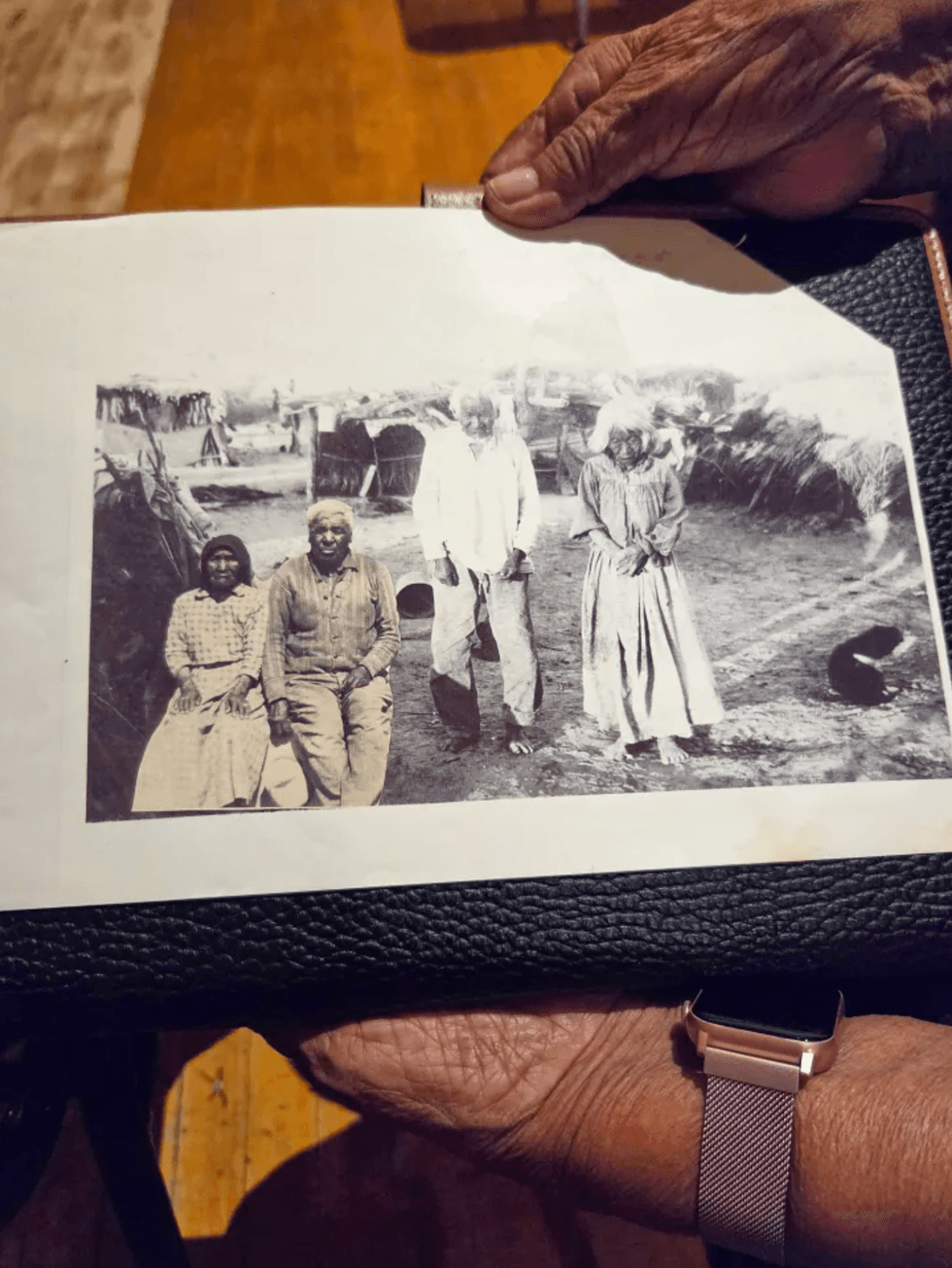 Lorraine Marquez Eiler’s photo of her great-great grandparents and her great-grandparents, who would walk about 50 miles through the Sonoran Desert to the springs.
 The Quitobaquito pond sits near the U.S.-Mexico border just west of the Lukeville port of entry on Monday, Aug. 24, 2026. The Trump administration is attempting to build a second border fence 150-feet from the existing border, which O’odham tribal members and environmentalists say would damage Quitobaquito, a sacred site to the O’odham and other indigenous people. Credit: Stephanie Casanova
 Construction equipment is seen near the U.S.-Mexico border just west of the Lukeville port of entry on Monday, Aug. 24, 2026. Credit: Stephanie Casanova
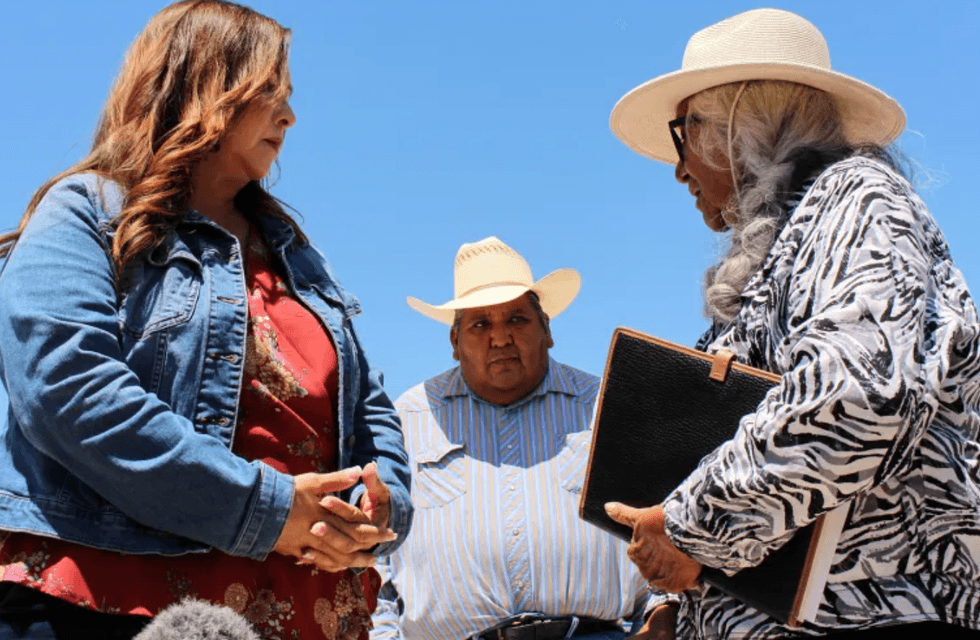 Rep. Adelita Grijalva, left, and Tohono O’odham Chairman Verlon Jose listen as Lorraine Marquez Eiler, a Hia-C’ed O’odham elder, shares how her ancestors would hold ceremonies at Quitobaquito Springs. Grijalva visited the springs with tribal leaders on Monday, Aug. 24, 2026. Credit: Stephanie Casanova
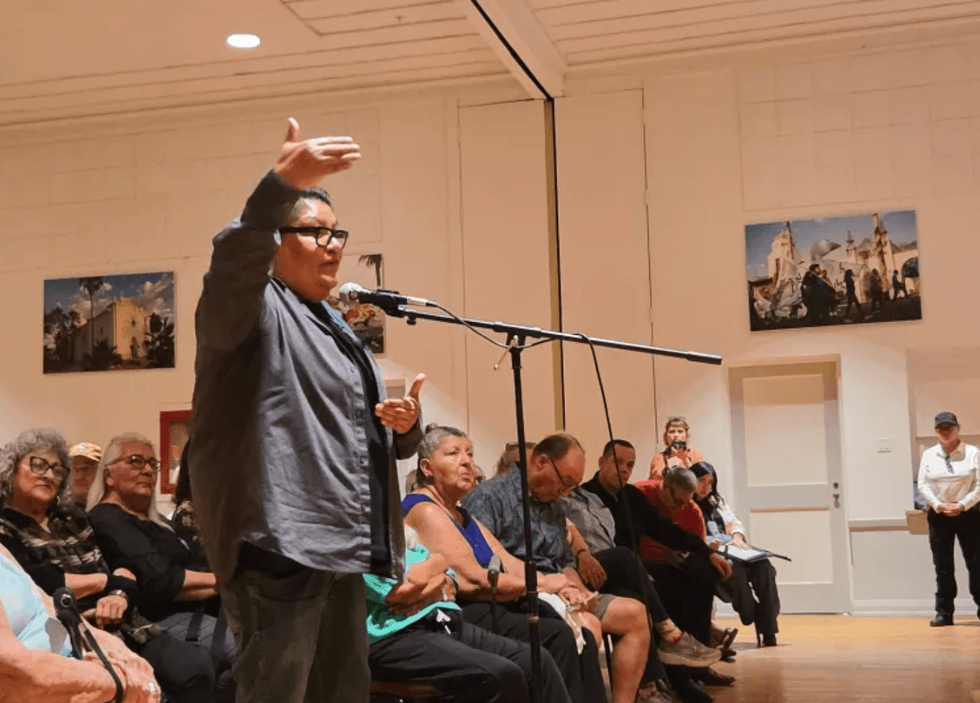 Sara Mae Williams, Justice of the Peace in Ajo and a Tohono O’odham citizen, shares their concerns regarding border wall construction on Tohono O’odham land at a town hall at the Ajo Plaza Rec Hall on Monday, Aug. 24, 2026. Credit: Stephanie Casanova