
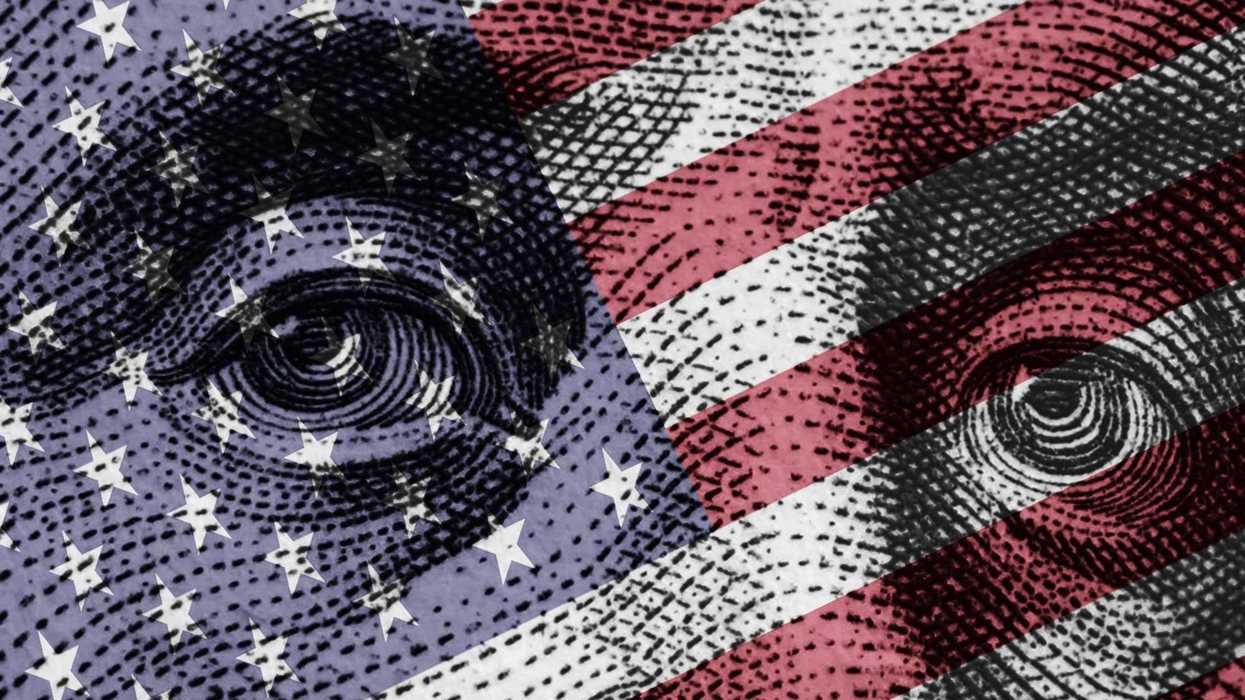
A recent NewYork Times article reported that a total of $11.6 billion will be spent on advertising in the current midterm elections, with $1 billion being spent in its last 2 weeks. Republican super PACs have invested $1.6 billion, twice the amount of Democratic super PACs. Elon Musk has contributed $420 million.
While money has always spoken in American elections, and the force of money's voice became even louder after the Supreme Court's decision in Citizens United, the experience of the current election season shows clearly why the unregulated flow of money from the mega-rich into election campaigns is perverting our democratic process.
Our democracy is based on millions of people making their voices heard through the voting process and electing their representatives—be they Representatives in the House, Senators, or the President. Even under the current circumstances, that still is the outward form of our democracy.
But how do individuals decide whom to vote for? While for some the vote has always been simply a matter of voting your Party, for many it' was a matter of listening and watching, absorbing information from multiple sources, and making a decision—based on that input—on what was in your best interest. This is what used to be called "the marketplace of ideas."
And so the question becomes, do we still have a marketplace of ideas? In one sense, one can argue that the fact that billions of dollars are being spent on advertising does not change the fact that there is a marketplace of ideas. And indeed, in one sense that is correct.
However, the concept of the marketplace of ideas is about the public weighing the truth or benefit of competing ideas. One cannot do that if you are bombarded by many messages supporting one idea and few for the competing idea. This is partly how the Nazis took control of Germany—there was little to counterbalance their propaganda. Think about it: If one is exposed to 100 ads saying one thing, and only 10 ads saying the opposite, the candidate with the 100 ads is more likely to win against the candidate with 10 ads, regardless the quality of the ads' contents
This is, to my way of thinking, a corollary to the Supreme Court concept of "one man, one vote" —that it is central to our democracy that each vote carries the same weight. So too is it central that each individual is able to come to a reasoned decision.
While it is true that regardless how much money is spent in a campaign, the end result is still one man, one vote—that is a question of process—if the mega-rich on one side have a huge advantage in the amount of messages they are sending to the public, it is likely that their side will win. Not because of the quality of their arguments meshing with the best interests of the people, but because the people hear their arguments so often that the arguments of the opposing side are drowned out. The overwhelming quantity of ads commandeers the individual's thinking and decision process.
That is why most proposals to limit campaigns to public funding have been founded on the principle of each candidate having the same amount of money to spend on his campaign. Then it is purely a matter of the quality of the ideas and their meshing with the interests of the people, because the quantity is equal, thus restoring the marketplace of ideas.
While the Supreme Court has upheld legislation that limits the amount an individual can contribute to a campaign (to prevent corruption), it has turned back efforts by Congress to prohibit outside spending during the last months prior to an election by independent organizations (e.g. super PACs and labor unions), so long as that spending is not coordinated with the campaigns. NOTE: This caveat is a delusion, for regardless whether the ads are "coordinated" with a campaign, they are supporting a campaign or attacking the opponent; these are not neutral comments about the election. Political parties can spend unlimited funds even in coordinated efforts.
The Supreme Court's holy grail in these cases has been the 1st Amendment right to free speech. It has viewed all of these cases as abridging that right and therefore unconstitutional. In Citizens United it declared that corporations were "associations of citizens" and thus were protected by the 1st Amendment.
But the 1st Amendment right is not absolute. Whether it's the proverbial, not being able to shout "fire" in a crowded theater, or laws prohibiting false advertising, speech can be limited when the speech either creates an immediate danger or where the parties involved are not on an equal footing and the speech misleads or harms consumers.
These cases all deal with the content of the speech in question. In the case of limiting spending in support of a candidate, the issue is not the content of the speech (which is another matter, see my article, "The Need for a Truth in Politics Law: De-frauding American Politics") but the quantity of the speech. Such a law would not prevent a corporation or super PAC from exercising its free speech rights, it would just limit the amount it spends in this endeavor.
Here again, as in the false advertising instance, you have two parties not on an equal footing—you have mega-rich donors and the average voter. The spending overwhelms the ability of the voter to make an informed decision on what is in his best interest and thus harms both the individual voter and the nation. Even if both sides spent a similar huge amount, being overwhelmed is not conducive to the reasoned thought process necessary to be the informed voter on which the strength of a democracy depends.
The only workable answer to this issue is for Congress to be allowed to set limits on spending relating to campaigns—by the campaigns themselves; by all others, whether individuals, corporations, or super PACs, whether coordinated with the campaigns or not; and the totality of spending for either side. The totality of money being spent on campaigns has become obscene as well as individual insertions of money, whether by an Elon Musk or various super PACs.
This. however. would not be a guaranteed fix. Complicating the problem is that with the advent of cable television and the internet, people often choose to listen to the media outlet that they are comfortable with, and so are not challenged with opposing points of view; for them there is no marketplace of ideas. And for this problem, there is no legislative solution.
Ronald L. Hirsch is a teacher, legal aid lawyer, survey researcher, nonprofit executive, consultant, composer, author, and volunteer. He is a graduate of Brown University and the University of Chicago Law School and the author of We Still Hold These Truths. Read more of his writing at www.PreservingAmericanValues.com