

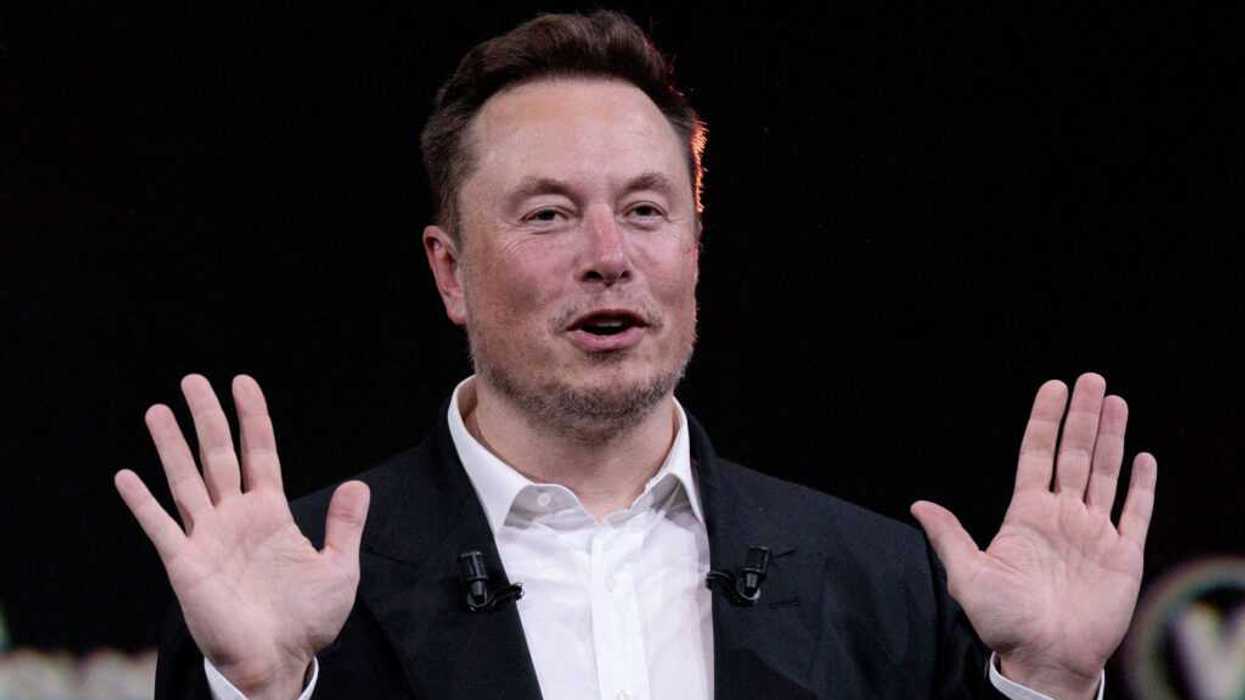

I am not a huge fan of Elon Musk as a political activist or commentator. I think he’s made Twitter — sorry, X — worse. His support for the nationalist right in Europe has been ugly. His tenure leading the Department of Government Efficiency mostly amounted to a missed opportunity and often descended into little more than performative vandalism. His personal life is not exactly consonant with my preference for bourgeois family values. Though, one can hardly accuse him of being a deadbeat dad.
On the other hand, I am a huge fan of his accomplishments in business and engineering. He helped create the foundations of the digital economy with PayPal. At the helm of Tesla, he made the electric car into a viable industry (something climate activists once lionized him for). Starlink, his internet satellite business, has been transformative. And, finally, there’s SpaceX, which went public last week. It’s a testament to human ingenuity, immigrant success and American greatness, on a scale that is hard to describe.
If Musk is successful in his ambitions, he will be more responsible than any other human for making ours an interplanetary species. That would mean that long after nearly every name of every politician and businessman you can think of have been forgotten, people will still remember Elon Musk.
But none of that is very relevant to the explosion of outrage over his status as the world’s first trillionaire. I offer my opinions about Musk only because a remarkable number of people think if you defend the morality or legality of him being so rich you must be on Team Elon. I am not. I am on Team Capitalism.
But the confusion hardly ends there. If you followed the reaction on social media to Musk’s shattering of the trillionaire barrier, you’d think that he now has a trillion dollars in the bank. Indeed, indignant politicians rushed to propose taxes on Musk’s wealth as if it was a suddenly discovered treasure ship (with laughably questionable math). Many people talked about Musk “hoarding” dollars that rightfully belong to the poor, the people or perhaps Social Security beneficiaries.
That trillion dollars doesn’t exist, save as a function of accounting. He owns a large number of shares in SpaceX. Those shares have an estimated book value of about $1.03 trillion — as I write this. The stock price will change daily, and if it dips in the future, as I expect it will, he might not be a trillionaire for very long.
Let’s say, heaven forbid, that SpaceX has a disaster on the launchpad, loses some major NASA contract, and the stock price tumbles. What happens to those dollars he supposedly hoarded? Do they vanish? No, because they never existed in the first place.
A shocking number of people think — or demagogically pretend to — that the economy is a static pie. All of the wealth in the economy exists in the form of a finite number of dollars. This zero-sum fallacy is why people think he’s hoarding wealth. He’s not. He’s creating wealth, and I don’t just mean for all of the SpaceX welders and cafeteria staff who now own more than a million dollars’ worth of stock.
Increased innovation and productivity grow the pie, which means more pie for more people. That’s what economic growth means. In 1969, the year I was born, the U.S. gross domestic product was about $1 trillion, in nominal dollars. (If you adjust for inflation, U.S. GDP was around $1 trillion a century ago.) Does Musk now own all of America’s wealth? Of course not, because the economy has grown massively since then.
Other than dislike for Musk, the main driver of all this outrage is our obsession with income inequality. To some, it’s just not right that anyone be so rich when others are so poor — or feel so poor compared with Musk. This is an aesthetic complaint masquerading as a policy position. In objective terms, no one was made poorer by Musk getting richer. Subjectively, however, we’re all poorer in the sense that the richest person in the world became marginally richer.
That’s a vibes argument.
If your neighbor wins the lottery, you will be poorer in comparison. But your ability to clothe, feed and house yourself and your family will not have changed.
If I cure cancer tomorrow, I will get very rich. Where’s the injustice? The world gets a cure for cancer, the economy saves countless billions fighting cancer, and I get to buy a bunch of cool stuff. Everyone, except maybe some drug companies and oncologists, comes out a winner.
I’ll never cure cancer. But capitalism probably will, eventually. Which is just one of a trillion reasons why I am on Team Capitalism.
Jonah Goldberg is editor-in-chief of The Dispatch and the host of The Remnant podcast. His Twitter handle is @JonahDispatch.