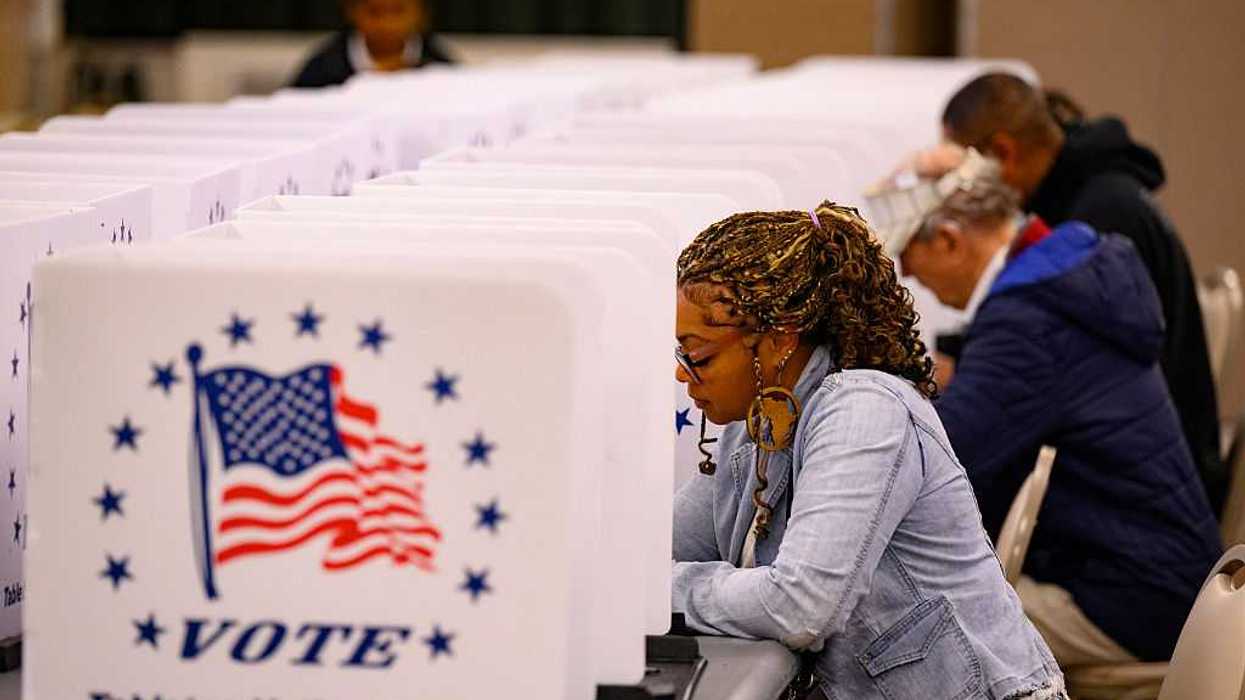




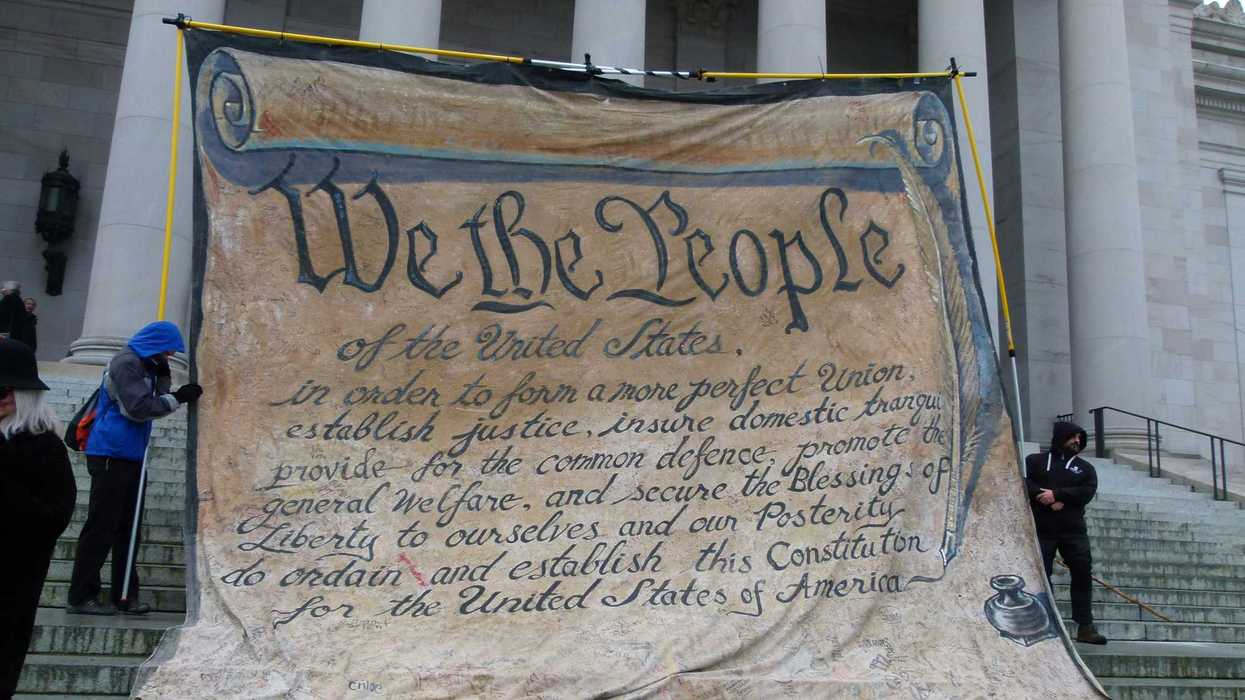

On July 4, 1776, Americans advanced a revolutionary claim: political power ultimately belonged not to a king, but to the people. Two hundred and fifty years later, we have become quite good at commemorating that claim, but we have not necessarily become equally skilled at putting it into practice in everyday life.
We vote, petition, and debate. Yet in daily life, residents often have little meaningful influence over matters that shape their lives: the price of food, whether a corner store can survive, how to obtain help, and how public resources are used. Perhaps the unfinished work of independence is not to issue another declaration, but to build institutions through which people can act together—and through which their collective action can itself be held accountable.
The Declaration of Independence affirms that governments derive their just powers from the consent of the governed. This is, first of all, a political principle. But consent also has a social dimension: between elections, how do residents participate in decisions that affect them? Who has the authority to decide which needs are most urgent in a neighborhood? And when people disagree, who has the final say?
Part of the answer lies in civil society: associations people form voluntarily in pursuit of common purposes. These organizations are not substitutes for government, nor do they earn the right to represent everyone merely by invoking the word ‘community.’ In the nineteenth century, the French thinker Alexis de Tocqueville observed Americans' talent for forming associations. He recognized in it an essential democratic skill: learning to act together despite disagreement.
Today we possess remarkably sophisticated systems for advertising products, collecting data, and delivering goods. Yet we lack equally effective—and equally accountable—mechanisms through which people living on the same street can understand one another's actual needs and connect those needs to resources already available.
Consider San Francisco's Tenderloin neighborhood. Households know which essentials they can no longer afford. Small merchants know what they can supply and at what price. Nonprofit organizations understand gaps in services. Public agencies possess resources and carry legal responsibilities. This knowledge is scattered; it does not automatically become cooperation. Street Equity and the Community DataBank, which I have proposed, seek to test a modest question: can genuine needs be connected to dependable supplies and services, with results that can be verified rather than merely promised?
But we must first acknowledge a difficulty: residents, merchants, and landlords do not necessarily share the same interests. Low-income families want less expensive food. Merchants must keep their businesses viable. Landlords may seek higher rental income. Inviting all three into the same meeting room will not make these conflicts disappear. If a neighborhood initiative is to claim democratic legitimacy, it must begin by acknowledging that its participants do not possess equal resources or equal influence.
I therefore propose that, before any Tenderloin pilot expands, participating residents and legally accountable partner organizations jointly establish a public charter. It should state which decisions residents can vote on and which must, by law, remain with agencies responsible for procurement contracts, benefit eligibility, or personal safety. It should explain who may make proposals, how reasons are given, how dissent is recorded, and when someone must recuse themselves because of a personal interest. Resident representatives should be selected through comprehensible, accessible procedures—not handpicked by the project founder. Tenants, lower-income residents, people speaking different languages, and those with limited mobility must have practical ways to participate.
When interests conflict, one principle should be clear: no party should acquire a final veto over collective decisions merely by possessing capital, owning property, or controlling the database. Before a group purchase goes forward, the goods and their quality, the actual delivered price, delivery charges, supplier-selection criteria, and alternatives should be made public. Merchants may submit bids, explain their costs, or decline to participate; households remain free not to buy. Decisions involving government funds must still be made by legally authorized public bodies, subject to existing public oversight. If a project cannot resolve a dispute, it should narrow its scope, pause, or end—not conceal disagreement beneath the language of ‘community consensus.’
The risks of data must not be obscured by promises of efficiency. A database that records family incomes, purchasing habits, health difficulties, and requests for assistance may improve services. It may also become a tool for targeted marketing, exclusion from benefits, or discriminatory pricing. Whoever designs the forms, determines how information is classified, and controls who can see it may also influence how resources are allocated. Data governance itself must therefore be subject to oversight by residents and independent professionals.
The first pilot should not build detailed dossiers on residents. A public directory of resources can draw on verifiable information that organizations choose to provide; surveys should gather only the minimum information needed to deliver a specific service. Anonymous feedback must be kept separate from identifiable service records. Access and editing rights must be restricted, with defined retention periods, access logs, correction procedures, and ways to withdraw. Participation must not automatically expose personal information to merchants, landlords, or investors. Any new use requires explicit authorization, compliance with the law, and independent review. Aggregate findings may be made public, but not in ways that allow individual households to be identified.
More important still, residents must have the power to correct the organizers. The initiative should disclose its service rules, use of funds, supplier relationships, complaint procedures, and methods of measurement. Complaints should be reviewed independently of management, with errors and corrective actions reported regularly. If organizers stop answering to residents, the charter must provide a procedure for replacing representatives and terminating partnerships. Equity shares, local investment vehicles, and promises of ‘community ownership’ must remain longer-term proposals—not accomplished facts—until their legal and governance arrangements have been properly reviewed.
Where should this work begin? Perhaps with an idea so small as to seem almost inconsequential: find a merchant willing to give a firm quote for one basket of everyday essentials, compare its price with a realistic alternative, and invite about ten willing households to try one actual delivery or pickup. Before proceeding, a responsible coordinator must verify the products, payment and refund arrangements, supply capacity, pickup location, privacy protections, and complaint process. If these basic conditions are not in place, the project should neither collect payments nor gather residents' contact information.
Then, over a limited observation period of roughly ninety days, record how many people received a complete offer, how many voluntarily accepted it, how many orders were fulfilled as promised, what the actual costs were, whether households truly saved money, how much real revenue local merchants received, and how complaints were resolved. Without a credible price comparison, we cannot claim that families ‘saved money.’ Without completed delivery, an intended order cannot be counted as a success. Only if the experiment works, costs remain manageable, and residents want to continue would gradual expansion be justified. A larger cohort of one hundred households is a possible goal—not an achievement already made.
Nor does any of this mean asking volunteers to shoulder duties that government has failed to fulfill. Qualified service providers, paid coordinators, public benefits, and responsible government cannot be replaced by an elegant spreadsheet. A neighborhood organization can help identify service gaps, improve referrals, and scrutinize outcomes. It must not become an excuse for government to abandon its obligations.
American history itself offers a warning. The Declaration's language of equality coexisted with slavery, women's exclusion from political power, and the dispossession of Indigenous peoples. Later reformers had to challenge these exclusions repeatedly before that promise could be more fully realized. If today's neighborhood initiatives listen only to those with the most time, money, or organizing power, they may reproduce a similar contradiction.
The problems facing the nation are enormous. Why attempt such a small experiment? Because freedom is not merely proclaimed in speeches. It also lives in everyday details: whether someone can object, refuse to have information recorded about them, understand a bill, hold a manager accountable, and see their needs answered fairly.
The 250th anniversary of American independence calls us to remember not only the courage of the Declaration, but also the responsibility that follows it. Digital tools may connect scattered information, but they do not automatically produce democracy. Democracy begins when people are willing to acknowledge disagreement openly and build institutions in which anyone who exercises power must answer questions.
A declaration can proclaim freedom; a neighborhood capable of holding its own power accountable can begin to give freedom a tangible form.
John van Sicklen Maeck II is a San Francisco writer whose work spans memoir, poetry, theatre, and reflective nonfiction. His civic writing focuses on resident participation, community development, and accountable neighborhood institutions. He has proposed Street Equity and the Community DataBank as ways to explore practical cooperation among residents, local businesses, and public agencies.