Skip to content
Search

Latest Stories

Follow Us:
Top Stories

Pennsylvania’s Bipartisan Exchange Is Rebuilding Trust in Governance

District exchanges help lawmakers understand communities and build trust across Pennsylvania.

Opinion

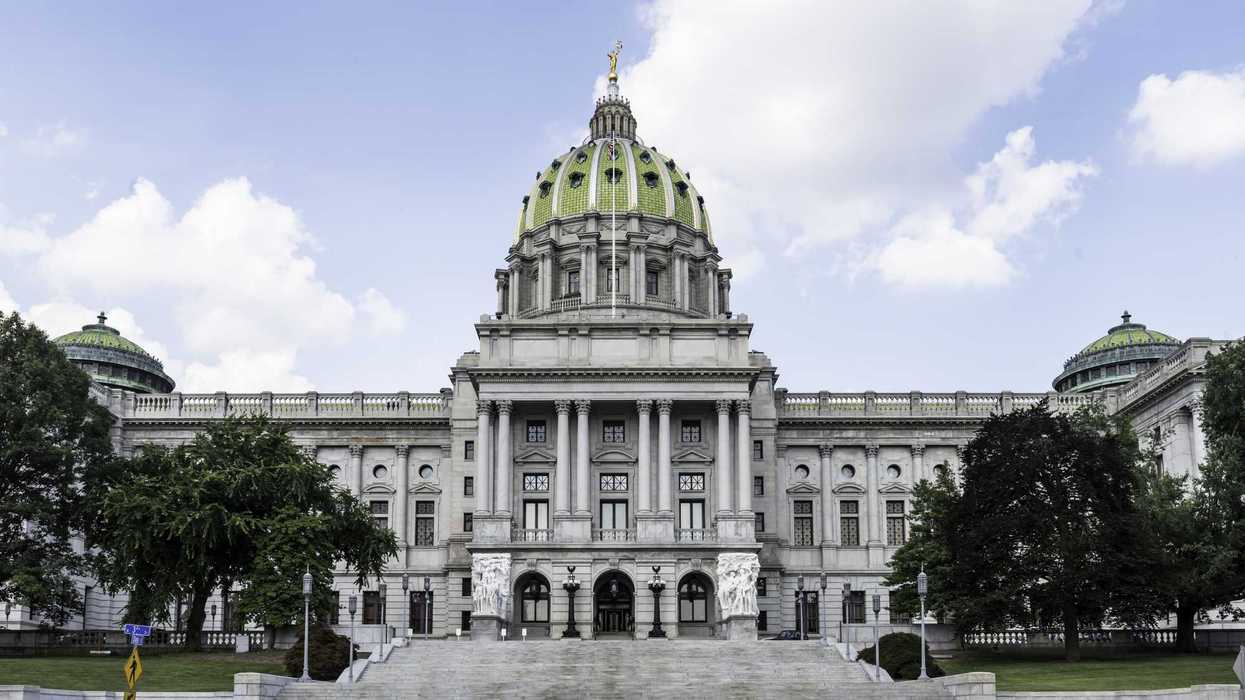
The Pennsylvania state capitol building.

The Pennsylvania state capitol building.

jimfeng/Getty Images

The University of Pittsburgh Institute of Politics has nearly 40 years of experience working with legislators from different political parties, and it is building on this history by drawing on lessons from the successful American Congressional Exchange model, begun in 2018 at the Bipartisan Policy Center, and from state exchanges now underway in Minnesota and Michigan. The University of Pittsburgh Institute of Politics, in collaboration with the Bridge Alliance, has launched the Pennsylvania Legislative Exchange.

This state-based, systematic approach is designed to foster better relationships and build trust across the political aisle with the following guiding principles:


  • Trust must be intentionally built between the two political parties before they can solve problems.
  • Legislators must listen to one another and understand what motivates and concerns their colleagues.
  • Shared experiences built on close personal interactions can bring state legislators together, help them identify shared values and goals, and find ways to work together for the common good.

When this happens, it almost always involves sharing information about each legislator’s perspective, their district’s challenges and opportunities, and a shared desire to make things work for all Pennsylvanians. The Pennsylvania Legislative Exchange (PLE) builds on this success and reinforces the idea that Pennsylvania benefits when we work together.

The PLE pairs legislators from opposite parties to visit each other's districts, focusing on districts that differ in geography, economy, culture, politics, and community demographics. The PLE aims to honor these differences, define common problems across communities, and identify shared interests and goals.

PLE trips typically last 12–36 hours, depending on the district’s geographic size. The Institute of Politics (IOP) designs itineraries in collaboration with the host legislator to showcase unique experiences, industries, businesses, institutions, and community leadership within the district. The trips will provide meaningful opportunities for local and county civic, business, education, and faith leaders to connect with the two members. Itineraries may include tours, roundtable conversations, meetings with local civic and community leaders, and shared meals to help legislators better understand a district's economic, social, political, and cultural makeup. The PLE will nurture authentic connections, bipartisan collegiality, and trust across differences.

The host legislator designs visits to reflect key challenges, opportunities, and constituent needs in their communities, and they exclude lobbying activity. Instead, visits are centered on relationship-building and introduction to each other’s district, with an eye toward potential future collaboration that grows organically from what is experienced on the

The Pennsylvania Exchange is built on a simple yet powerful premise: when lawmakers step outside the Capitol and into one another’s communities, they see the Commonwealth—and each other—with fresh eyes. Each bipartisan visit focuses on the issues that matter most to Pennsylvanians. By grounding itineraries in local, regional, and statewide policy concerns, participating legislators confront real challenges together and begin identifying solutions that can make a tangible difference back in Harrisburg.

These exchanges are uniquely valuable because of the diversity of the participants. Lawmakers come from regions shaped by distinct histories, industries, economies, and natural resources. As they travel across these varied landscapes, they gain a deeper appreciation for the perspectives that define Pennsylvania’s political and cultural mosaic. They discover not only the differences that shape their constituencies but also the unexpected commonalities that can form the basis for a shared purpose.

During each visit, policymakers hear directly from local leaders, residents, and stakeholders—voices often missing or overlooked in statewide debates. These conversations surface new priorities and reveal areas of alignment that transcend partisan politics. Participants often discover shared interests they didn’t know they had, along with policy ideas that emerge organically from Pennsylvanians' lived experiences.

By the end of each exchange, lawmakers return to Harrisburg with more than goodwill. They carry concrete ideas for legislative action—sparked by joint exploration, honest dialogue, and the recognition that durable solutions are possible when leaders see the Commonwealth through one another’s eyes. The Pennsylvania Exchange strengthens relationships, broadens understanding, and equips policymakers to craft bipartisan legislation grounded in the realities of the communities they serve.


David Nevins is the publisher of The Fulcrum and co-founder and board chairman of the Bridge Alliance Education Fund.

Read More

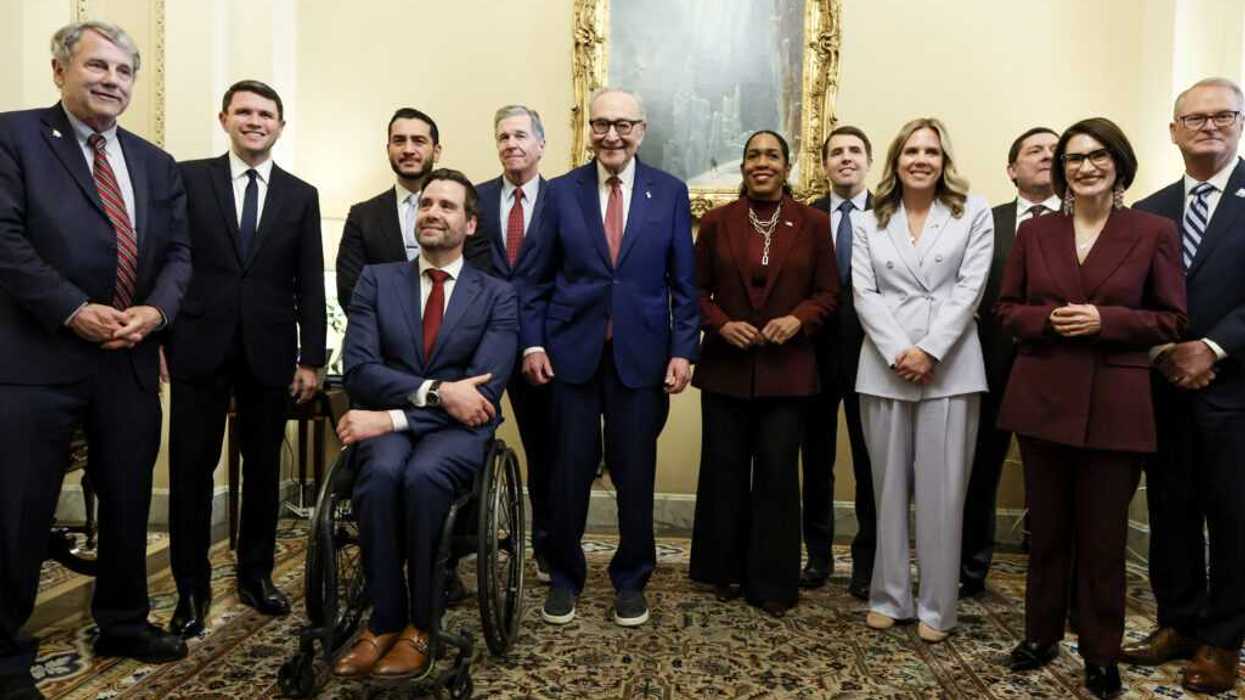
Newly elected Democratic Senators in his office in the U. S Capitol Building

U.S. Senate Minority Leader Chuck Schumer poses for a photo with newly elected Democratic Senators in his office in the U. S Capitol Building on Nov. 9, 2026, in Washington, D.C. Schumer posed for a photo with U.S. Sen.-elect Sherrod Brown, U.S. Sen.-elect James Talarico, U.S. Sen.-elect Abdul El-Sayed, U.S. Sen.-elect Josh Turek, U.S. Sen.-elect Roy Cooper, U.S.

Getty Images

Democrats need to level set with voters

It’s been two weeks, but many Americans are still reveling in the Democratic tsunami that swept the country on Election Day, brimming with excitement, teeming with hope for the future, and gloating from the ass-whooping Republicans just took.

After 10 long years of Donald Trump’s brute dominance over our political system— whether he was in office or lurking menacingly outside of it — MAGA, the nativist, nationalist, nihilistic movement he created, was finally beaten back. And not just in the expected places — but on new frontiers like Texas, Mississippi and South Carolina.

Keep ReadingShow less
two cars on a highway
Cars drive on a highway next to a river

Why Your Town’s Roads Run Through Washington: Unpacking Transportation Infrastructure Funding

Introduction

Access to reliable transportation is a critical part of most Americans’ daily lives. In 2022, Americans took an average of 2.28 trips per day, traveling 28.55 miles on average — figures including every mode of transportation and every purpose, for the full population. However, little attention is paid to transportation infrastructure until there are obvious problems like potholes or broken sidewalks linked to sharp decreases in road safety and quality of life for nearby residents. Given widespread reliance on transportation infrastructure makes examination of the governance structures underpinning its funding an important area of consideration.

Process-Shaping Priorities and the Federal Level

At the federal level, transportation infrastructure is primarily governed by the United States Department of Transportation (USDOT), an executive branch agency split into nine main operating administrations overseeing a specific part of the national transit system. USDOT then uses this oversight to distribute federal funding and ensure that individual transit outlets comply with national policy and safety standards. Distributed federal funding is drawn from the Highway Trust Fund, a dedicated federal fund financed through taxes on gas and other transportation costs, and distributed to states through formula-based approaches or competitive grant programs based on spending caps established by Congress. While federal funding plays an important role in transportation infrastructure, it only represents one-quarter of all public spending on roads and highways. The remaining three-quarters of long-term financing and associated maintenance is provided by state and local governments.

Keep ReadingShow less
Capitol Building in Washington, DC
white concrete building under blue sky during daytime

The Public Is Demanding Ethics Reform. Will Congress Listen?

At the end of the 2026 midterm elections, “corruption” emerged as a central issue in the campaign. The public outrage had been building for years. In a September 2026 Gallup poll, 89 percent of Americans agreed that corruption is “widespread throughout the government,” an all-time high. Allegations that members of Congress use insider information for stock trading have become a common belief. Additionally, a raft of sexual harassment and sexual assault scandals has shed light on the inadequate protections in place for congressional employees. As the 120th Congress convenes in January, Congress must respond to this national cry for ethics reform in the legislative and executive branches.

Historically, Congress has always needed a scandal to act. The Honest Government and Open Leadership Act of 2007 – famously proclaimed by Speaker Nancy Pelosi as an act to “drain the swamp” – was passed as a result of the lobbyist Jack Abramoff scandal involving illegal gifts and favors to members of Congress. It appears the swamp was harder to drain than anticipated.

Keep ReadingShow less
a piece of paper cut out of the shape of a donkey
Photo by Kelly Sikkema on Unsplash

America Adrift—Our Future Depends on Returning to American Principles and Standards

The Democratic Party won the recent midterm elections overwhelmingly. But this was not because voters returned to the way people—whether Republican or Democrat— used to think about government and their relationship with it.

It was simply a matter of people being fed up with ever-increasing prices and with the Iran War. It was not a rejection of Trump's vicious, narcissistic, megalomaniac, mendacious personality nor his anti-democratic actions.

Keep ReadingShow less