





Skip to content
Search

Latest Stories

Top Stories

The Unscrupulousness of AIPAC

Opinion

The Unscrupulousness of AIPAC

Israeli Prime Minister Benjamin Netanyahu addresses the American Israel Public Affairs Committee's annual policy conference at the Washington Convention Center March 6, 2018 in Washington, DC.

(Photo by Chip Somodevilla/Getty Images)

After AIPAC failed to defeat El-Sayed in the Michigan Democratic Senate primary—after spending $32 million—it said that it remains committed to defeating El-Sayed and his "radical, anti-Israel" agenda in the general election. Which means it is poised to sink tens of millions of dollars in supporting Republican Mike Rogers. It also said that Haley Stevens, his opponent, had presented "an authentic Democratic agenda." Meaning that El-Sayed did not? And they think that Mike Rogers, a MAGA Trump supporter, does compared with El-Sayed?

How can AIPAC say that El-Sayed does not present an authentic Democratic agenda when his socialist stance is much more in line with the principles stated in the Declaration of Independence than most centrist Democrats'? And making it sound like AIPAC cares about an authentic Democratic agenda is deceitful, when in the same breath they make clear that they will support Mike Rogers, a Trump lackey, in the general election.


AIPAC's one-dimensional perspective is clearer now than ever. They will fight for the unequivocal U.S. support of Israel at any cost, even if it means having the Republicans and Trump remain in power and destroy our nation.

They are like the Evangelicals to whom there was nothing more important than the creation of a conservative judiciary that would reverse Roe v Wade and other liberal policies, such as LGBT rights, even at the cost of supporting perhaps the most Godless, misogynistic President that the United States has ever had and his MAGA allies. In both cases, they have made a bargain with the devil that will ultimately cost them their souls.

Let me state very clearly at the outset that I, as an American Jew who is the child of holocaust survivors, am a firm supporter of the State of Israel. As illustrated in numerous posts, I have, however, been critical of various actions of past and current Israeli governments towards Palestinians—both Palestinian citizens of Israel and those living in Gaza and the West Bank. See my posts, "The Palestinian/Israel Conflict - A Reality Check," and "A Democrat’s Plan for Ending the War in Gaza and Establishing Peace between Israel and the Palestinians."

And so, I have no problem with there being an organization such as AIPAC that has as its principal mission American support of Israel. But their version of supporting Israel is the "my country, right or wrong" version. It makes no difference what the government in power does; it doesn't matter how egregious the policies and actions of Netanyahu are; they support Israel regardless.

That position is not, in my view, supporting Israel's best interests. Israel has not just become a pariah among many formerly supportive governments around the world; it has suffered existential damage and is further from achieving security for its people than perhaps ever.

When looking at AIPAC's actions, I believe they support Netanyahu because they are as right-wing as he is. They have voiced no criticism of the settlers or other right-wing Israelis that have nothing but contempt for Palestinians. Officially, they support a two-state solution, but their support of Netanyahu's government and settler actions against Palestinians makes that official position a farce, a proverbial "fig leaf."

They are not an organization that asks, how do we support Israel while always acting in the best interests of the United States. They could do so much good with their money and influence. They could work for a better, more democratic Israel, but instead they are supporters of the Netanyahu government. They could work for an Israel that is at peace with its neighbors and is the core of an economic engine that transforms the Middle East. Instead, they work for an Israel that maintains itself through force and fear, never allowing its people to experience the security that comes from living in peace.

Israel deserves the United States' support. But that support should not be unconditional. It is not the role of the U.S. to judge Israeli governments, but when a government takes action that is contrary to international law and is questionable from a human rights standpoint, it should withhold support.

U.S. law provides for withholding arms sales in various situations. First, defense articles may be sold only for specific purposes, including "internal security and legitimate self-defense." Second, no security assistance may be provided to any country whose government engages in a "consistent pattern of gross violations of internationally recognized human rights." Without question, the use of arms against Gaza has gone far beyond "legitimate self-defense" and is evidence of a "consistent pattern" of gross violations of human rights.

AIPAC's support of Israel, regardless of what it is doing, encourages a violation of U.S. law by members of Congress and is unscrupulous.

Ronald L. Hirsch is a teacher, legal aid lawyer, survey researcher, nonprofit executive, consultant, composer, author, and volunteer. He is a graduate of Brown University and the University of Chicago Law School and the author of We Still Hold These Truths. Read more of his writing at www.PreservingAmericanValues.com



Read More

An empty grocery cart in a market.

NYC Mayor Zohran Mamdani proposes five city-run grocery stores. See the arguments for and against, from food deserts to bodega concerns and the $70M cost.

Getty Images, Kwangmoozaa

Government-Owned Grocery Stores: Accessible Nutrition or Government Overreach?

Issue Introduction

Over the past few years, affordability has become the most central issue affecting Americans and the quality of life in the United States. The prices of groceries and basic necessities have risen 25-30% since the COVID-19 pandemic and are projected to rise another 3.2% in 2026. At the same time, the exodus of grocery chains from rural and low-income areas has scattered food deserts throughout individual states. Recent mass closures include Grocery Outlet’s shuttering of 36 stores and continued shut-downs of many Albertsons locations. These factors have led politicians to make affordability a major campaign issue.

During his progressive campaign for mayor of New York City, Zohran Mamdani raised the idea of opening grocery stores owned and operated by the city government to provide New Yorkers with affordable groceries. In his April 2026 public address that marked his first 100 days in office, Mayor Mamdani announced plans for the first of five city-run grocery stores. Mamdani’s proposed initiative will use $70 million in capital funding to build five city-owned municipal stores–one in each borough–and place them under control of the New York City Economic Development Corporation (NYCEDC). NYCEDC will then select third-party operating staff in accordance with city standards for affordability and proper labor practices. Public opinion following the announcement continues to be divided between uproar and support.

Keep ReadingShow less
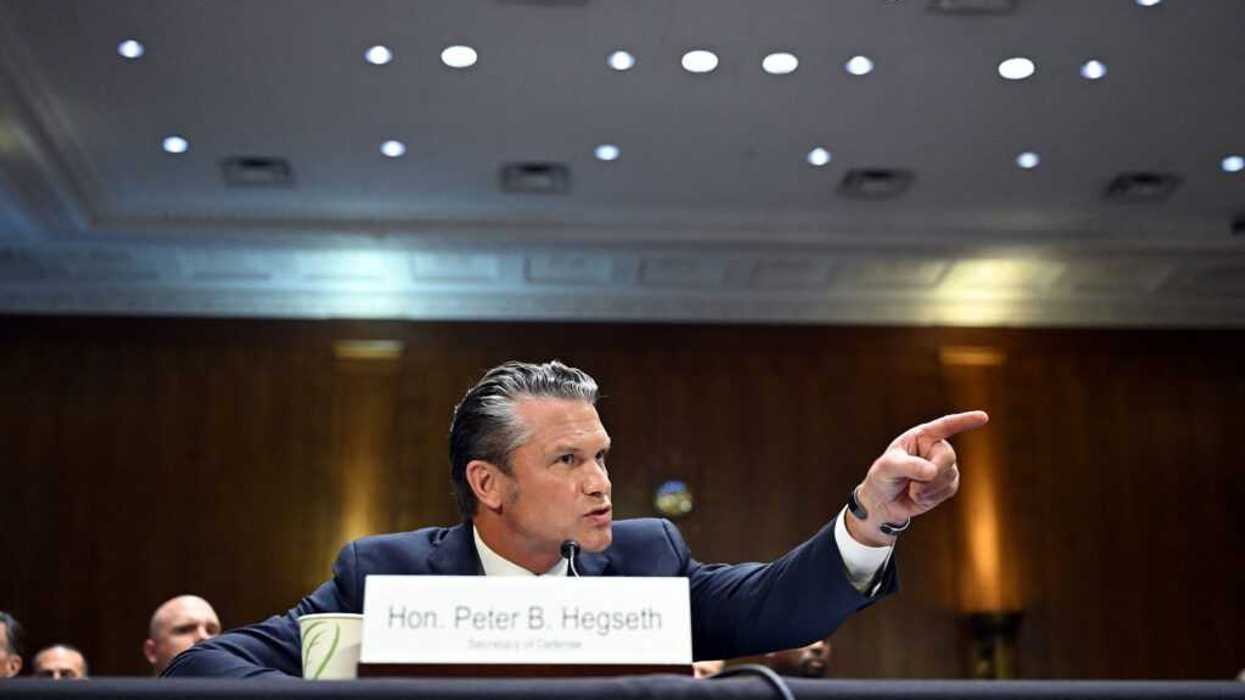
​U.S. Defense Secretary Pete Hegseth

U.S. Defense Secretary Pete Hegseth testifies during a Senate Committee on Appropriations hearing on Capitol Hill in Washington, D.C., on July 21, 2026. Hegseth is crafting a strong and masculine identity for his audience as he reportedly contemplates a presidential run.

(Alex Wroblewski/AFP/Getty Images/TNS)

Politicians Can’t Just ’Give the People What They Want’

For reasons that will baffle my many detractors, I am often asked for advice about being an opinion journalist. One of my standard responses is: You have to be willing to disappoint your biggest fans.

What I mean is that if you start to see your job as telling fans what they want to hear, you risk becoming an entertainer rather than a thinker, and eventually you become a caricature. I’ve seen it happen numerous times. Patrick Buchanan was a brilliant columnist and a serious person. But over the course of his career, he listened too much to the people who said, “Go Pat, go!” and too little to friends who said, “I think that’s taking it too far.”

Keep ReadingShow less
White marble exterior of the United States Capitol, often called the Capitol Building, is the home of the United States Congress and the seat of the legislative branch of the U.S. federal government

Congress approval is at a record-low 10%. Moderation and consensus-building, not partisan theatrics, are how Washington gets problems solved.

Richard Sharrocks / Getty Images

Reclaiming the Politics of the Possible

Washington is stuck in a cycle of performative conflict. The incentives seem to reward outrage, not outcomes that last; purity tests, not problem‑solving. So it’s no surprise that after three shutdowns in less than a year, public approval of Congress collapsed to just 10 percent this spring. (Gallup, April 2026.) But the country we live in — where many middle-income families report persistent financial strain and businesses are navigating unprecedented technological upheaval — cannot be governed by theatrics. Breaking this cycle requires moderation, consensus‑building, and a cooperative approach to governance.

This is not a call for centrism as an ideology. Instead, this is a call for transformative leaders to embrace moderation as their governing strategy, recognizing that in a pluralistic country of nearly 350 million people durable solutions require broad and stable alliances. Ultimately, this is a call for the 240 million of us who are eligible to vote in November to elect consensus-builders instead of bomb-throwers, and healers instead of arsonists.

Keep ReadingShow less
Adult man holds a microphone while asking a question during a town hall meeting.

Congress ignored 90% of public support for background checks. Learn how citizen assemblies and sortition helped Ireland break gridlock and could work in the US.

SDI Productions/Getty Images

Consensus Without Power: How Sortition Could Break America's Legislative Gridlock

In April 2013, four months after the Sandy Hook Elementary shooting killed twenty children, the US Senate voted on the Manchin-Toomey Act to expand background checks and to include gun-show and internet sales of firearms. Roughly nine in ten Americans, including a majority of gun owners, supported the bill—a figure that has held steady across more than a decade of polling. It fell short of the 60-vote threshold by six votes. This was not an outlier. On complex issues, representatives often fail to translate public consensus into reality. Research shows that legislators consistently vote in line with donor and interest group preferences over constituent opinion. Before the vote, the National Rifle Association (NRA) warned every senator it would “rate” their vote on its annual rating system, and a low NRA rating could cost senators their next primary. Consequently, the bill died 54-46, and the majority of Americans watched, powerless, as their consensus was overridden by self-interested representatives.

Liberal democracies need a method to bypass electoral incentives that run counter to public opinion. One already exists: Ireland faced the same stalemate on complex issues before it instituted a process called sortition. The beauty of sortition lies in its removal of the primary pressure that misaligns representatives’ interests from public interest: reelection. Much like jury duty, citizens are randomly drawn from the population. An independent body then stratifies the pool, so the final group mirrors the country by age, gender, geography, and income. The group meets over weeks or months, hearing from experts and the public, as well as debating frequently. At the end, it issues a recommendation that parliament may then put to a referendum or pass into law.

Keep ReadingShow less