


Skip to content
Search

Latest Stories

Follow Us:
Top Stories

Senate Pushes $72 Billion ICE Funding Boost as Abuse Allegations Mount

News

Senate Pushes $72 Billion ICE Funding Boost as Abuse Allegations Mount
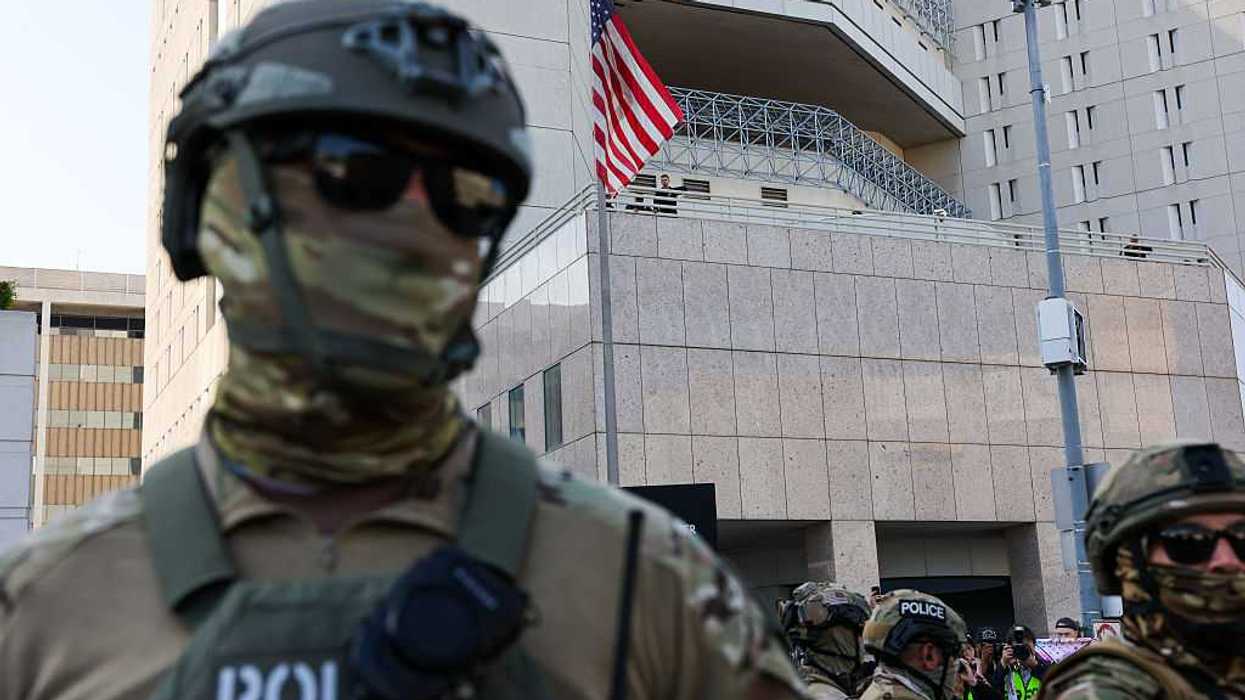
Federal agents guard outside of a federal building and Immigration and Customs Enforcement (ICE) detention center in downtown Los Angeles as demonstrations continue after a series of immigration raids began last Friday on June 13, 2025, in Los Angeles, California.
Getty Images, Spencer Platt

Washington, D.C. — The Senate is preparing to begin a budget reconciliation process that could direct up to $72 billion in new funding to U.S. Immigration and Customs Enforcement (ICE) and Customs and Border Protection (CBP), a move that has prompted sharp criticism from civil rights groups who argue the agencies already operate with expanded enforcement powers and minimal oversight.

The proposal isn’t a standard spending bill. It’s a reconciliation package, which allows Republicans to advance it in the Senate with a simple majority rather than the 60 votes normally required to break a filibuster. That procedural choice makes it one of the most direct efforts yet to cement Trump’s immigration agenda without needing Democratic support.


The Latino civic organization Voto Latino is urging lawmakers to reject the proposal, citing a growing list of reported abuses, wrongful detentions, and deaths in custody. They argue the Trump administration has widened ICE and CBP’s enforcement authority without corresponding accountability from Congress, resulting in communities across the country experiencing increased detentions, wrongful deportations, and family separations. Despite billions in additional funding last year, the Senate is now considering tens of billions more, without what advocates describe as meaningful guardrails or reforms.

The organization argues that the agencies’ record under Secretary Markwayne Mullin reflects a pattern of abuse, inadequate medical care, and preventable deaths in custody. “Rewarding that record with a $72 billion blank check will only make it worse,” the group said.

Recent reporting from national and local outlets highlights the breadth of incidents fueling the backlash. The Texas Tribune documented the case of José Contreras Díaz, a longtime DACA recipient who was deported to Honduras while his wife was pregnant, later allowed to return, and then detained again, leaving him uncertain about what comes next. NBC Chicago reported that Kevin Gonzalez, an 18‑year‑old U.S. citizen with terminal cancer, died hours after his detained parents were released so they could say goodbye. In Georgia, WABE reported the death of Denny Adan Gonzalez, the second person to die in ICE custody in the state this year and the 18th nationwide in 2026.

Other cases involve U.S. citizens and military families and have raised concerns about the use of force:

  • Brian Jose Morales Garcia, a U.S. citizen born in Denver, was deported to Mexico after a traffic stop despite repeatedly asserting his citizenship (Apr. 25, 2026).
  • Deisy Rivera Ortega, the wife of an active-duty U.S. Army sergeant, was detained during a routine immigration appointment in Texas (Apr. 20, 2026).
  • Marie‑Thérèse Ross‑Mahé, an 85‑year‑old French widow who married an American G.I., was held in a Louisiana detention center as her family struggled to reach her (Apr. 16, 2026).
  • ICE agents smashed a car window to detain Edgar Gomez‑Ramirez in South Jersey (Mar. 30, 2026).
  • Zoila Guerra Sandoval, whose daughter’s father died in the Francis Scott Key Bridge collapse, is now facing deportation despite being the parent of a U.S. citizen child (Apr. 24, 2026).

Republicans argue the package is needed to restore and expand enforcement funding after Democrats blocked the usual appropriations process. Democrats, meanwhile, are expected to criticize it as an attempt to bypass standard spending rules and broaden ICE authority without sufficient oversight.

Next step is the Senate procedural review. Under reconciliation rules, every provision must have a direct budgetary effect — not simply function as a policy change framed as spending. That gives the Senate parliamentarian significant power over which elements Republicans can keep in the bill.

Voto Latino is calling on Americans, community leaders, and organizations to contact their members of Congress and demand a “no” vote on the reconciliation package. The group argues that Congress should not approve billions more for agencies accused of abuse, wrongful deportations, and family separations without implementing meaningful oversight and accountability measures.

As the reconciliation process moves forward, lawmakers face competing pressures over border security, civil liberties, and federal spending. Advocates warn that without reforms, expanded funding risks deepening the very problems already documented across the country.

Senate Pushes $72 Billion ICE Funding Boost as Abuse Allegations Mount was first published by the Latino News Network and republished with permission.

Hugo Balta is the executive editor of The Fulcrum and the publisher of the Latino News Network, and twice president of the National Association of Hispanic Journalists.



Read More

Tensions were High as Representatives Debated Allegations Against the Southern Poverty Law Center

Members of the House Judiciary Committee during the hearing on the Southern Poverty Law Center.

Credit: Olivia Ardito

Tensions were High as Representatives Debated Allegations Against the Southern Poverty Law Center

WASHINGTON, D.C. – The House Judiciary Committee held a hearing last Wednesday examining claims that the Southern Poverty Law Center had funded the very hate groups the center aims to dismantle. Tensions were high as Republicans and Democrats fired back at each other. Noticeably absent was a representative from the center, a non-profit that since 1971 has fought for racial justice and against white supremacy.

The hearing came after the Texas Attorney General Ken Pax­ton announced last Monday that he was investigating the center. The U.S. Justice Department indicted the Southern Poverty Law Center in April for allegedly funneling money to people associated with violent extremist groups. The group has flatly rejected the accusations. While Republicans backed these claims, Democrats viewed the allegations as part of the Trump-backed efforts to hinder “DEI” and other racial justice initiatives.

Keep ReadingShow less
Trump Is Protecting Insurrectionists But Not Your Kids

An analysis of gun violence, political extremism, Islamophobia, and community resilience in America after the San Diego Islamic Center shooting.

GemaIbarra / Getty Images

Trump Is Protecting Insurrectionists But Not Your Kids

Last Monday, two teenage gunmen opened fire outside the Islamic Center of San Diego, murdering three Muslim men. Unfortunately, this is the type of horror Americans have been conditioned to expect. After years of political stagnation on gun safety and ongoing hateful acts of violence, our president has signaled once again to children, to the Muslim community, and to everyone else: he does not care if you get shot.

Gun violence has been on the rise in the United States for too long. Perhaps the most harrowing consequence is that gun violence is now the leading cause of death among children. Whether from school shootings, homicides, suicides, or accidents, the gun-death rate for children is nearly five in every 100,000. In fact, the number of domestic deaths due to gun violence is about as many as U.S. military deaths in every war since World War I combined. More children have been lost to gun violence since 2020 than troops lost since 9/11. Yet even with such a striking death toll—and one affecting children no less—happening on our own soil, Vice President J.D. Vance calls it a “fact of life.

Keep ReadingShow less
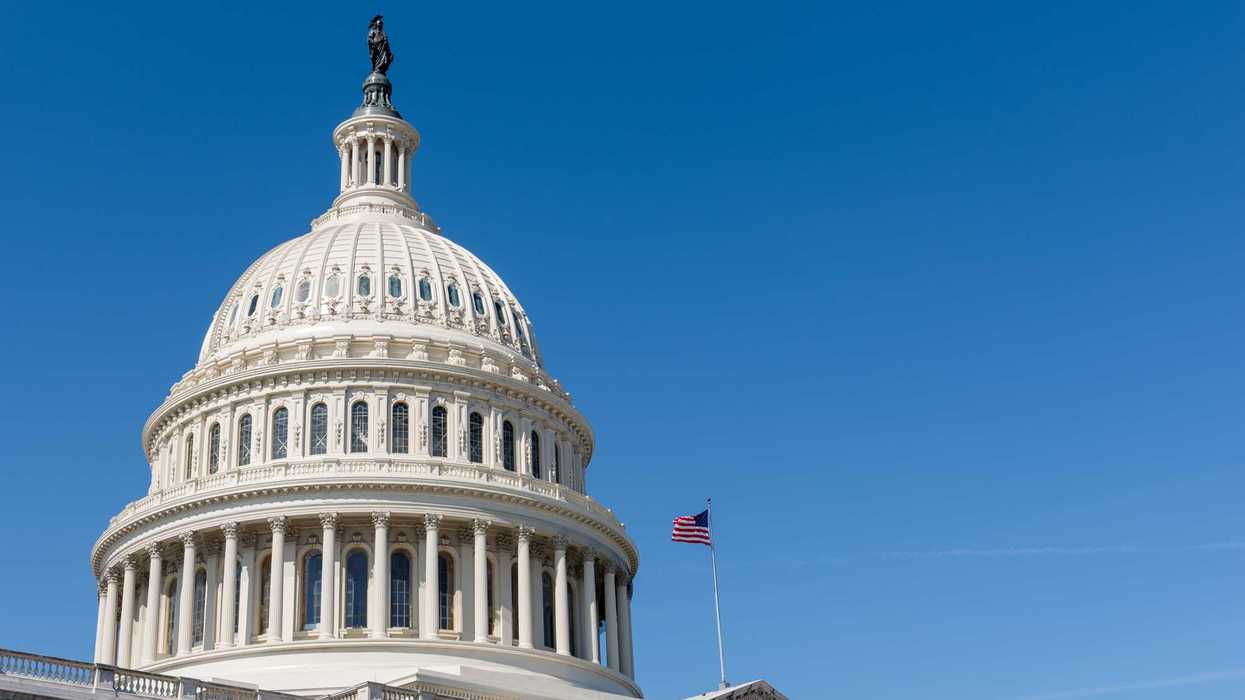
The dome of the United States Capitol Building in Washington, D.C., stands tall against a blue sky with the American flag waving proudly

Congress faces growing pressure to pass redistricting reform as lawmakers debate banning gerrymandering, independent commissions, and mid-decade map changes amid renewed national controversy over fair elections.

Getty Images, aire images

Congress's Missed Opportunities on Redistricting Reform

On April 29, Issue One posted an image on Facebook and Instagram: CONGRESS CAN FIX THIS WITH THREE SIMPLE STEPS:

  1. Establish Clear National Criteria for Fair Maps
  2. Require Independent Redistricting Commissions in Every State
  3. Ban Mid-Decade Redistricting.

Issue One added below: “… but it needs 60 Senate votes to do it.”

Keep ReadingShow less
Open Letter to Justice Roberts: Partisan Gerrymandering Is Unconstitutional
beige concrete building under blue sky during daytime

Open Letter to Justice Roberts: Partisan Gerrymandering Is Unconstitutional

The Supreme Court, in holding that partisan gerrymandering is permissible—unless it "goes too far"—stated that the argument made against this practice based on the Court's "one person, one vote" doctrine didn't work because the cases that developed that doctrine were about ensuring that each vote had an equal weight. The Court reasoned that after redistricting, each vote still has equal weight.

I would respectfully disagree. After admittedly partisan redistricting, each vote does not have an equal weight. The purpose of partisan gerrymandering is typically to create a "safe" seat—to group citizens so that the dominant political party has a clear majority of the voters. It's the transformation of a contested seat or even a seat safe for the other party into a safe seat for the party doing the redistricting.

Keep ReadingShow less