



This series from Lawyers Defending American Democracy connects the words of the Declaration of Independence and the Constitution to current events that threaten democracy and the justice system. Each piece highlights the unique responsibility lawyers carry—through their oath, professional obligations, and roles in their communities—to help the public understand what’s at risk and to speak out when democratic principles are under threat. LDAD’s call to action is straightforward: as the Founders once did, we must recognize threats to constitutional values, demand accountability, and act to defend them.
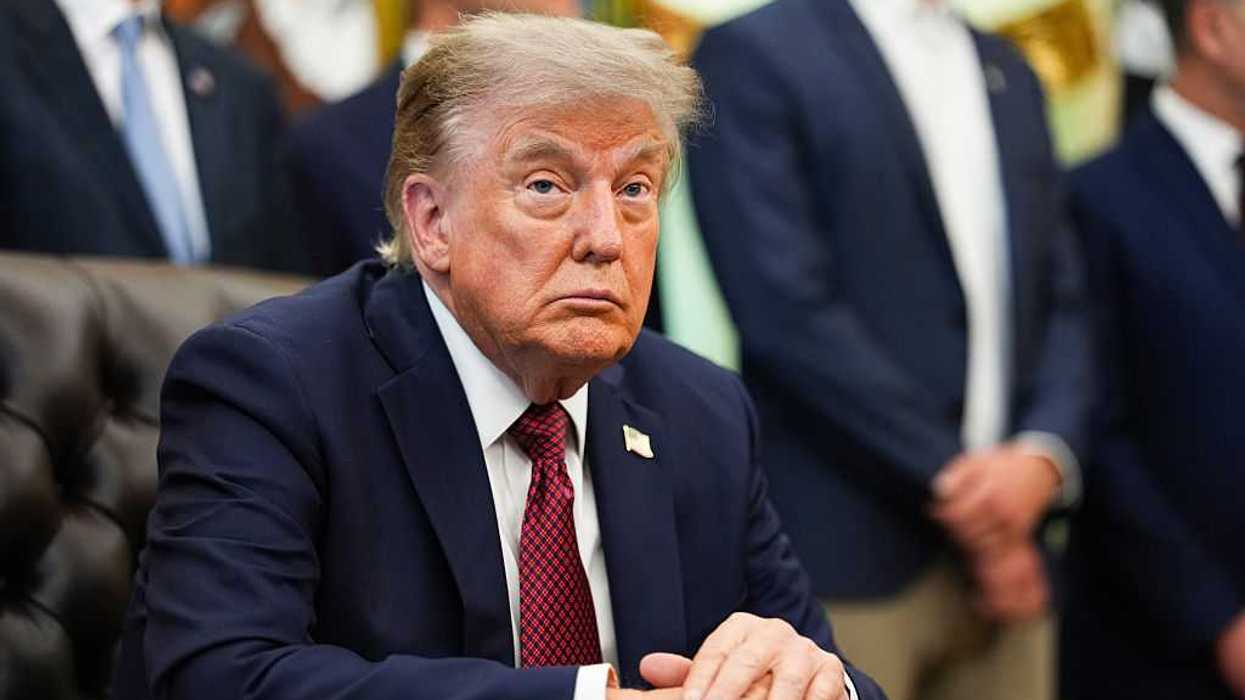
In its recent decision in Trump v. Slaughter, a divided Supreme Court approved an expansive use of presidential power that upsets the Constitutional balance between Congress and the President. The Court approved the President’s summary dismissal of agency leaders (in this case, commissioners of the Federal Trade Commission), notwithstanding a statute signed by a former President and the Court's own precedent specifically forbidding such dismissals. This decision will further politicize and weaponize much of our federal government.
Because of their important role, the statutes creating many of our most important agencies typically provide their leaders (appointed by both parties) with a degree of independence by setting forth fixed terms of office and prohibiting removal by the president without cause. The independence of these agency heads is a hallmark of balanced separation of powers, contributing to government integrity and professional expertise and preserving continuity as administrations change. The Slaughter decision destroys that model and will do lasting damage to our nation.
The History and Experience Slaughter Has Undone
Since 1914, the FTC Act has provided for five Commissioners (no more than three from the same party) to be appointed by the President with the advice and consent of the Senate. The Act specifies that they may be removed by the President for “inefficiency, neglect of duty, or malfeasance.” Since 1887, every President before Trump, except Franklin Roosevelt, accepted the protections against the arbitrary dismissal of these multimember agency heads. And when FDR tried to fire a previous FTC commissioner without cause, he lost in a unanimous Supreme Court decision (Humphrey’s Executor v. United States). The New Deal-era Court that decided that case was as sharply and bitterly divided as today’s, but it ruled unanimously that the FTC, like many other agencies, was created to perform quasi-judicial and legislative functions. The Court held that the FTC did not simply function as an arm of the executive branch and that a president has no power to remove its leaders except on the grounds specified in the statute.
The FTC Act became law when President Wilson signed it, thereby, in his capacity as Chief Executive, endorsing a statute that specifically eliminates any implicit Presidential power to remove Commissioners without cause. Wilson vetoed forty-four bills during his Presidency—in one case because of a provision that would have restricted his ability to remove a budgetary official performing strictly executive branch duties. But he did not veto or object to the removal provisions in the FTC Act. Wise presidents have historically recognized that it would be inappropriate and beyond their authority to exercise such powers over agencies with the manifold duties of the FTC. Once a President has exercised executive branch authority to sign a statute into law, it binds all future Presidents and Congress itself, unless the statute is repealed or amended. Much of our government has been created and operated in reliance on these principles since before the New Deal.
Casting aside Humphreys Executor and over a century of reliance, the six Justices in the Slaughter majority substitute a novel, hands-off-the-President approach. They assert that their theory of a unitary executive –a theory they have fashioned without any textual basis-- now compels the opposite result. These six Justices overturned precedent to transfer power from the legislative to the executive branch, undermining the constitutional balance and destabilizing the government.
The Slaughter majority's rationale essentially eliminates fixed terms and bipartisan boards in most executive agencies. It enables the current and future Presidents to remove at whim leaders of our most essential agencies, such as the Securities and Exchange Commission, the Environmental Protection Agency, the National Labor Relations Board, and the Merit System Protection Board, which provides due process protections to federal workers.
The President may then either replace their leaders with loyalists who know they must do the President’s bidding or create vacancies that paralyze any Congressionally created agency the President dislikes. (The FTC now has only two of five Commissioners, and the Merit Protection Board has no chair and a years-long backlog to investigate employment termination cases, thereby rendering civil service protections a nullity in practice.) Slaughter may also lead to the conclusion that a president may bypass the special notice and reporting provisions Congress created for the removal of the Inspectors General who police abuse and corruption in government agencies.
The Supreme Court Majority That Justifies Its Decision on the Theory That the “Buck Must Stop” with the President Ensured Two Years Ago That the President Will Never Pay the Bill
The majority’s rationale in Slaughter is even more troubling when juxtaposed with one of its other recent decisions: Trump v. United States, which provided broad immunity to a President for actions even marginally related to the performance of the duties of the office.
The majority now finds another reason to give the Chief Executive unbridled authority: to fulfill the duty to execute the laws faithfully, it says, there must be one, and only one, person responsible and accountable for doing so: it’s the Buck Stops with the President theory of government. But in the earlier case, the Court made the Chief Executive the least accountable person in the United States by investing the incumbent with broad personal immunity. If the buck is going to stop with a Chief Executive now freed from the inconvenience of independent actors, then the person occupying that role should be held strictly accountable, and actions by the President and surrogates should receive heightened, not highly deferential, scrutiny.
Only in an Ideological Ivory Tower Can an Agency That Performs The Far-Ranging Variety of Functions of the FTC Be Treated as a Lowly Presidential Subordinate
Humphrey’s Executor held that the FTC was a multi-member, multifaceted agency with largely adjudicative and legislative duties. Justice Roberts (without finding it necessary to define what makes an agency a power executive) seems to think we would all now agree that somehow it has entered “the heartland of executive power.” But there is no reason for preferring his characterization to Humphrey Executor’s.
Long after 1935, I began teaching and practicing antitrust law and interacting with the modern-day FTC. These interactions included formal hearings, where the FTC acts in a judicial capacity with decisions reviewable in the federal courts of appeals, and submission of testimony or bar association reports when the FTC convened proceedings to examine the efficacy and economic effects of laws in what seems a quasi-legislative capacity. While the FTC also institutes proceedings in a manner akin to a traditional prosecutorial function as a necessary and proper adjunct to its other significant consumer protection duties, it functions very differently and in many more capacities than a purely executive-branch enforcement arm like the Justice Department’s Antitrust Division.
Where Are We and What Might Be Done?
If the Slaughter decision has made a hash of the constitutional order and threatens to wreak havoc on government stability, what can be done about it?
Senators from both parties must do more in their role in advice and consent. They cannot continue to rubber-stamp loyalists and sycophants who come before them for appointment. They should do this for their own long-term protection as well as for our national welfare.
Similarly, Congress as a whole should not hesitate to invoke remedies for malfeasance and mistakes, including investigations, funding withdrawals, and impeachment when warranted. Extraordinary authority demands strict accountability.
Congress must protect its own prerogatives when the President usurps them. It can act forcefully and creatively to discipline a president through its power of the purse. It could also limit the Supreme Court's jurisdiction and waive immunity from tort liability for any federal employee who interferes with our constitutional rights or commits other tortious acts, even when acting at the direction of the President or presidential surrogates.
In the future, Congress should tailor legislation narrowly to limit excuses for executive branch overreach and give the courts unequivocal grounds to curb it when it occurs. Congress could also create bodies structured more like the tax court or the Copyright Office (established as part of the Library of Congress), or as federally chartered or partially private corporations not subject to the President's control.
With the loss of agency independence, the federal courts should rethink the scope of abstention doctrines like ripeness, standing, and the political question doctrine, which were developed for other times and sometimes serve as unnecessary barriers to judicial review of executive action. The times now demand that many such actions be scrutinized carefully (as many courts have been doing).
Many of the possibilities seem politically unattainable right now. We have learned, to our sorrow, how hollow remedies for serious wrongdoing, like impeachment, are likely to be. There are no easy answers. But almost two hundred fifty years ago, from the day when we declared our independence from a despot and madman, the Court, a supine Congress, and our own inattention have left us on the verge of placing ourselves in the hands of another.
James B. Kobak, Jr., has been a lawyer in New York for over fifty years. He is a former President of the New York County Lawyers Association and currently chairs the National Center for Access to Justice. He prepared this article as a volunteer with Lawyers Defending American Democracy.













The President Invited Iran to Bomb My Home