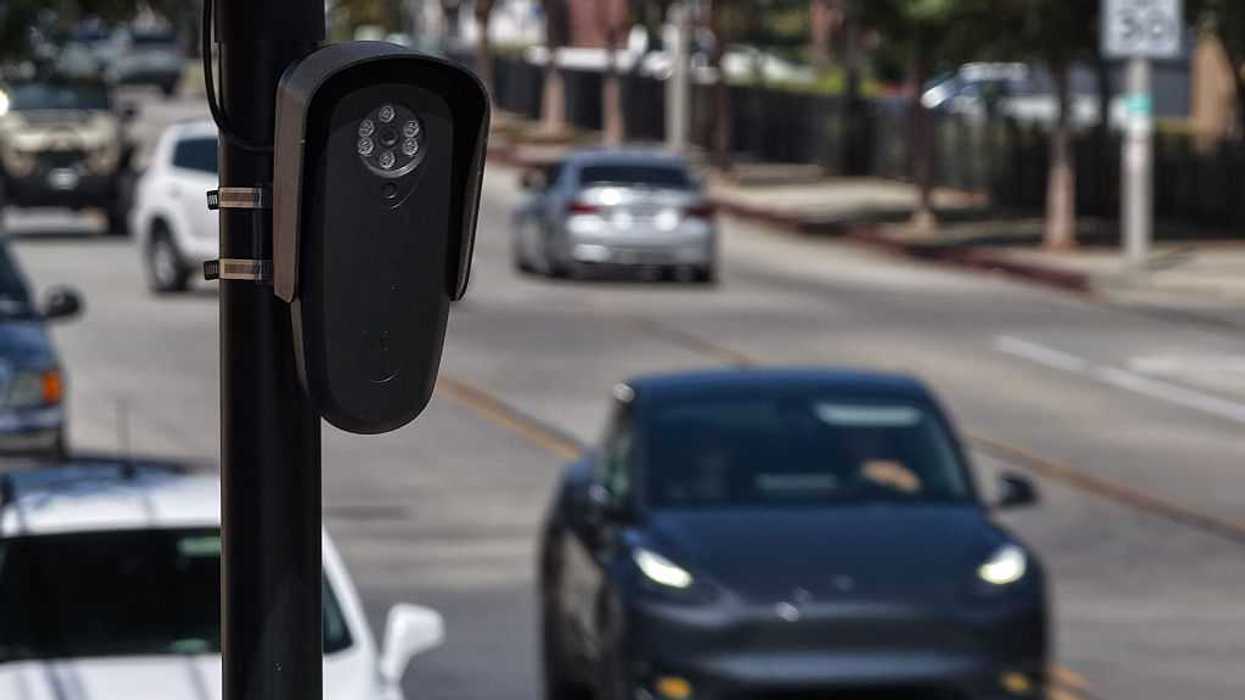

Chances are, you’ve seen one in your neighborhood. Flock cameras have become a major flashpoint for voters in the leadup to the midterms. The concept sounds straight out of 1984 — a network of government-owned cameras that track your movements — it’s no wonder that Americans across party lines are demanding their states and towns sever ties with the controversial company. Surveillance fears are only getting stronger as we enter the AI era.
But the problem isn’t just Flock. These cameras, Automated License Plate Readers or ALPRs to be exact, are a symptom of a larger “surveil first, ask questions later” attitude that has been adopted by local and federal government for decades. In recent years, the federal government has been dramatically expanding the nation’s surveillance infrastructure. This has taken many forms, from facial recognition technology at the airport, to law enforcement monitoring your mail, to the government watching what you’re posting on your personal social media pages. Since April, many Democrats and Republicans in Congress have united to stop what would effectively be a blank check for surveillance via FISA reauthorization, demanding surveillance reforms such as closing the “data broker loophole”, which allows the government to buy Americans’ personal data without a warrant.
Using all of these tactics, the government can obtain outrageous amounts of information about you. The new prescription you picked up last week? The government might know about it because they purchased your search history data. Your trip to the gun range, or a protest, or grandma’s house? With approximately 120,000 ALPRs stationed across the country, a simple warrantless search could reveal that, too. To make matters worse, AI is supercharging all of this. Data brokers, for instance, already sell sensitive information to the government. Now, using AI, federal agencies and law enforcement can build dossiers on individuals in a matter of seconds. No oversight. No accountability. No warrant. The use of AI in ALPRs Flock or any other license plate readers means your movements can be flagged and reported to law enforcement.
The danger isn’t abstract. Just this month, Anthropic reported how several nations attempted to use Claude to “build, run, and otherwise facilitate surveillance operations.” This, not too long after a stunning letter earlier this year, sounded the alarm on the profound risk of domestic mass surveillance using AI.
The government’s willingness to use these technologies with little to no regulation is the very definition of dangerous. The Fourth Amendment exists to protect us from dragnet government surveillance because surveillance can be used to silence and punish anyone who speaks out against the government.
The right to privacy is one of our nation’s most powerful and closely held values and yet, it is under attack.
The outrage against Flock points to a much broader discontent with the state of surveillance in our country. Flock is just the straw that broke the camel’s back because it reveals just how in-your-face surveillance has become. But if the backlash to Flock is a symbol of how angry people are that their privacy rights are being eroded, the response from public officials—asleep at the wheel while surveillance has expanded, or worse, cheerleading the expansion itself—is a sign that speaking out against the surveillance state can wake them up. Florida and Texas both pulled back from Flock this week. Nearly 150 cities and growing have canceled Flock contracts, rejected new deployments, and taken down existing cameras. Imagine what’s possible if we build on this momentum and demand the government stop buying our private data, sifting through our e-mail, and follow the Constitution?
In America, government answers to the people. It has a responsibility to act. States, municipalities, and even Darth Vader are stepping up, but Congress needs to defend the privacy rights guaranteed to us by the Constitution. That means going beyond Flock and passing laws that keep up with technology. It means ending warrantless surveillance in all its forms.
We are in a critical moment where public outrage over Flock and unrestrained AI are high, but more is required of us to dismantle this system of mass surveillance. Government being able to crush our privacy rights and peer into our personal lives—for any reason, at any time, using increasingly powerful AI to know us better than we know ourselves, would all but obliterate our civil liberties. Congress must step up and pass legislation that stops dragnet surveillance in all of its forms, not just Flock cameras.
Don Bell is senior policy counsel at The Constitution Project at POGO. In this role, Don manages the organization’s policy and legal advocacy portfolio to protect constitutional rights, particularly when threatened by our government’s domestic law enforcement surveillance practices.