




Much of the national conversation about independent politics focuses on candidates. Less attention goes to the independents who have already won and are now doing the actual work of governing without a party behind them.
This is the first installment in a new IVN series profiling independent elected officials in an attempt to address that shortcoming.
These independent elected officials show not only that such campaigns are viable, but also what leadership looks like when it isn't filtered through party platforms, caucus discipline, or the demand for rigid ideology. This series will talk to sitting independent officials about how they won office, how they govern, and how they interact with and represent their constituencies.
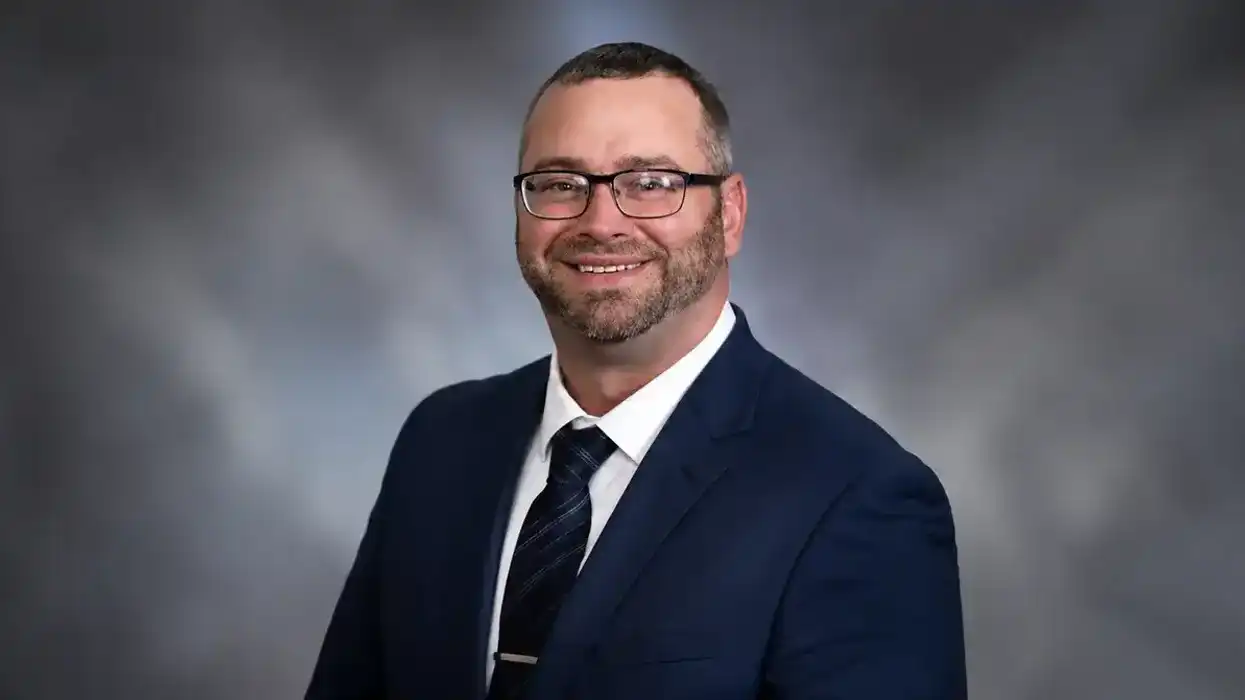
We start with Travis Endicott, the independent mayor of Ridgecrest, California.
As a federal employee, Travis Endicott is bound by the Hatch Act, which he reads as requiring him to run for office as an independent. But, in speaking with the Mayor of Ridgecrest, California —home to the Navy's China Lake testing facility—Endicott makes clear the law only formalized a decision he'd already made for himself."
I've felt party-less for a long time," he said. A former political science professor, Endicott described the same dynamic that shaped his independent identity long before he sought office: "When I talk to my Republican friends, I feel like a Democrat. When I talk to my Democratic friends, I feel like a Republican." He doesn't agree with either fully, he said, but sees the freedom to "pick and choose what I like about different policy angles from both parties" as the point, not a liability. He sees both sides as getting some things right and some things wrong, and he sees some issues where he doesn’t believe either party is correct.
Running Without a Party
That freedom from party constraint became the organizing idea of his 2024 campaign—and, in his telling, a test of whether voters would engage differently with a candidate who didn't come pre-sorted. Endicott said he hoped that running without a "D" or "R" next to his name would prompt voters to slow down and ask who he actually was.
By his account, and by the vote totals on election night, it worked. His campaign ran on roughly $550 of his own and constituent money, plus a donation from Independent Veterans of America, and was built almost entirely on door-knocking. "I just went and knocked on doors and handed out pamphlets and had really good discussions with individuals," he said.
He estimated he reached two to three thousand doors over the course of the race that saw about 11,000 people vote—including, memorably, one night during the Harris-Trump presidential debate, when several residents asked him to simply leave a brochure rather than pause the broadcast.
Some voters pressed him on national hot-button issues such as abortion and immigration. His approach to answering these questions? He’d respond that he didn't feel obligated to answer as a mayoral candidate. "As a mayor, or someone running for mayor, I can't control that, so I didn't feel compelled to have an answer for them, because that's outside my bounds," he said.
Other voters, ones he believed were more likely to consider his candidacy, simply wanted to know whether he'd follow through on what he was saying. Especially, on the issue that he says actually pushed him toward running in the first place: a city contract with a surveillance firm Endicott said could track flights and movements of federal personnel visiting China Lake, the military installation that anchors Ridgecrest's economy.
"That's terrifying. We should not know that," he said of the tracking capability. He worked to end the contract.
Endicott was running against a self-identified Republican opponent, the CEO of a local bank, in a campaign defined by a financial mismatch he didn't shy away from describing: his opponent reported close to $20,000 in campaign funds against Endicott's own outlay of under $1,000.
The disparity showed up in the usual ways—yard signs, mailers—and Endicott said it was precisely what pushed him into the door-to-door strategy as a substitute for paid outreach. He said he and his wife were home sick with norovirus on election night when his son walked in to tell him he was leading in the count. Endicott won with roughly 5,800 votes, a few hundred ahead of the incumbent.
He described local press coverage as fair, crediting reporter Darla (A. Baker) at the Ridgecrest Daily Independent for substantive questioning during the race, including a candidate forum against the sitting mayor. Endicott said voters responded well to a habit some campaigns avoid: admitting uncertainty.
"I got more good and positive feedback from saying 'I don't know' than trying to provide some bogus answer," he said.
A Governing Philosophy Built on "Walking, Not Talking,” to the Middle
Endicott frequently invokes a line he's used publicly before: that most politicians talk to the middle, but few actually walk to it. Pressed on what the political middle actually looks like—acknowledging that a "moderate" in coastal California and a "moderate" in Texas can look very different—Endicott drew on his academic background, citing Philip Converse's research on ideological constraint, later replicated, finding that only about 10 percent of the public reasons consistently through a fixed ideological lens.
The other 90 percent, in his framing, are effectively moderates on an issue-by-issue basis, whatever party label they've adopted. "It's just way too easy to assign yourself to a party you might not agree with everything [about]," he said, arguing that label loyalty makes voters reluctant to criticize their own side.
Asked what "walking to the middle" looks like in an actual elected official, Endicott pointed to former Indiana Senator Evan Bayh, a Democrat who voted with Republicans in a Republican-leaning state because, in Endicott's telling, "That's what his constituents wanted."
For Endicott, that willingness to set aside personal or party preference in favor of constituent will is the practical definition of compromise—a word he said has become politically toxic.
He extended the logic to his own approach in office: he personally opposed a local casino project on moral grounds, but after researching crime and alcohol-incident data and finding no significant spike associated with casinos elsewhere, he concluded he had no standing to block something the public wanted and that could generate revenue for the city. He drew a contrast with issues he considers genuine threats to civil liberties, where he said the calculus changes.
Civil liberties recur as a central policy focus for Endicott, and he argues it's one of the rare areas where he sees authentic, organic bipartisan agreement among Ridgecrest residents.
He said he's watched residents who normally disagree at city council meetings find common ground opposing both Flock (an AI-driven camera system for issuing citations) and a proposed AI data center nearby, even as he himself recognizes Flock's usefulness in specific cases, including a kidnapping case he said the cameras helped resolve.
"Civil liberties to me is one of those things that crosses that boundary," he said, calling it the kind of issue that should command bipartisan support at the federal level.
The current two major parties, however, have issues with failing to protect civil liberties. Asked whether both parties share a vulnerability to what he views as authoritarian tendencies—the encroachment on civil liberties he's pushed back against in Ridgecrest—he was direct:
"I think it's the parties that we have [that] have ended up in that place."
The frustration, in his telling, is that civil liberties should be exactly the kind of issue that produces federal bipartisan action, yet the reflexive opposition that now defines congressional politics prevents it.
"We're in the age of, if the Republican Party says something, the Democrats have to be opposed, and if the Democrats say something, the Republicans have to be opposed," he said. In Ridgecrest, he sees constituents from opposite sides of the aisle arriving at the same conclusion on surveillance and data; in Washington, he sees two parties that have made opposition their default posture and can’t get these compromise positions enacted.
His diagnosis for how the parties ended up here? Mayor Endicott pointed to social media incentives that reward viral confrontation over legislative results and Richard Fenno's Homestyle from the 1970s on how the shift to commuter flights—letting members of Congress fly home rather than live in Washington together—eroded the informal relationships that used to make compromise possible.
"The idea that we have to make out someone who disagrees with us as an enemy is what's ruining politics," he said.
Governing As an Independent: Freedom, But A Narrower Mandate
In office, Endicott said he hasn't experienced overt exclusion for lacking a party affiliation. He described workable relationships with individuals from both parties: Republican Rep. Vince Fong's office, Democratic Sen. Adam Schiff's staff, and Republican state Sen. Shannon Grove.
Such work has helped secure local wins for his constituents, such as securing the funding to keep the OB ward open at Ridgecrest's local hospital, which serves the military base population. If those individuals don’t have the care they need to start or expand their families nearby, he reasons, they might move away, hurting both the local economy and national security.
He attributed the relatively smooth dynamic between him and elected officials from the two major parties in part to the scale of his office: he's not asking federal or state partners to move on abortion or immigration, but on "common-sense" local asks like that hospital funding. "I'm not trying to make waves with my asks, because at the local level, I don't feel like I need to," he said.
He was more circumspect about how constituents categorize him. Without a party, he said, he's often treated by default as a third "tribe" until a specific conversation establishes common ground issue by issue. He traced his comfort holding that position back to his experiences in the military and his teaching career.
In the former, he would have long conversations with people with whom he disagreed during long shifts; in the latter, he said he made students argue positions they personally opposed as an exercise in understanding the other side. "My goal was never to have my students know what I believed on any policy issue," he said.
Asked about the practical costs of running without party infrastructure, Endicott named the obvious one—money—but also pointed to a less tangible benefit: independence itself. He said other local candidates who ran within a party structure described having to seek approval before speaking publicly on issues.
"I don't have any of them. I can just be me and talk [about] what I want to talk about," he said, adding that his only real liability is "if I put my foot in my mouth."
Even then, he noted that his willingness to admit when that happened or to state that he didn’t know an answer to certain questions was seen as refreshing by many with whom he spoke.
Building a Network That Foesn't Fully Exist. Yet.
Endicott said he has no plans to seek higher office, citing his career in military intelligence and the toll public scrutiny has already taken on his family—including his wife being jokingly addressed as "First Lady of Ridgecrest" by hospital colleagues, and his son getting the nickname of "Governor" on his football team.
He does, however, intend to seek re-election as an independent.
He has tried, with limited success so far, to build connective tissue among other independent and IVA-endorsed candidates. During his own 2024 run, he said he reached out to other independent veteran candidates hoping to trade strategy and lessons learned.
Most of those efforts didn't result in ongoing contact. He met Idaho Senate candidate Todd Achilles for the first time earlier this week and said he hopes to follow up.
His broader hope is for something more regular, even if just a group chat or informal network among independents to share what works and what doesn't between campaigns (Achilles and several other Senate candidates have openly discussed their own efforts to support each other and coordinate their messaging on a Senate fulcrum).
His advice to anyone considering an independent run, at any level, was unadorned: run if you believe you can genuinely help your community, and recognize that independents are positioned to bridge divides precisely because they aren't bound to defend a party line.
He added a separate, more personal warning for independents engaging with the public, particularly online: avoid being baited into the kind of viral confrontation that, he said, algorithms and audiences reward regardless of whether it serves any actual constituent. "More people read and watch how you react than what you're actually trying to get through," he said.
That advice might very well apply to governing as an independent, as well. As more independents gain office, an increasingly independent electorate will be looking to make sure that results in a style of governance, and legislative outcomes, that reflect what they feel is missing from the two-party system.
Each of these individuals will have an outsized influence on whether voters believe electing independents result in the changes they hope to see.
Matt Shinners is a writer, political strategist, and election reform advocate. He served as the Chief of Staff on Andrew Yang's presidential campaign and Chief Strategy Officer for the Forward Party. He's an avid player of board and video games.
No Party. No Big Money. No Problem: How an Independent Mayor Beat the Machine in Ridgecrest was first published on Independent Voter News.
This article is republished as part of The Fulcrum’s partnership with IVN and the Latino News Network to expand voter‑first journalism and strengthen public‑centered coverage of democracy.









The President Invited Iran to Bomb My Home