


Skip to content
Search

Latest Stories

Top Stories

Would Congressional Term Limits Make Congress Better—or Worse?

Opinion

US Capitol building
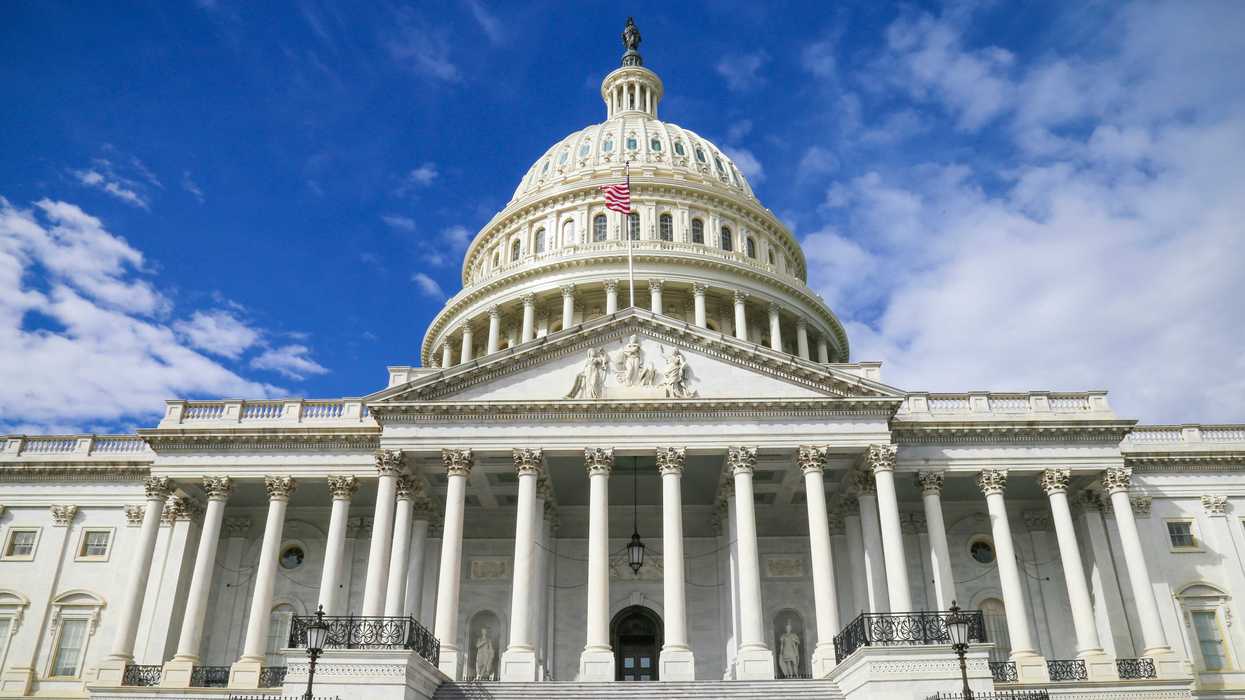
The United States Capitol building with its white dome against a blue sky

Starting in the 1990’s, the idea of putting term limits on members of Congress became a recurring idea to reform the institution and improve democracy. The idea was born out of the theory that replacing the current crop of legislators with a new batch would produce a better Congress. More than 30 years later we now have quantitative and qualitative data showing the impact of term limits.

Twenty-one state legislatures have enacted some kind of term limit on legislators since 1990. Since then, dozens of academic studies have examined the impact on such factors as: complexity of legislation, influence of lobbyists and staff on legislative outcomes, and interactions with constituent. Here are some key findings.


Reduced legislative capacity. With less experienced lawmakers writing legislation the legislators produced weaker and fewer bills. Intuitively, this makes sense. If you have less experienced individuals in any workplace they require time to understand the nuances of the business. As a confidential consultant for members of the U.S. House and Senate I’ve seen this countless times. Even experienced members of the minority party can legislate circles around rookie lawmakers.

Power shifted to lobbyists. With the institutional memory erased, special interest backed (and written) legislation was more likely to pass. When legislators are forced out of their jobs due to term limits they often migrate to the lobbying community. But they still retain their institutional and issue knowledge they gained as lawmakers. To be fair, not all lobbyists fall into the grim stereotype portrayed in movies and TV. Most are subject-matter experts and lawmakers rely on them to convey how a proposed piece of legislation might affect a group of constituents or businesses. Yet, we can also see a world that would likely be better of legislatures were not compelled to rely on lobbyists since the in-house expertise was unable to run for re-election.

Power shifted to leadership and executive branch. With inexperienced lawmakers trying to quickly get up to speed on their job, academic studies have suggested that the power vacuum is filled by legislative leaders and the executive branch in states. Of course, to have functioning legislators you need functioning leaders. But this power shift almost always consolidates power away from the majority of state constituents. We’ve seen this power shift occur in the U.S. Congress, under Democratic and Republican leaders, since 1995. And seen it shift on a massive scale since the beginning of President Trump’s second term. There are very few scholars (and most members of Congress) who think a weakened legislative institution is healthy for our democracy.

Reduced constituent engagement. With no electoral incentive, especially in lawmakers’ final terms, there was less engagement with constituents. Legislators grew more distant from the voters. Term limited lawmakers also were more likely to skip committee meetings and miss floor votes. Putting oneself up for the voters’ assessment every two or four years is a remarkable human incentive our Founders created.

Also consider that general retirements and electoral outcomes often result in significant reductions in senior lawmakers. This effect was on display at the start of the 118th Congress, when Rep. Kevin McCarthy was forced to 15 ballots to gain the speakership. The 435 House members voting on McCarthy had not been sworn in (the Speaker’s vote comes first). And at the beginning of that Congress in 2023, 49 percent of House members had four years’ experience in the Congress or less. Can we really say with that infusion of new blood that 2023 was a banner year for the Congress?

One can also assess what we would lose when experienced lawmakers are forced out of office. Under term limits, all these lawmakers would have been required to leave before the pinnacle of their legislative effectiveness: Henry Clay, Lynden Johnson, Orin Hatch, John McCain, and Ted Kennedy. At the height of their careers these legislators crafted historic bills on health care, transportation, taxes, and defense policy.

There is of course a natural “stick it to the man”/“throw the rascals out” mentality that runs through public opinion. Yet when we explore how to reform our democratic institutions, we should be grounded in solid research rather than impulsive passions.

Bradford Fitch is the former CEO of the Congressional Management Foundation, a former congressional staffer, and author of “The Citizen’s Handbook for Influencing Elected Officials."

Read More

The Pennsylvania state capitol building.

The Pennsylvania state capitol building.

jimfeng/Getty Images

Pennsylvania’s Bipartisan Exchange Is Rebuilding Trust in Governance

The University of Pittsburgh Institute of Politics has nearly 40 years of experience working with legislators from different political parties, and it is building on this history by drawing on lessons from the successful American Congressional Exchange model, begun in 2018 at the Bipartisan Policy Center, and from state exchanges now underway in Minnesota and Michigan. The University of Pittsburgh Institute of Politics, in collaboration with the Bridge Alliance, has launched the Pennsylvania Legislative Exchange.

This state-based, systematic approach is designed to foster better relationships and build trust across the political aisle with the following guiding principles:

Keep ReadingShow less
An empty grocery cart in a market.

NYC Mayor Zohran Mamdani proposes five city-run grocery stores. See the arguments for and against, from food deserts to bodega concerns and the $70M cost.

Getty Images, Kwangmoozaa

Government-Owned Grocery Stores: Accessible Nutrition or Government Overreach?

Issue Introduction

Over the past few years, affordability has become the most central issue affecting Americans and the quality of life in the United States. The prices of groceries and basic necessities have risen 25-30% since the COVID-19 pandemic and are projected to rise another 3.2% in 2026. At the same time, the exodus of grocery chains from rural and low-income areas has scattered food deserts throughout individual states. Recent mass closures include Grocery Outlet’s shuttering of 36 stores and continued shut-downs of many Albertsons locations. These factors have led politicians to make affordability a major campaign issue.

During his progressive campaign for mayor of New York City, Zohran Mamdani raised the idea of opening grocery stores owned and operated by the city government to provide New Yorkers with affordable groceries. In his April 2026 public address that marked his first 100 days in office, Mayor Mamdani announced plans for the first of five city-run grocery stores. Mamdani’s proposed initiative will use $70 million in capital funding to build five city-owned municipal stores–one in each borough–and place them under control of the New York City Economic Development Corporation (NYCEDC). NYCEDC will then select third-party operating staff in accordance with city standards for affordability and proper labor practices. Public opinion following the announcement continues to be divided between uproar and support.

Keep ReadingShow less
Five men sitting on one side of a table, as a panel at an event.

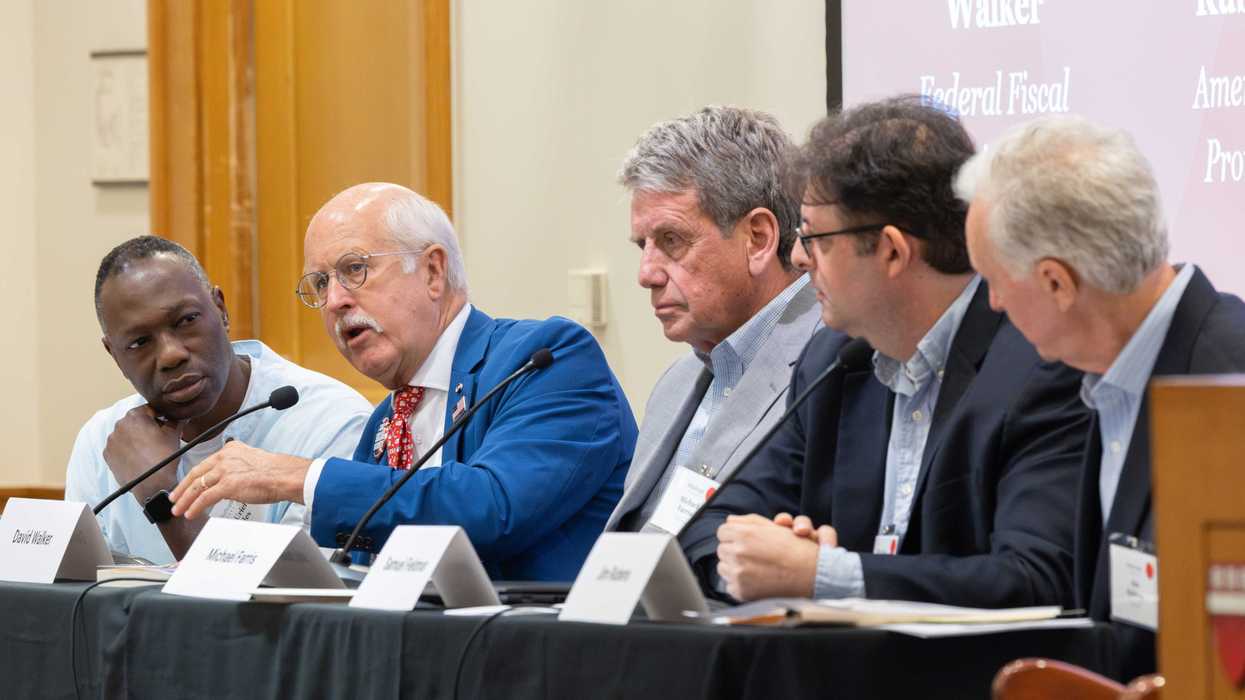
Harvard's Guy-Uriel Charles (left) listens to David Walker, Chair of the Federal Fiscal Sustainability Foundation. Fellow panelists (L-R) are Michael Farris, Convention of States Project; Samuel Fieldman, Wolf Pack; and Jim Rubens, FFSA and American Promise.

Photo by Martha Stewart

Congressional Inaction Raises Constitutional Change Alternative

Voting is the anchor of democracy, as we are reminded every two years. But this anchor rests on unstable ground today, signaling that our political roots need examining too.

In the United States, the Constitution itself becomes the focus when serious problems prompt such foundational civic dives. Our current challenges may not be as severe as the Civil War or the excesses of the Gilded Age, which produced waves of amendments, but today’s erosion of our system of checks and balances requires us to revisit our constitutional underpinnings.

Keep ReadingShow less
​U.S. Defense Secretary Pete Hegseth

U.S. Defense Secretary Pete Hegseth testifies during a Senate Committee on Appropriations hearing on Capitol Hill in Washington, D.C., on July 21, 2026. Hegseth is crafting a strong and masculine identity for his audience as he reportedly contemplates a presidential run.

(Alex Wroblewski/AFP/Getty Images/TNS)

Politicians Can’t Just ’Give the People What They Want’

For reasons that will baffle my many detractors, I am often asked for advice about being an opinion journalist. One of my standard responses is: You have to be willing to disappoint your biggest fans.

What I mean is that if you start to see your job as telling fans what they want to hear, you risk becoming an entertainer rather than a thinker, and eventually you become a caricature. I’ve seen it happen numerous times. Patrick Buchanan was a brilliant columnist and a serious person. But over the course of his career, he listened too much to the people who said, “Go Pat, go!” and too little to friends who said, “I think that’s taking it too far.”

Keep ReadingShow less