

I just listened to political scientist Lilliana Mason challenge one of the most familiar explanations of what is wrong with American politics.
We are constantly told that America suffers from polarization. Republicans and Democrats have moved too far apart. They distrust each other, increasingly regard one another as enemies, and have lost the ability to compromise. The prescribed remedies are familiar: more civility, more dialogue, less hostility, and a return to the political center.
But what if polarization is not the underlying problem?
In her October 2026 Journal of Democracy essay, “Polarization Is Not the Problem,” Mason argues that America’s political divisions reflect a deeper struggle over who belongs in the country, who exercises power, and who deserves equal rights.
If we diagnose the wrong problem, we are unlikely to find the right solutions.
The political change behind the division
Mason’s argument draws on years of research into political identity, racial attitudes, and partisan behavior.
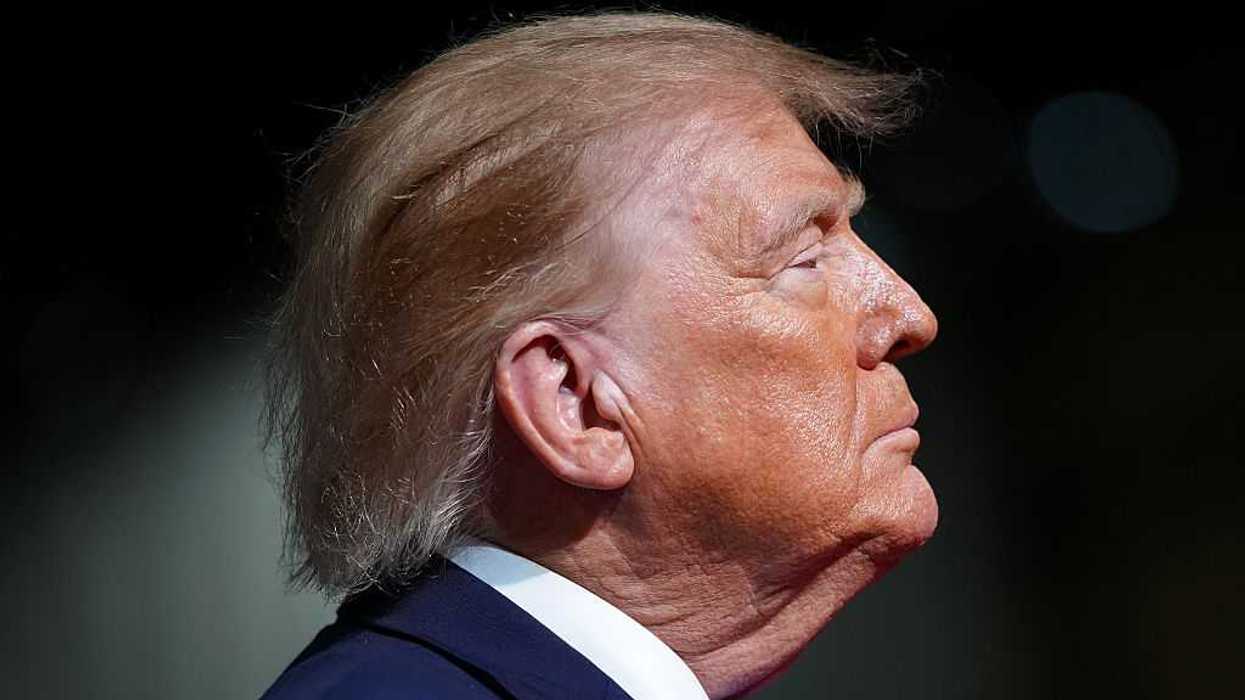
In 2021, Mason and political scientists Julie Wronski and John V. Kane published “Activating Animus: The Uniquely Social Roots of Trump Support” in the American Political Science Review.
The researchers examined survey responses collected in 2011, years before Donald Trump announced his presidential candidacy. They measured respondents’ attitudes toward African Americans, Hispanics, Muslims, and gay and lesbian Americans, then examined how those earlier attitudes related to subsequent political preferences.
The researchers found that people who expressed hostility toward these minority groups in 2011 were more likely to support Trump years later, regardless of their earlier party affiliation. Those prejudices did not similarly predict support for other Republican politicians or for the Republican Party itself. The finding suggests that Trump drew support from people whose hostility toward minority groups was a stronger predictor of their support for him than their earlier party affiliation.
The study does not establish the precise size of that constituency or that every Trump supporter shared these prejudices. But it provides evidence for Mason’s recent argument: Trump helped mobilize people whose hostility toward minority groups had not previously translated into the same kind of partisan allegiance.
Mason argues that this mobilization helped give an ethnonationalist movement disproportionate influence within the Republican Party.
Her concern is not simply that Americans disagree about taxes, spending, or government regulation. It is that an influential political movement seeks to reverse gains in equal citizenship made by racial minorities, women, and LGBTQ Americans.
Racism in American politics is hardly new. Nor is the influence of racial resentment on Trump’s political movement. Mason highlights how a faction organized around those attitudes gained disproportionate power within a major political party, and why describing the resulting struggle as polarization misses what is at stake.
Balance can become distortion.
The second implication of Mason’s argument concerns journalism.
A familiar account of polarization portrays two parties that have become equally extreme, equally intolerant, and equally responsible for the breakdown of democratic norms.
That framing can sound objective. But objectivity does not require treating opposing sides as equivalent.
Journalists should scrutinize Democrats and Republicans alike. Neither party deserves immunity from criticism. But equal scrutiny does not require equal conclusions.
If one political movement challenges equal rights or democratic institutions, while another resists those challenges, describing their disagreement simply as mutual polarization leaves readers without essential information.
Journalists have an obligation to establish what is happening. What rights are being challenged? What policies are being advanced? What have political leaders said and done? How do those actions measure against constitutional protections and democratic principles?
These questions require evidence, not a predetermined distribution of blame.
A report can appear balanced while leaving readers with a fundamentally misleading picture of the conflict.
Mason’s essay suggests that the familiar language of polarization has become a way to avoid precisely that examination.
Asking the right question
I have spent much of my professional life working on complicated problems involving security, energy, environmental protection, and institutional decision-making.
One lesson carries across these fields: the way we define a problem determines which solutions we are prepared to consider, encouraging the audience to reflect on how they understand political issues.
If we mistake a symptom for a cause, we may devote enormous resources to interventions that leave the underlying system unchanged.
Consider what follows when polarization becomes our primary diagnosis. We look for ways to reduce partisan hostility, encourage compromise, and bring the country together.
Those may be worthwhile activities. But they do not answer Mason’s central question: What happens when the political conflict itself concerns whether every American should enjoy equal standing in our democracy?
A call for compromise cannot substitute for examining what is being compromised.
Nor should journalism’s commitment to fairness require neutrality about the democratic principles against which political conduct is judged.
Mason is asking us to stop measuring how divided we are and start examining why.
That deserves serious consideration, particularly from those of us who have grown accustomed to describing every new political confrontation as another example of polarization.
The question we should be asking is not why Americans are so divided.
It is what they are divided about, how those divisions gained political power, and what they mean for American democracy.
Until we answer that question, we may continue searching for solutions to the wrong problem.
Edward Saltzberg writes The Stability Brief, is the Executive Director of the Security and Sustainability Forum, and is a visiting scholar at George Washington University.