






Immigration has become one of the issues pulling Americans apart. Earlier this month, at a constituent conversation in Bristol, Pennsylvania, I watched eight Americans with very different political views offer a glimpse of how it does not have to stay that way.
Four “Reds” and four “Blues” — terms used for participants on the political right and left — sat across from Reps. Brian Fitzpatrick (R-Pa.) and Tom Suozzi (D-N.Y.), the Republican and Democratic co-chairs of the House Problem Solvers Caucus, to present something increasingly unusual in our politics: unanimous Points of Agreement on immigration developed through an earlier Common Ground Workshop.
What stood out was not simply the agreements themselves. It was the range of people involved in reaching them — and how they got there.
These were not eight self-described moderates who saw immigration the same way. The Bristol group included a conservative helping a longtime undocumented family, a Trump supporter who opposed amnesty and a Democratic participant who worked with refugees. One participant had assumed the dialogue would attract “only moderates.”
Instead, another participant came away surprised that they had “agreed way more than they expected.”
Getting there had taken work.
Months earlier, on May 16 in Doylestown, Pennsylvania, the eight Bristol participants were among a larger, evenly balanced group who spent nearly five hours in a Braver Angels Common Ground Workshop. The model asks people with differing views to understand one another and identify Points of Agreement. An idea becomes a Point of Agreement only when every participant can support it.
Participants worked toward unanimous Points of Agreement on values, concerns and possible remedies, then brought them to Bristol for a face-to-face conversation with Fitzpatrick and Suozzi.
What emerged crossed familiar partisan lines.
Among the values participants unanimously identified were both “rule of law” and “respect for human rights and dignity.” Among their concerns were what they called “massive indiscriminate detention and deportation,” but also the financial burden on taxpayers.
The same complexity appeared in possible remedies. One paired agreement called for permanent residency — but not citizenship — for undocumented immigrants who had lived here at least 10 years and committed no crime, alongside “zero tolerance and enforcement with penalties for illegal immigration in the future.”
As that Point of Agreement was read aloud in Bristol, Suozzi’s eyes widened. The brief reaction captured something important. Constituents with sharply different views had reached unanimous agreement on a combination of ideas that did not fit neatly into the usual red-or-blue immigration debate.
Both lawmakers said they agreed with much of what the group had produced and discussed the obstacles to translating agreement into legislation and the value of more members engaging in this kind of constituent deliberation.
None of this means the workshop participants had discovered the answer to immigration, nor should these Points of Agreement be mistaken for a representative poll of the American electorate. But that is precisely what makes the exercise interesting.
Polling tells us what people think separately. Deliberation can tell us what people are capable of reaching together.
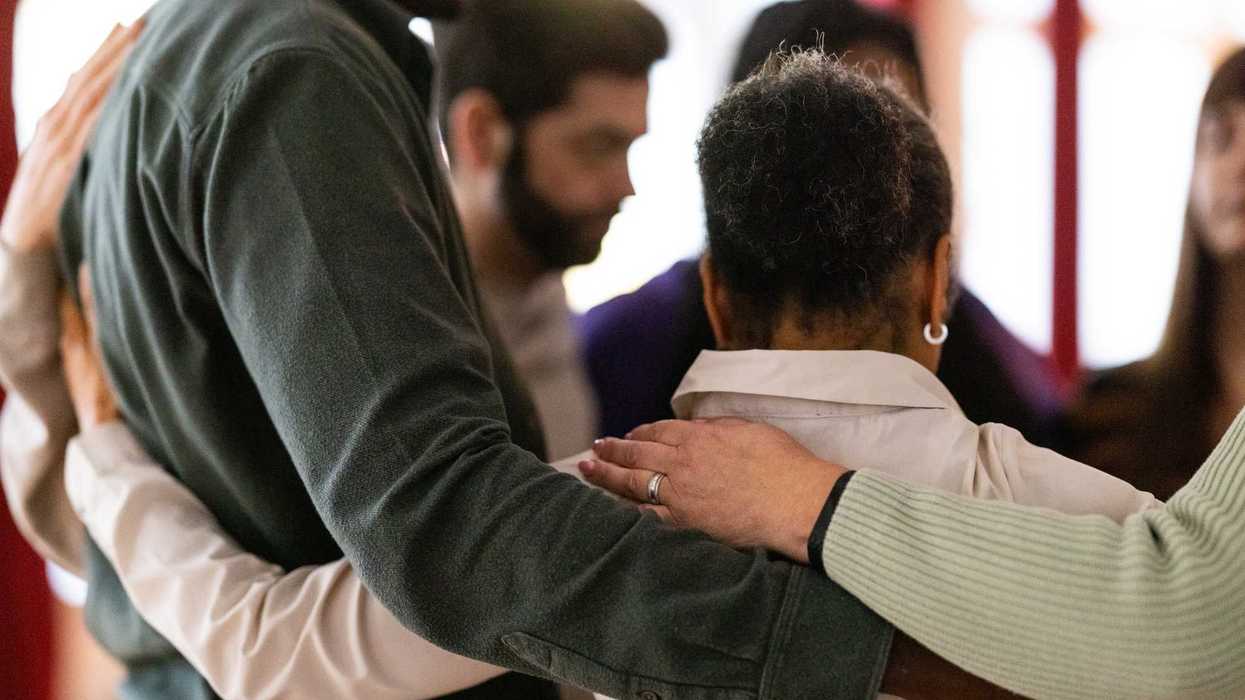
Participants had spent hours listening across disagreement, explaining the experiences behind their views, confronting tradeoffs and deciding what they could endorse together.
One participant said immigration had been “ripping us apart as a country.” Yet participants spoke afterward not only about unexpected agreement, but also about relationships they had formed with people across the political divide.
Through the Citizens Commission on Immigration, Braver Angels is applying this model at several levels. Nearly 50 Common Ground Workshops on immigration have taken place nationwide, engaging ordinary Americans in the work of finding areas of agreement across political differences.
The same approach is being used among national immigration leaders. For over a year, a couple dozen prominent advocates and experts from across the ideological spectrum — people who have spent decades on opposing sides of the immigration debate — have been meeting regularly through Braver Angels’ Immigration Policy Roundtable to better understand their differences and identify areas of agreement. That engagement has also moved into public settings, including a 2026 Braver Angels National Convention discussion featuring roundtable participants and other public conversations across the country.
Congress is the third part of the effort. Members are being invited to engage directly with constituents and national leaders who have already done the difficult work of listening across disagreement. The effort is intended to culminate in a Report to the Nation outlining immigration recommendations reflecting red-blue common ground from the grassroots and national work.
Bristol is not an isolated example. Similar constituent conversations have connected politically diverse Americans with lawmakers from both parties, including Rep. Greg Landsman (D-Ohio), Blake Moore (R-Utah), Greg Stanton (D-Ariz.) and Mike Lawler (R-N.Y.). Participants first identified Points of Agreement across political differences and then brought them directly to their representative.
Better conversations alone will not resolve the country’s disagreements over immigration. Genuine differences remain, and deliberation cannot — and should not — eliminate political conflict.
Citizens can do more than choose sides. They can listen, deliberate and search seriously for areas where agreement is possible. National leaders who have spent years opposing one another can do the same. And elected officials can engage not only with polls, advocacy organizations or the loudest voices in a debate, but with constituents and policy leaders who have already done the difficult work of listening across disagreement.
At the end of the conversation, one participant summed up the experience simply: “I’m leaving today more hopeful.”
Bristol raises a question worth considering: What might happen if more Americans had opportunities to deliberate across political differences, identify genuine Points of Agreement and then bring those agreements directly to their representatives?
Diego N. Sánchez is vice president of policy and strategy at the Presidents’ Alliance on Higher Education and Immigration, a non-resident fellow at Cornell University’s Center on Democracy, and a member of the leadership team of the Braver Angels Citizens Commission on Immigration.











The President Invited Iran to Bomb My Home