



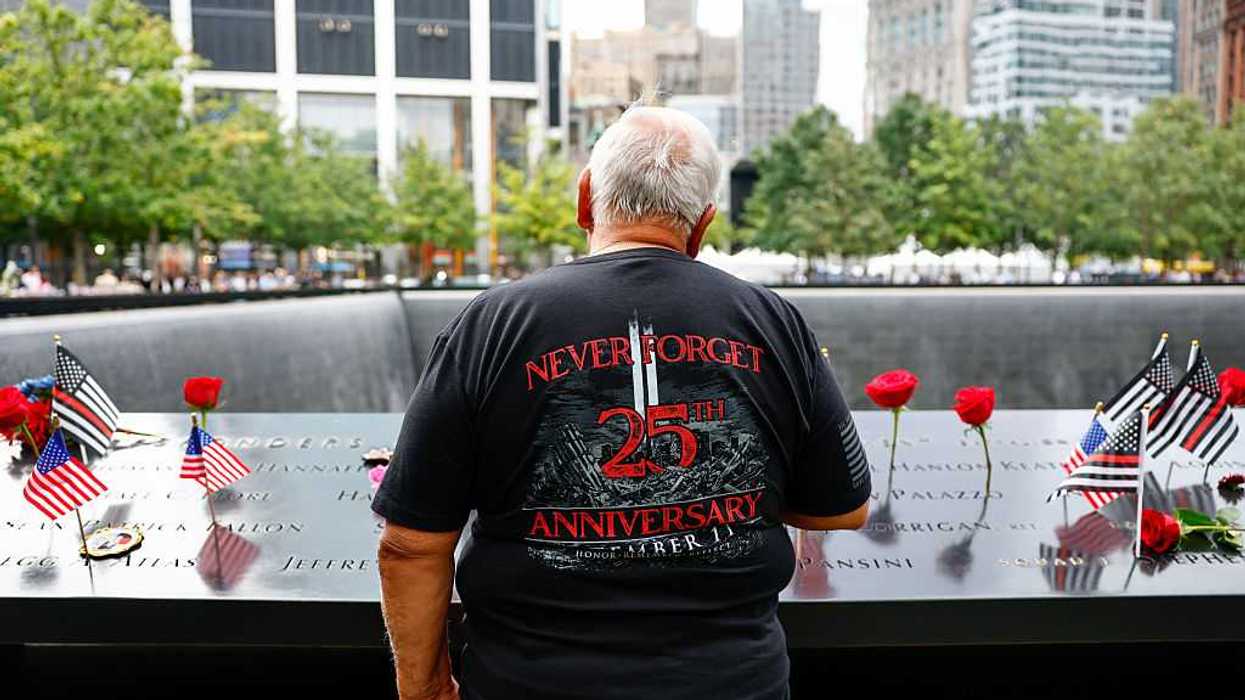

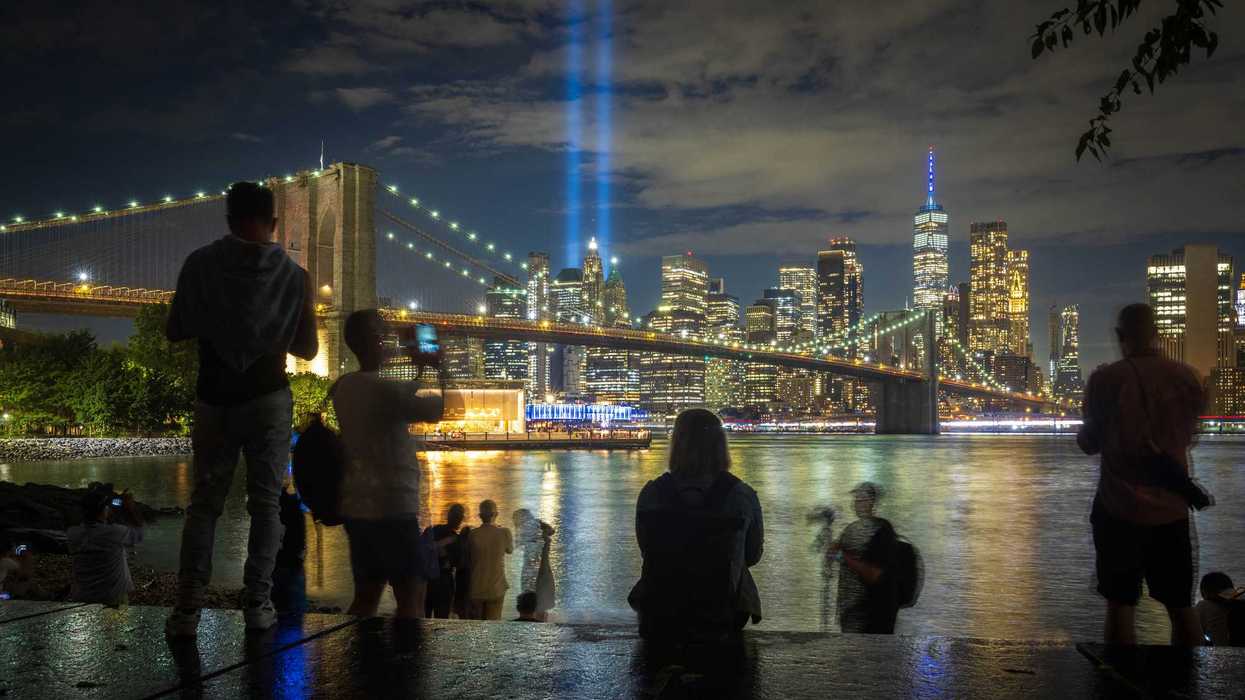
Last month, I watched the ceremonies marking the 25th anniversary of September 11.
I listened as family members read the names of the dead. Children and grandchildren talked about people whose absence still shapes their lives. Nearly 3,000 people were killed that morning. At the 9/11 Memorial, they are remembered as individuals.
I found it deeply moving. Time has not diminished the grief, the courage, or the human cost of that day.
I think about the firefighters.
While thousands of people were desperately trying to get out of the World Trade Center, firefighters were going in. One of them was Battalion Chief Orio Palmer.
Palmer took an elevator to the 41st floor of the South Tower and then climbed 37 flights carrying roughly 50 pounds of equipment. He reached the devastated 78th-floor sky lobby, moving toward trapped civilians. The 9/11 Commission Report records that firefighters freed civilians trapped in an elevator shortly before the tower collapsed. Palmer did not make it out.
He did not know the people he was climbing toward, only that they were in danger. We rightly remember that as heroism.
But as I watched the commemorations, another thought kept intruding.
People are also dying violently elsewhere as I write this, in Ukraine, Gaza and Iran. Behind us are Afghanistan, Iraq and other wars.
As Americans read the names of people killed 25 years ago, families elsewhere were mourning loved ones killed in wars today.
We remember our dead by name. We can remember theirs only by numbers.
The Moral Distance
Families grieve their own differently from strangers. Communities and nations preserve their own tragedies. No human being can feel every death in the world with the intensity of losing a spouse, a child, or a friend. Our concern naturally begins close to home.
Emotional distance is understandable, but it can also become moral distance.
This human tendency is not uniquely American. But for the United States, it operates alongside extraordinary power. American military forces can reach almost anywhere on Earth. Our national wealth, geographic security, and military superiority have insulated most Americans from the consequences of wars fought in our name.
Our cities stay intact. Our lights stay on. Our children go to school. We know war mostly through reports, not through lived experience.
For much of our recent history, war has happened somewhere else. September 11 was the exception. For a few hours, the distance collapsed. Nearly 3,000. We know the names behind that number.
Names Are Buried In Numbers
Brown University’s Costs of War project estimates that more than 940,000 people died directly from post-9/11 war violence in Iraq, Afghanistan, Syria, Yemen, and Pakistan between 2001 and 2023. When indirect deaths from war’s damage to health systems and infrastructure are included, the project estimates at least 4.5 million deaths.
Many actors caused those deaths in very different conflicts. They are not a count of people killed by the United States. Deliberately murdering civilians, military action against legitimate targets, strategic error, and unintended civilian deaths carry very different moral and legal responsibilities.
But numbers this large tell us almost nothing about the people behind them. Distance does not make those lives less human.
One of them was Hami.
Hami was 11. He loved soccer and riding his bicycle. On February 28, his grandfather, Heydar Sadeghi, drove Hami, his 9-year-old sister Nila, and their mother, Neda Salehizadeh, a teacher, to their school in Minab, Iran. He planned to pick them up at 1 p.m.
At least one U.S. missile struck the school that morning, according to an Associated Press investigation. Hami and his mother were killed. Nila was pulled alive from the rubble. When Sadeghi reached the school, he searched through the destruction, calling their names.
One important fact should not be pushed aside. The school stood next to a compound operated by Iran’s Revolutionary Guard. Some of its students were children of officers at the base. Many were local children from Minab.
The circumstances of the strike and the Guard compound matter. So do questions of military necessity, intent, and responsibility. U.S. military investigators reached a preliminary assessment that American forces were likely responsible, although the investigation had not reached a final conclusion when Reuters reported on it.
None of that makes Hami less human.
The number is how we encounter the death. His name is how Hami’s grandfather remembers him.
My Own Moral Distance
I know something about the insulation I am describing.
Around 1980, part of my professional work involved analyzing the impacts of Agent Orange from U.S. military use during the Vietnam War. The analysis included what had happened in Vietnamese villages: studies, exposure information, impacts, and numbers.
That was how I saw it then: numbers and facts. I did not stop to ask about the people inside those numbers. That was my insulation.
I am asking the question now as I experience 9/11’s 25th anniversary.
What “Never Forget” Asks of Us
For 25 years, “Never Forget” has been a promise.
We should remember who died, what was endured, and the courage and sacrifice. We should preserve the story so later generations understand what happened that morning.
But remembrance carries an obligation forward as well.
If remembering only preserves our own wound, its moral reach remains limited. The intimacy with which we understand the suffering of September 11 can help us grasp what violent death does to a family anywhere.
We need not feel guilt for everything done in our country’s name. But we should ask what price was paid, what proved wrong, what humanity was lost, and what was easier to overlook because it happened far away.
Remembrance should enlarge our moral imagination. It should take what we learned from our own suffering and change how we see the suffering of people we do not know.
Moral imagination should guide how we use that power.
Sometimes military force may be necessary. But a country with our reach and power should be especially careful about using it. Those who bear the consequences usually live far from us, and distance makes them easier to ignore.
America’s power places a greater responsibility on us. When we can use force without experiencing its consequences ourselves, we have an obligation to understand what those consequences mean before we act.
The question is whether we clearly see the people who may pay the price before we decide to use force.
The People Who Ran In
Orio Palmer climbed the stairs.
He moved toward strangers. He did not need their names to decide their lives mattered.
We cannot know every name in every war. We cannot grieve every loss as we grieve our own. But we should not confuse distance with insignificance.
Orio Palmer had a name.
Hami had a name.
Twenty-five years ago, firefighters entered burning buildings to reach people whose names they did not know. Remembering those we lost that day is where “Never Forget” begins.
For me now, “Never Forget” also means seeing the names inside the numbers when our power puts distant lives in our hands.
-----
Edward Saltzberg is the Executive Director of the Security and Sustainability Forum and a Visiting Scholar at George Washington University. He writes the Substack, The Stability Brief.








The President Invited Iran to Bomb My Home