




Since organizing the Voters Not Politicians 2018 ballot initiative that put citizens in charge of drawing Michigan's legislative maps, Fahey has been the founding executive director of The People, which is forming statewide networks to promote government accountability. She regularly interviews colleagues in the world of democracy reform for The Fulcrum.
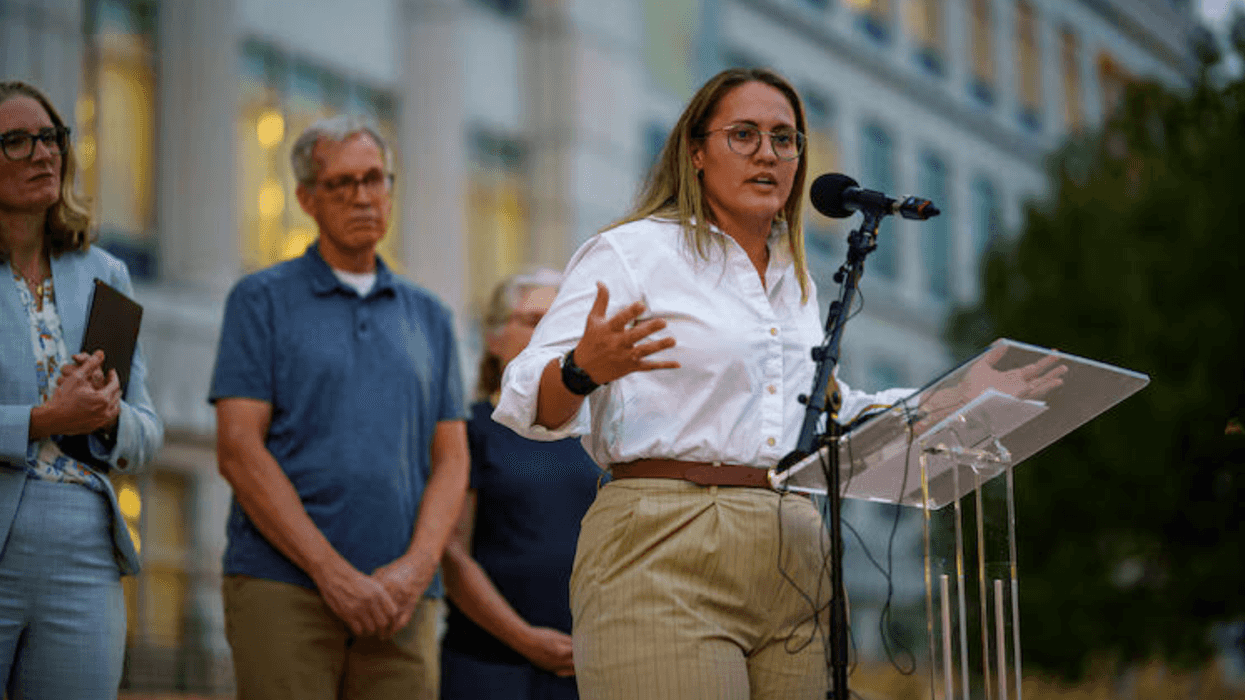
Elizabeth Rasmussen is the Executive Director for Better Boundaries, a Utah-based organization fighting for fair maps, defending the citizen initiative process, preserving checks and balances, and building a better future. Currently making headlines in the state, Better Boundaries is working to protect Proposition 4, and with it, the rights of Utah voters.
Our recent conversation has been edited for clarity and brevity.
Fahey: Please tell us about your background and what brought you to lead this effort.
Rasmussen: I always wanted to work in the public sector, and started getting involved in politics at a young age. My passion is primarily in the environmental space–ensuring our public lands are protected, water is conserved, and resources are handled with care. I began my career in Washington, D.C., working on public lands and water policy for Senator Romney. After a few years, I transitioned back into the campaign world, and then I became a climate consultant at Deloitte. It was there when I realized so many issues we face with implementing good policy stem from issues with representation and voting structures, such as gerrymandering and ballot access. I realized that in order to make change, we needed to change the structures that incentivize bad policy. This naturally led me to Better Boundaries.
Fahey: Please tell me about Better Boundaries and the reforms the organization is promoting.
Rasmussen: Better Boundaries initially started as an anti-gerrymandering organization. Its goal was to implement an independent redistricting commission and neutral criteria for drawing voting maps, at the state and federal levels. After our ballot initiative to implement these reforms passed, the legislature fought back by undoing the reforms, making them non-binding. This led us to advocacy work and litigation on our right to use the ballot initiative process. Over the past several years, we have been devoted to protecting anti-germandering reforms, protecting the ballot initiative process from attempts to weaken or eliminate it, and lobbying for policies that eliminate barriers to voting.
Fahey: Why is redistricting reform necessary in Utah? How has gerrymandering impacted the previous decade of elections?
Rasmussen: When the legislature has unchecked control over the map-drawing process, the incentive is to protect those already in power, whether that be an incumbent or a certain political party. Utah is a supermajority red state in its representation, despite only having 50 percent of the voting population registered Republican. This has resulted from the legislature drawing maps that split up Salt Lake County into all congressional districts, cracking the progressive population of the state and diluting their influence. They also continued to draw maps that protected incumbent state legislators from worrying about reelection campaigns. With half of the population disenfranchised, we knew there had to be a change in the process of drawing maps.
Fahey: What previous attempts have there been to reform the redistricting process in Utah? Why haven’t they stuck?
Rasmussen: 2018 was the first major attempt to tackle redistricting reform–and it was successful. The struggle came after, in 2021, when the legislature repealed Proposition 4 and replaced it with SB200. This new law made the commission and neutral criteria, or standards, non-binding. With Prop 4 gutted, they were allowed to pass a gerrymandered map that split Salt Lake County into all four congressional districts. We have been fighting to remedy this through litigation, and in 2025, the courts finally reinstated Proposition 4 and implemented a representative map for the 2026 elections after the legislature again failed to follow the law.
Fahey: What has been the biggest obstacle to your effort?
Rasmussen: The biggest obstacle to our effort has been the legislature’s unwillingness to listen to the will of the people. We passed Proposition 4 nearly eight years ago, and it was just implemented by court order in August 2025. Instead of respecting this decision, their response has been threats to impeach the judge, massive reforms to the judiciary during the 2026 legislative session, and a petition to repeal Proposition 4. They packed the court, created a new process for constitutional questions to be handled in the court system, and even levied a new federal lawsuit trying to block the 2026 map. Instead of respecting the people, the courts, and the constitution, they have fought back every step of the way.
Fahey: Why do you think the legislature has been attacking the ballot initiative process?
Rasmussen: Our Senate President and House Speaker have made it clear that they believe the ballot initiative process is the greatest threat to Utah. By allowing this tool of direct democracy, they claim that Utah will become like California, passing ballot initiatives every year that go against the Utah way. In other words, they do not trust voters to use the ballot initiative process. Their goal is to eliminate it through a constitutional amendment so that the legislature can amend or repeal ballot initiatives after they pass.
Fahey: What is the plan for fighting the proposed amendment, S.J.R. 2, and where are you at in the process?
Rasmussen: Right now, we are in the education phase. Because there have been so many attacks on Proposition 4 and the ballot initiative process, people are confused and tend to tune out of the conversation. Our goal is to show people that they have a constitutional right to alter and reform their government, and that includes using the ballot initiative. Any effort to weaken this process is a direct attack on their rights.
Fahey: How can citizens get involved or support your work?
Rasmussen: We are currently doing work to protect Proposition 4 through a program called Protect Utah Voters. We encourage people to reach out by signing up to volunteer on this program’s website: protectutahvoters.com
Fahey: If you were speaking with a high school student or a new immigrant to the country, how would you describe what being an American means to you?
Rasmussen: There seems to be a prevailing thought that being an American means you can’t criticize your government or history. I see it as the opposite. Being an American is learning from the past, seeing where improvements can be made, and advocating for change. That is how our country was founded, and it’s our duty to carry that long-standing tradition forward so the next generations have a better country than the one we were given.Katie Fahey is Executive Director of The People.









The President Invited Iran to Bomb My Home