
Skip to content
Search

Latest Stories

Follow Us:
Top Stories

Remembering 9/11 and My Pledge to Frank

Opinion

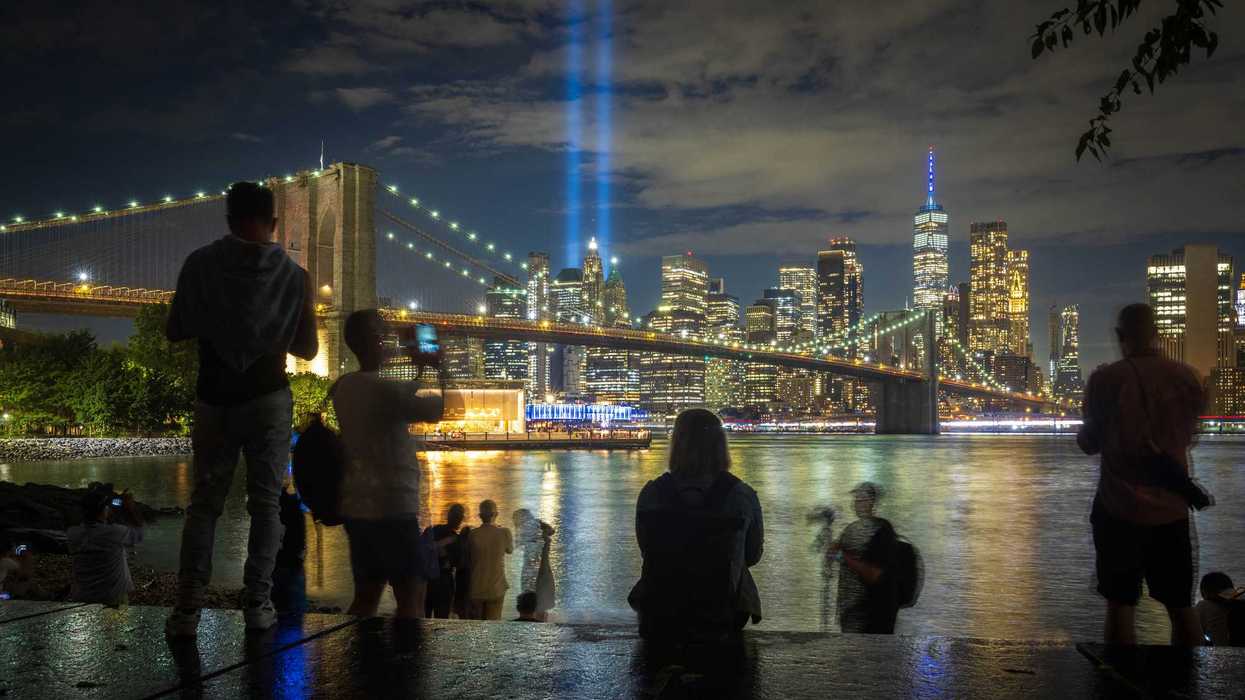
​A crowd gathers to take in the September 11th memorial lights in Brooklyn, NY.

A crowd gathers to take in the September 11th memorial lights in Brooklyn Bridge Park, New York City, NY.

Getty Images

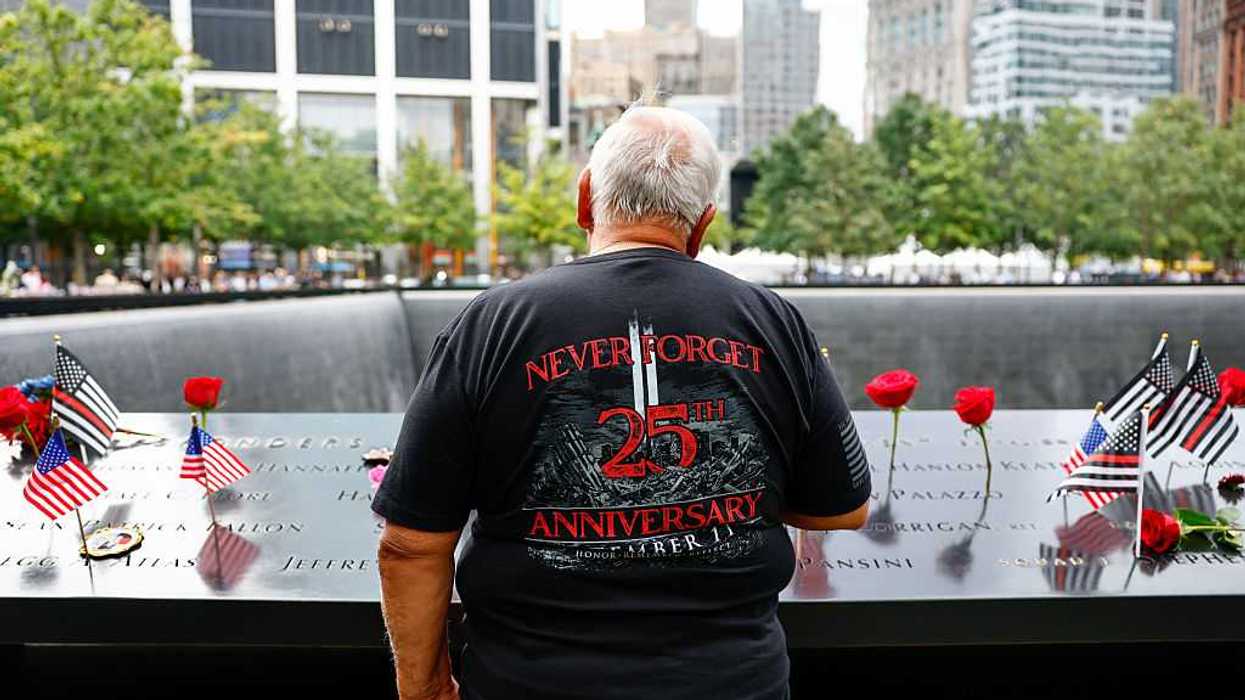
A college friend called me and desperately urged me to turn on my television. I was at home in my study writing a chapter on civic faith for a new book. As I tuned in to the news, I watched a second plane ram into the north tower of the World Trade Center, where my best friend from college, Frank Reisman, worked for Cantor Fitzgerald. Hours later, another call: Frank was gone.

Twenty-five years have passed, and I remember that dreadful day as if it was yesterday. Are we a better nation? Stronger? More vibrant? Kinder?


Since 2001, our nation has lived through a series of seemingly endless wars and a global pandemic. The internet has overwhelmed many of our senses, and AI now threatens to replace basic human interactions. People have lost faith in our leaders, institutions, news media, even in each other. I believe we face a crisis of belief.

Like you, I worry about where we are, and where we are headed.

Just last week it was reported that a 20-year-old Haitian immigrant who lived in Springfield, OH, and who had just started college, was so despondent and full of shame over having to wear an ankle monitor that he walked into the street amid oncoming cars and ended his life.

In America, we may hold different positions on issues involving deportation and immigration, but what exactly is our position on the dignity of each individual and the sacredness of their life? When do the actions of those in power become so malicious—indeed, heinous—that they violate basic human decency? Must we always go to extremes to make a point, win an argument, pursue a particular policy goal?

Our public lives are now enveloped in constant noise, confusion, and uncertainty; some days it’s just too much to take in. So many of us have adopted a kind of cynicism as a shield against further disappointment or despair. We sometimes tear things down to feel some semblance of power, or to exude superiority over others. Oftentimes we throw up our hands in frustration, only to retreat from public life.

Are we afraid to have hope? Is belief in one another and in our nation somehow beyond what we can now imagine, or are willing to risk? What are we willing to lose and at what cost? What are we willing to fight for and protect and cherish and grow?

There are times I sit in my study in the dark and in absolute silence and try to imagine the sheer panic Frank must have experienced when he realized a plane had hit the south tower. The fear, the sense of doom—and then the deadly impact of the second plane. My heart aches. I weep.

Reflecting on that horrific day and its lasting effects, and considering where our society has gone in the decades since, I am left wrestling with pressing questions. Shall I surrender to evil? Must I walk away in disgust? Is it time to give in or give up on trying to repair breaches in society?

My travels throughout our country over the past 40 years have led me to this conclusion: There is so much good and goodness in people and in our society. And yet, amid our current conditions, such good and goodness can be hard to see. It can be difficult to let in. Even risky.

I know you may be feeling weary. Frustrated. Angry. Disgusted. I hear you. But hear me out, please. We must restore our belief in one another and in our nation.

Indeed, I’ll be damned if I will idly sit by, wringing my hands, and allow the cynics and doomsdayers and fear mongers and bigots to win. We can do better and be better—as individuals, in our communities, and across this nation. We have work to do, building to undertake. This must be done together; it can only be done together. It happens brick by brick, neighborhood by neighborhood, community by community. This must be our collective ambition.

The World Trade Center buildings were reduced to rubble. But the spirit of those who were lost and injured lives on in our shared memory and in our hearts. We go on. We build together.

Let’s face it. We need each other. We are meant to go together. So, let us always remember the past and commit to building a future we can believe in. That’s my personal pledge to Frank.

Rich Harwood is the president and founder of The Harwood Institute.


Read More

Two Yellow Speech Bubbles Overlapping Common Ground on Blue Background Front View.
A reflection on parenting, empathy, and communication in a divided world.
Getty Images, MirageC

Building Trust, One Conversation at a Time

In 2020, my friend and colleague Dr. Terrence Robinson died suddenly and unexpectedly of COVID. For five years, we had built a youth apprenticeship program together in Cleveland, raised more than half a million dollars, and trained more than 200 young people. Terrence was Black. I am Jewish. The whole time, I wanted to talk with him about the things that sat quietly underneath our friendship: race, religion, history, privilege. I never did, because I was afraid of saying the wrong thing, and the negative ramifications of saying something ignorant in the workplace. Then he was gone, and the conversation I kept postponing was gone with him.

I think about that silence often, because it is the same silence I now see between two communities that once helped change this country together.

Keep Reading Show less
How Composting Connected Two Women Across Six Decades

An 82-year-old and 24-year-old bonded over composting—and discovered shared roots, values, and a friendship that broke every generational stereotype.e

Cavan Images/Getty Images

How Composting Connected Two Women Across Six Decades

Every day, we cross paths with people whose lives seem completely different from our own. We exchange polite greetings with neighbors, chat briefly with acquaintances, and pass strangers without ever learning their stories. Yet beneath the surface, we often share more than we realize. Sometimes, all it takes is one conversation. Jean and Bella, 82 and 24 respectively, discovered this through their interest in composting.

Bella regularly attended a Sunday morning "Cookies and Conversation" intergenerational discussion group at Hebrew SeniorLife, where Jean lives in Brookline, MA. The two had spoken before, but only in passing. Like many people meeting someone from a different generation, Bella wasn't always sure how to bridge the gap.

Keep Reading Show less
Cropped shot of a group of people joining their hands in solidarity

A new union political director explains why labor membership has halved since 1983 even as public approval hits record highs—and what's driving the gap.

LumiNola/Getty Images

The Ongoing Fight for Bread and Roses

Last Monday, I started a new job as the political director for IBEW 569, a local electrical workers' union based here in San Diego. In talking to friends about what I’m doing–while learning, fast, in real time, how to do the job myself–it occurred to me that there’s actually quite a knowledge gap in society today regarding an understanding of what unions are and what they’re supposed to do. So let’s get into it.

A union is, at its core, a group of workers who agree to negotiate together instead of alone. One worker asking a boss for a raise has almost no leverage. A thousand workers asking together hits different. That leverage of teamwork, that collective bargaining, is how the overtime pay, workplace safety standards, and employer-sponsored health insurance all came to exist in this country. None of it was handed down out of corporate goodwill. Fair wages (bread) and dignity (roses) were won, often at real cost. In 1890, the average workweek for manufacturing employees and building tradesmen was around 100 hours or more. Workers in Chicago who rallied for an eight-hour workday faced police violence, but we have that and weekends now because people were willing to lose their jobs, and sometimes their lives, to organize for it.

Keep Reading Show less
Group of young adult students sit at desks in classroom listening to teacher

Why do Americans respond so differently to hard history lessons? A look at the three psychological mindsets driving the patriotism debate — and a path past it.

Lighthouse Films/Getty Images

“They Hate America”: Patriotism in the Face of Historical Updates

I happened upon a civil discussion blog and read a post by a man who said he was happy to report that when he attended a panel discussion about teaching patriotism in the schools, all went well. He said that’s because most of the people in the bridging organization that hosted the event are “pretty patriotic.” He clarified that by writing, “None of the type of bad actors (and there are many) who want to teach kids to hate America and Western Civilization were represented.”

Someone made a comment about why we can’t incorporate historical change into curriculum and objected to the notion that a segment of the population wants to teach kids to hate America. The man who posted cited what he believes is proof. A last commenter simply input the emoji for a sleeping person, as though the argument was boring or unimportant.

Keep Reading Show less