

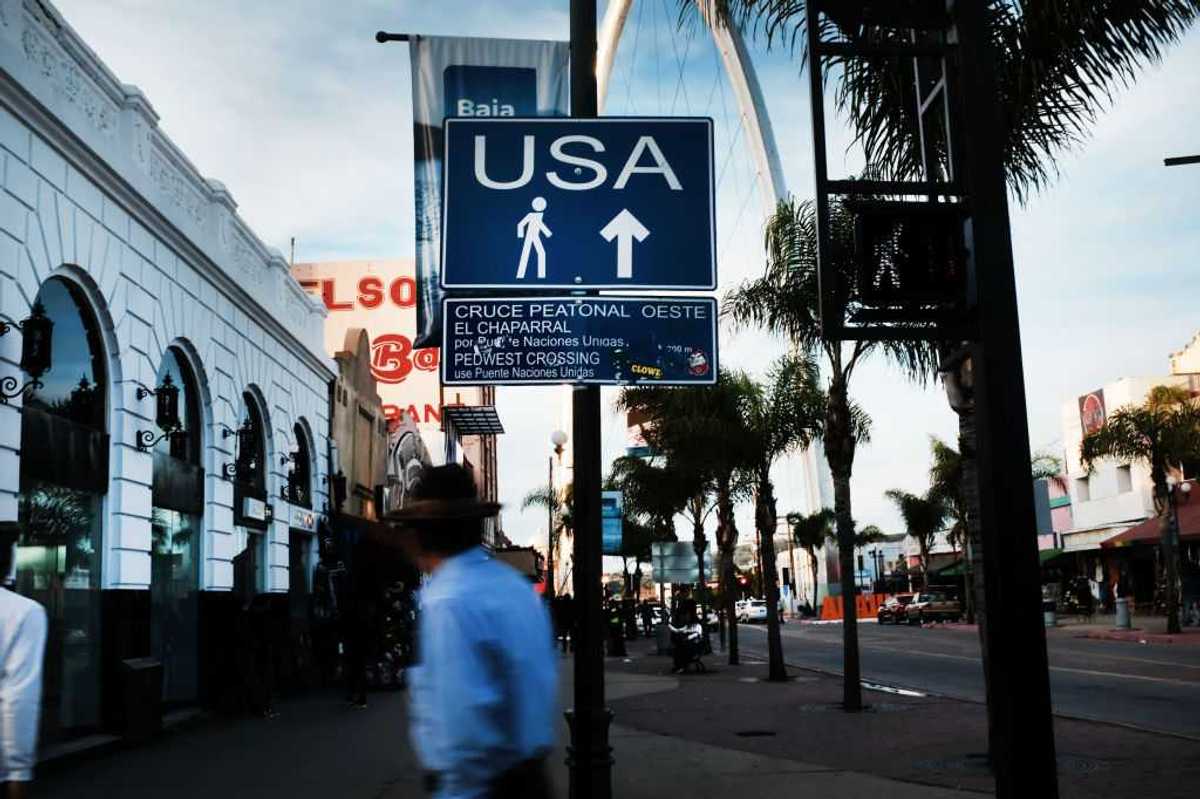




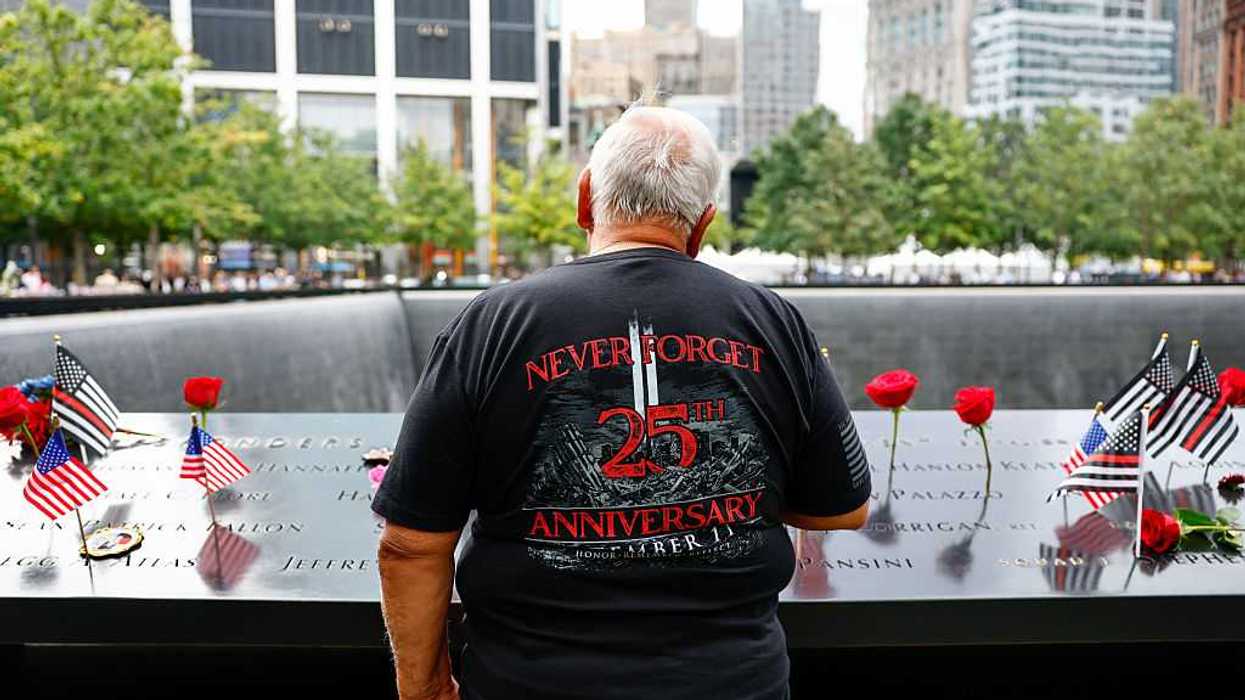
As Americans look back on 9/11 in this 250th year, we remember a nation shaken — yet rising, again and again. America is cracked, but Americans are not broken. Our resilience is the quiet force holding this country together.
Today, we find ourselves in a moment thick with noise — global conflicts, corruption, rising prices, healthcare struggles, and political division designed to exhaust us. Every day brings a new headline, a new crisis, a new attempt to distract or divide. The chaos, fatigue, and uncertainty are real. Yet even in this noisy, chaotic time, Americans continue to rise — not because life is easy, but because rising is who we are.
Across the country, Americans are searching for ways to survive the noise — corruption, turbulence, and dysfunction. They are navigating an affordability crisis dismissed as a “hoax,” a healthcare system buckling under pressure, a measles outbreak, and rising global instability, including the Iran war. They are watching unqualified people confirmed to positions of national importance while an election-denying president dominates the news cycle, abuses the office, and evades accountability. They see institutions strained, rights challenged, and democratic norms tested. Many are simply trying to hold on — to their peace, their sanity, their hope.
And in the middle of all this, Americans turn toward one another — toward kindness, community, faith, humor, and resilience — because that is where real care still exists. In the absence of compassion from the top, they make the most of what they have.
But chaos is not the whole story. Noise is not destiny. And noise is not who we are. Through it all, Americans continue to rise. I saw that resilience on 9/11. Living in California, my husband — who worked in aerospace — narrowly missed his flight to New York. My cousin’s subway train in Manhattan stalled underground. One of my Muslim teachers told me her husband did not want her to come to work because he feared she would be mistreated. She said, “My principal values diversity — she will keep me safe,” and she came anyway. My niece in northern Virginia watched military planes fly overhead. In those hours, Americans of every background prayed together, comforted one another, and showed extraordinary courage. I remember asking my entire school to pause for a moment of silence. Even in unimaginable grief, America rose.
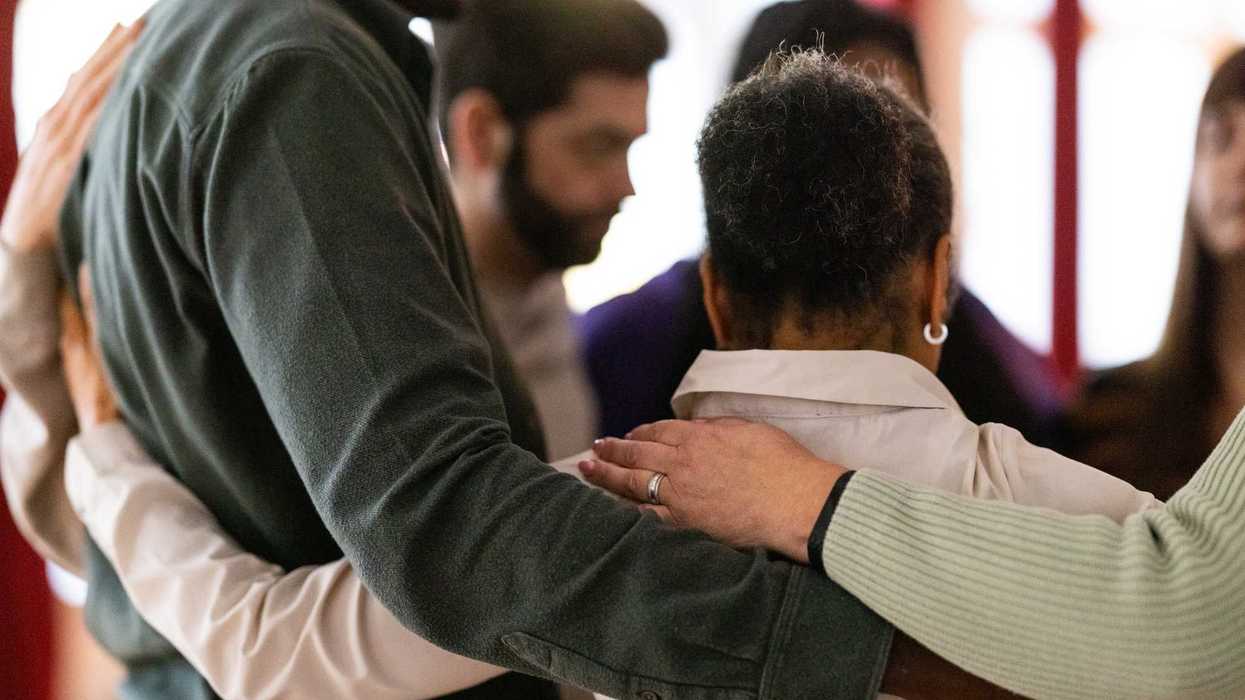
Hard times do something unexpected: they make love stronger. Couples hold each other closer. Friends become anchors. Communities tighten their circles. Look at the neighborhoods surrounding Haitian families and other immigrants — people who came to America, built lives, contributed to their communities, and helped make those communities stronger, only to find themselves facing fear, uncertainty, and political hostility. Yet communities stepped in. Neighbors share food. Families donate to food banks even when their own budgets are thin. People with almost nothing find ways to give. My mother used to say, “You can’t miss what you have never had.” And she was right. Americans know what it means to depend on one another. They rise through empathy, connection, sacrifice, and love.
There is also a striking contradiction. The president is the son of an immigrant, and he has married two immigrant women: his late first wife, Ivana Trump, who was born in Czechoslovakia, and his current wife, Melania Trump, who was born in Slovenia and became a naturalized U.S. citizen. Both are white European immigrants. Yet Haitian and other immigrants of color can find themselves facing fear, uncertainty, and political hostility. America is not strengthened by deciding who is worthy of belonging. It is strengthened when people see one another as human beings worthy of dignity.
Just today, my nephew sent me pictures and videos from Symphony in the Park in Atlanta — a huge crowd of diverse people gathered under the open sky. “Everybody is here,” he said. And he was right. People of every background were talking, laughing, sharing food, and enjoying the evening together. Strangers spoke with strangers. Families relaxed side by side. Here they were, choosing joy over noise, community over cruelty, and connection over division.
Even now, Americans continue to show quiet acts of goodness. My sister in Virginia found herself part of a “pay it forward” chain at Walmart. I experienced it myself in a fast-food drive-through — someone paid for my order. I watched a man in a grocery store hand a woman two dollars when she was short on her bill. “Take the $1.67 and keep the change,” he said. No politics. No division. Just humanity.
A grieving mother adopted a five-year-old girl her late daughter had planned to adopt, carrying forward her daughter’s love. A waitress patiently read a menu to a confused customer, restoring their dignity. An older man paid for another person’s groceries and simply said, “Been there, kid.” These moments are not small. They are evidence of who we are.
America may feel far from the country many of us remember. This administration has cast a cloud over that spirit — a cloud of cruelty, division, intimidation, and corruption. But resilience remains the quiet force holding this country together. Americans are struggling to endure an affordability crisis and a political crisis at the same time. Yet they smile. They rise.
My mother taught my siblings and me something simple that stayed with me throughout my life: Don’t look down. Keep your head up. Look toward the heavens and smile.
I did just that.
Years later, I had a supervisor whose tactics seemed designed to break people. I watched adults under his supervision cry, quit, give in, or become loyal to him simply to survive. He once asked me why I was always smiling. He told me people were suspicious of me because I was always smiling.
I looked at him, smiled, and walked away.
He could not break me. He did everything he could to keep me from being promoted, but his tactics did not work. Thank goodness I had learned something long before I entered that workplace: another person does not get to decide whether I surrender my spirit.
People need to remember that inner strength now. Resilience is not pretending hardship does not hurt. It is knowing that hardship does not have to define you. Sometimes strength is simply keeping your head up, looking toward the light, and refusing to let someone else take your joy.
Do not give in to the noise. Weed through lies and conspiracies. Do your research. Seek the truth. Remember the past, especially when leaders claim they “did right by you.” Make a plan to vote. And vote.
Don’t get sidelined by party loyalty, election interference, or intimidation. Protect your voice. Protect your power. Protect the Republic.
Protect something else, too: your inner strength. Step away from the noise when you need to. Look up. Smile. Breathe. Stay connected to people who remind you of hope and possibility. Believe that your effort matters.
My mother used to say, “No one can take your joy. You can give it away, but no one can take it.”
She was right.
We may not be able to control every storm around us. But we can decide whether we will surrender our humanity, our hope, our voice, or our joy to it.
America’s quiet strength has always lived in its people.
And still, we rise.
Carolyn Goode is a retired educational leader and former principal who has spent her career advancing civic responsibility, equity, and public engagement. She writes about democracy, leadership, and the values that strengthen American communities.











The President Invited Iran to Bomb My Home