
Skip to content
Search

Latest Stories

Follow Us:
Top Stories

For Trump, even 9/11 is an opportunity

Opinion

Donald Trump

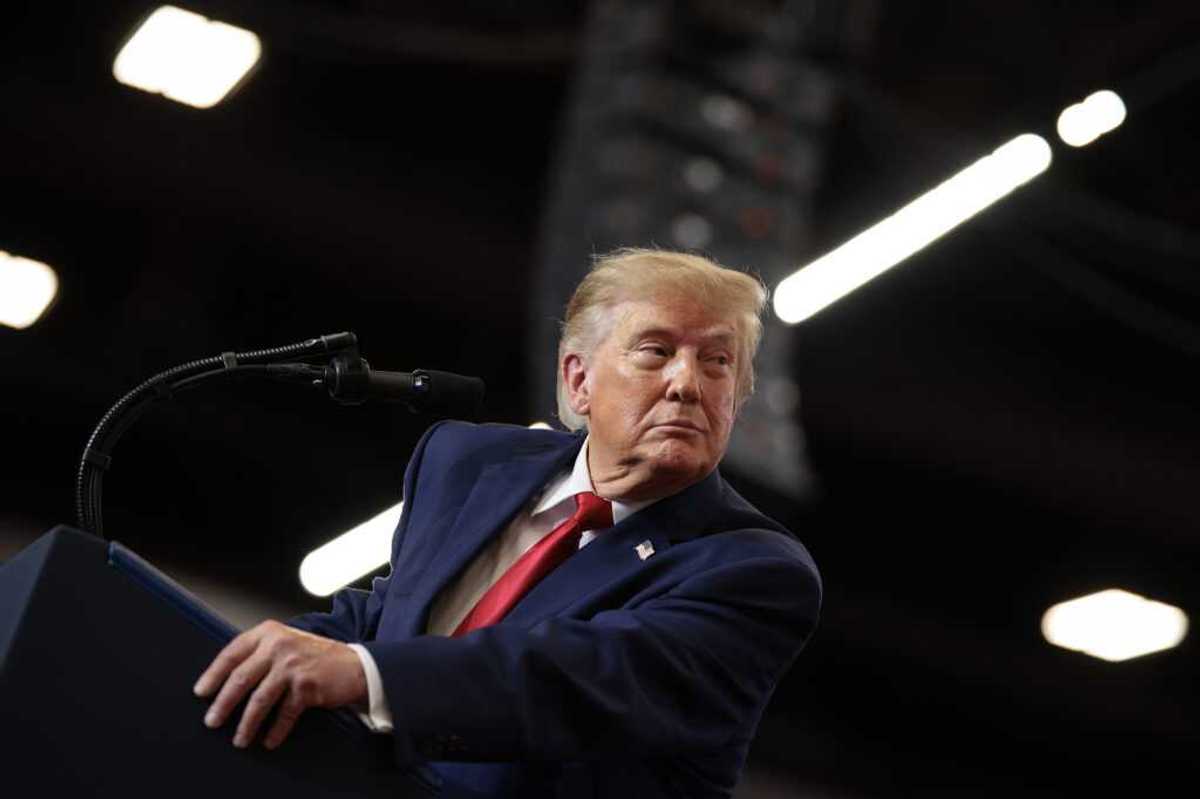
U.S. President Donald Trump speaks during a“ Steel Across America” event ahead of the 25th anniversary of the Sept. 11th attacks on the Ellipse near the White House on Sept. 8, 2026 in Washington, D.C. President Trump welcomed 9/ 11 first responders to the Tunnel to Towers Foundation’ s“ Steel Across America” event featuring a 16,900- pound, 21- foot steel beam recovered.

(Getty Images)

There was a reason organizers of the 9/11 ceremony in Manhattan told President Trump he could not speak at this year’s memorial service.

A good one, it turns out.


Because in a speech he gave on Tuesday in Washington, he did exactly what they were presumably worried about — he made it about himself.

According to The New York Times, Trump had wanted a speaking role at the service, but the National Sept. 11 Memorial and Museum, which oversees the site, said no, as they’ve maintained for the past decade-plus that the venue and event should be nonpartisan.

Trump has long used awful tragedies to either puff himself up, trash political opponents, or sell lies to the American people.

He blamed a deadly plane crash at Washington National Airport last year on diversity, equity and inclusion policies. He blamed Puerto Ricans for the devastation they endured after Hurricane Maria in 2017. He reportedly considered withholding disaster relief after the California wildfires based on the way affected regions voted. In an interview on Fox News meant to commemorate the 75th anniversary of D-Day in Normandy, he used the occasion to slam former House Speaker Nancy Pelosi…with graves of the dead behind him.

And now, as we approach the 25th anniversary of what many New Yorkers consider the darkest day in modern history, Trump has done it again.

He told a rambling, nonsensical story — one he’s told before — about going to Ground Zero just after terrorists flew two commercial jets into the twin towers. In the story, which no one has been able to verify, despite multiple attempts, he says firefighters had to carry him out of One Liberty Plaza, also known as the U.S. Steel Building, because they thought it was about to collapse.

As CNN fact checker Daniel Dale notes, there’s no evidence Trump went into this building, especially at a time when NYPD and NYFD had locked down the area. There’s no evidence that building was collapsing — in fact, it was deemed structurally sound and reopened within two months of the attacks. There’s no evidence he was carried out of it by firefighters.

But the lie isn’t even the worst part. Pretend it was all true — why would the leader of our country, and a New Yorker, decide to make that tragic day about himself?

Because that’s who Donald Trump is. He’s a malignant narcissist.

He’s also, incidentally, a terrible and ineffectual president, who’s made ill-fated decisions that he has to keep defending, and there’s nothing he won’t do to make himself look and feel better.

Within the first two minutes of his speech, he was cravenly using 9/11 to justify and promote his dumb war in Iran — two events separated by 25 years and 6,000 miles.

“And I will tell you, we’re right now fighting because we have a certain nation that wanted a nuclear weapon, they were very close to getting it, and now they have no chance at getting it. They will never have a nuclear weapon. Iran will not have a nuclear weapon. And they’ve been punished greatly. As you know, we’ve really taken it to them.”

As a New Yorker who lived through 9/11, still one of the worst days of my life, I’m utterly sickened by Trump’s crass, political, and self-promotional framing of that awful day.

And I’m relieved he won’t be given a platform to do it again on Friday’s anniversary in lower Manhattan.

Because for Trump, everything is his for the taking, and absolutely nothing is sacred.

S.E. Cupp is the host of "S.E. Cupp Unfiltered" on CNN.

Read More

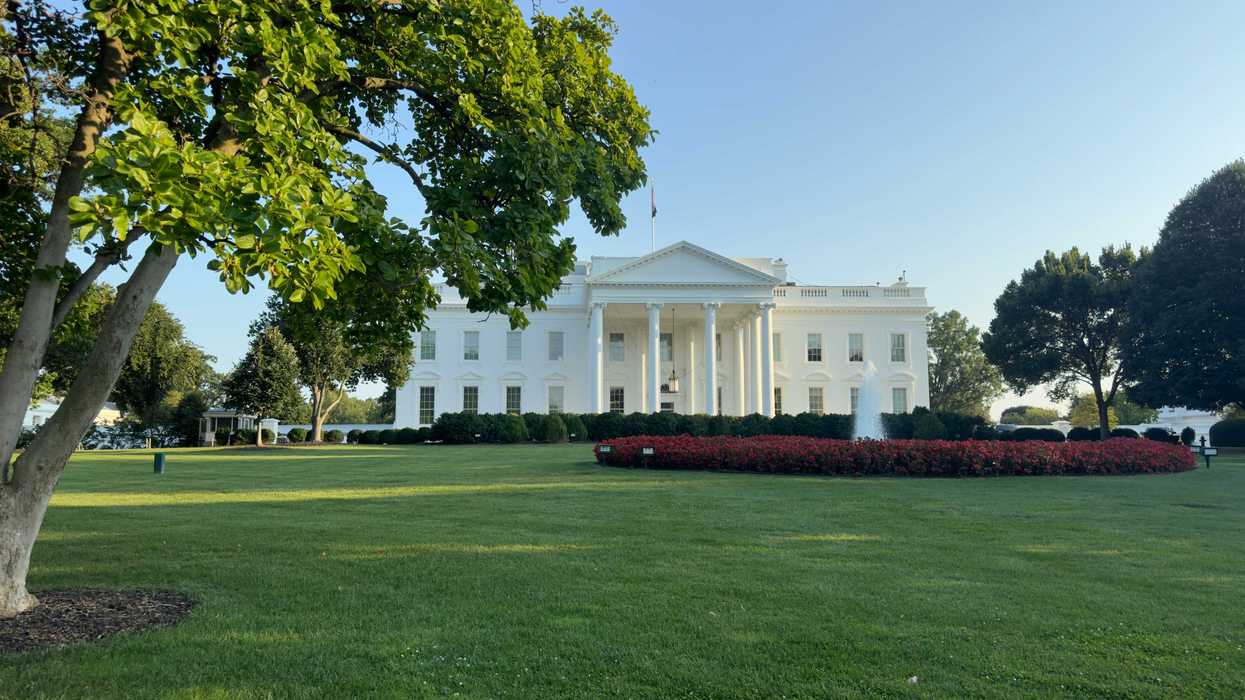
The White House
The white house with green lawn and trees
Photo by Josh on Unsplash

The Politics of Gratitude: Why Washington Punishes the Loyalty It Cannot Price

On a Sunday night in August, Senator Jon Ossoff told a campaign rally in Atlanta that President Trump would rather build his ballroom and “travel with Natalie” than do his job. He never used her last name. He did not need to. Natalie Harp, the White House aide known to colleagues as Trump’s “human printer” for trailing him with a portable printer and transcribing his social-media dictation, had become a punchline before most Americans knew who she was.

The backlash arrived within hours. White House officials accused Ossoff of insinuating an affair; Republican Rep. Brandon Gill noted that Harp survived bone cancer only because the Right to Try Act, which Trump signed in 2018, let her seek an experimental treatment outside the normal approval process, and dismissed any other reading of the moment as unfair. Weeks earlier, Harp had been at the center of a far more consequential story: in July, she was one of a handful of aides, alongside the defense secretary and two senior staffers, chosen to accompany Trump on a covert switch of aircraft as he left a security summit in Turkey after officials detected a credible Iranian threat, while most of the traveling delegation stayed behind on a decoy plane. That is the real proximity Ossoff's line was needling. Then came a detail that complicated the story further: Trump had personally given Harp and several other aides cash gifts of $45,000 apiece, which a former federal ethics official called troublesome, since money on that scale can leave a recipient feeling indebted to whoever signs the check.

Keep ReadingShow less
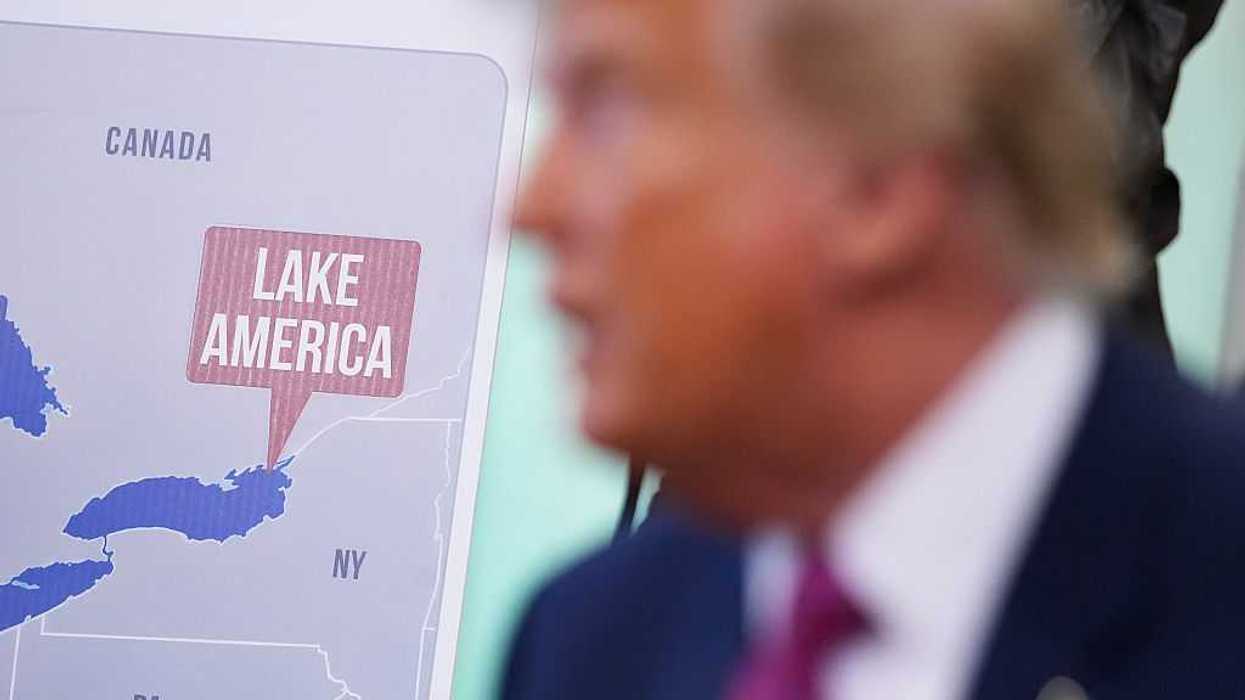
A map labeling Lake Ontario as "Lake America" is displayed behind U.S. President Donald Trump.

A map labeling Lake Ontario as "Lake America" is displayed as U.S. President Donald Trump signs an executive order during an event in the Oval Office of the White House on August 27, 2026 in Washington, DC.

Andrew Harnik/Getty Images

Cartography of Convenience: Why Rushed Renaming Erodes Public Trust

In tough economic times, governments often reach for the easiest kind of progress: a new name on an old sign. Wage stagnation, inflation, crumbling roads, and rising rents are hard problems that take years and real money to fix. Renaming a street, a lake, or a strait is not. It costs a fraction as much and lets officials point to something they “did.” A new name never fixes a pothole or lowers a grocery bill. This year offered an unusually rich catalogue of the habit, reaching from a city council in Texas to a wartime waterway in the Persian Gulf.

A Concept Borrowed From the Cremation Ground

Indian philosophy has an old idea called shmashana vairagya, describing the sudden clarity a person feels standing at a cremation ground, when ordinary ambitions look small. The feeling fades once the mourner goes home. Public policy has its own version of this cycle. In the raw hours after a tragedy, a scandal, or a surge of national feeling, officials decide, sometimes within a single social media post, what belongs on a map or a sign forever. The emotion passes in hours. The bill, when there is one, stays for years.

Keep ReadingShow less
Donald Trump

U.S. President Donald Trump on February 6, 2026.

(Photo by Samuel Corum/Getty Images)

A Demagogue in the White House: Will the Guardrails Hold?

A demagogue does not seize all power at once. He takes it piece by piece.

In Trump’s second administration, those pieces accumulated in plain sight. The president generated so much disruption and noise that Americans struggled to keep pace. Each new controversy displaced the last, obscuring a more consequential story: the steady accumulation of presidential power.

Keep ReadingShow less
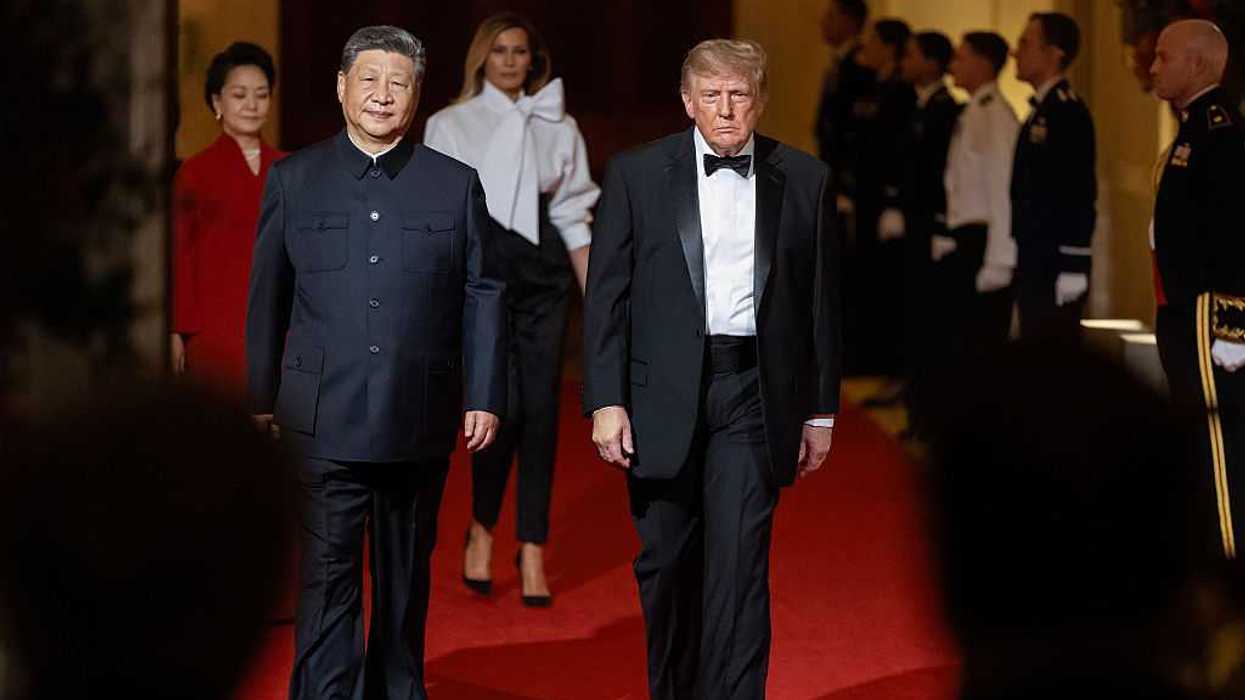
​Chinese President Xi Jinping (L) and U.S. President Donald Trump followed by Chinese first lady Peng Liyuan and U.S. first lady Melania Trump arrive for a state dinner at the White House.

Chinese President Xi Jinping (L) and U.S. President Donald Trump followed by Chinese first lady Peng Liyuan and U.S. first lady Melania Trump arrive for a state dinner in the East Room of the White House on September 24, 2026 in Washington, DC.

Kevin Dietsch/Getty Images

When Leaders Disagree, Ceremony Plays an Important Role

When Chinese President Xi Jinping arrived at the White House on 24 September, the U.S. welcomed him with an elaborate display of ceremony. The Army Herald Trumpets sounded a fanfare, the Chinese and American national anthems were played, and the Old Guard Fife and Drum Corps performed. A military review was followed by a flyover involving a B-2 bomber and four F-22 fighter jets, according to the White House. It was an extraordinary production for two countries that still disagree on some of the most important issues in international politics.

Talks between President Donald Trump and Xi touched on trade, artificial intelligence and Taiwan. The visit was marked by warm words and some signs of cooperation, but it did not erase the fundamental competition between the United States and China. So why was all this ceremony staged? It is tempting to dismiss political pomp as mere window dressing: an expensive historical relic surrounding the serious business taking place behind closed doors. As a music historian, however, I think this misunderstands what ceremony does. Ceremony can become particularly valuable when words alone are not enough.

Keep ReadingShow less